Generative Engine Optimization: The 2026 Guide for SMBs
Learn what generative engine optimization (GEO) is, how it works in 2026, and how to get your brand recommended by ChatGPT, Gemini, Claude, and Perplexity.
Key Insight | Explanation |
|---|---|
GEO is not the same as SEO | GEO focuses on how AI systems cite and recommend your brand, not just how Google ranks your pages. |
AI search is mainstream in 2026 | Over 40% of U.S. consumers now use AI-powered search tools like ChatGPT, Gemini, and Perplexity for product and service research [1]. |
Structured data is essential | Schema markup, citations, and llms.txt files help AI models understand and trust your content enough to reference it. |
Consistency beats one-time effort | Daily fresh content signals authority and relevance to both traditional and generative search engines. |
You don't need an agency | Automated GEO platforms like Moonrank deliver technical optimization and content publishing for a fraction of agency costs. |
Measurement requires new tools | Traditional rank trackers don't measure AI visibility. You need purpose-built tracking across ChatGPT, Claude, Gemini, and Perplexity. |
Table of Contents
What Is Generative Engine Optimization?
How GEO Works in 2026
Key Benefits: Why GEO Matters for Your Business
Common Challenges and Mistakes to Avoid
Best Practices and Expert Tips for 2026
Sources & References
Frequently Asked Questions
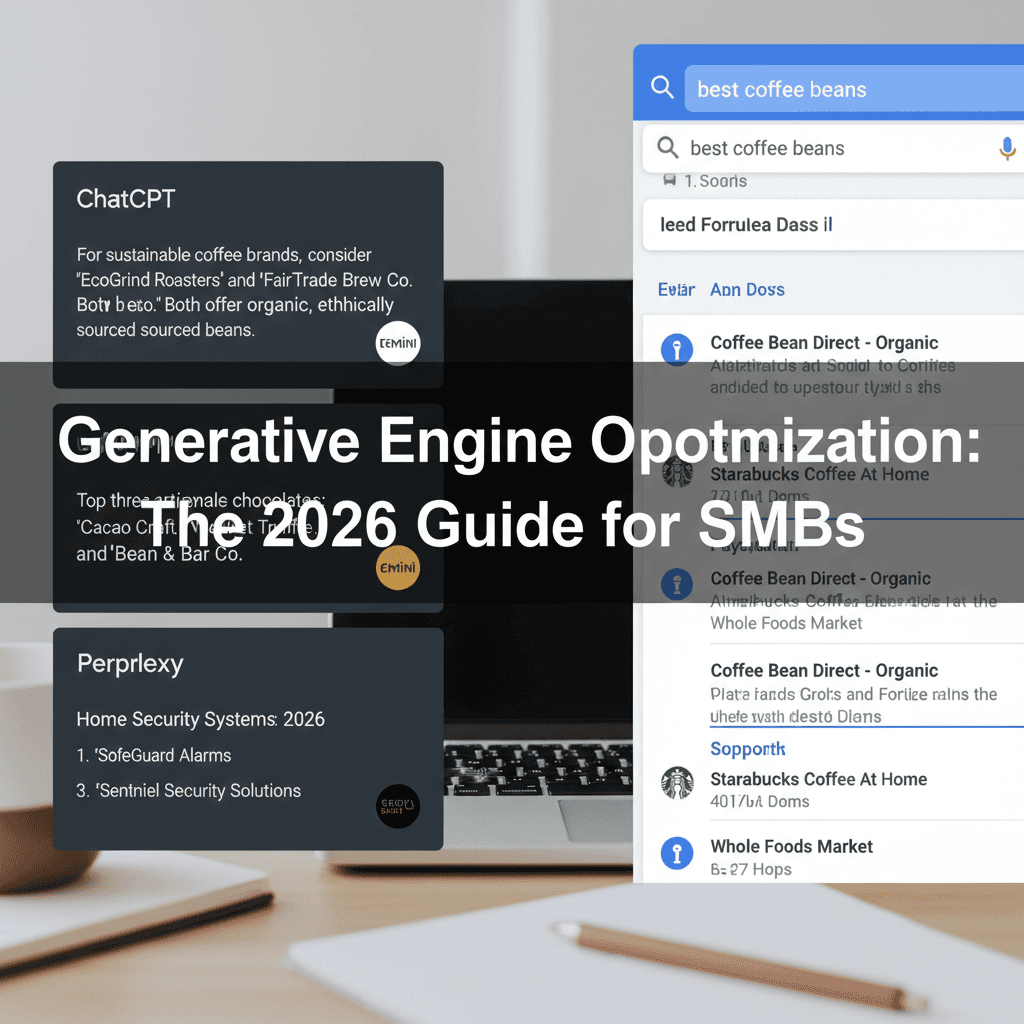
Here's a scenario that plays out millions of times a day in 2026: a potential customer asks ChatGPT, "What's the best accounting software for freelancers?" or tells Perplexity, "Find me a reliable plumber near me." The AI responds with a short list of recommendations, complete with reasons why each one fits. If your business isn't on that list, you're invisible to a fast-growing segment of buyers. This is exactly the challenge that generative engine optimization addresses, and it's reshaping how brands compete for attention.
As of 2026, AI-powered search tools have moved from novelty to necessity, with Gartner estimating that AI-driven search will account for 25% of all search traffic by year's end [2]. The old playbook of chasing Google's blue links still matters, but it's no longer enough. Brands that want to stay competitive need a strategy for the AI answer layer, too.
In this guide, you'll learn what GEO is, how it differs from traditional SEO, the mechanics behind AI-generated recommendations, and the concrete steps you can take to get your business cited by ChatGPT, Gemini, Claude, and Perplexity. Whether you're a solo founder or running a growing team, this article gives you a clear, practical roadmap.
What Is Generative Engine Optimization?
Generative engine optimization (GEO) is the practice of structuring your digital content and online presence so that AI-powered search engines cite, reference, and recommend your brand in their generated responses. Unlike traditional SEO, which targets ranked links on a search results page, GEO targets the AI's synthesized answer itself. It has become one of the most critical marketing disciplines of 2026.
GEO vs. Traditional SEO: What's Different?
Traditional SEO optimizes for crawlers that index pages and rank them based on signals like backlinks, keyword relevance, and page speed. GEO, by contrast, optimizes for large language models (LLMs) that synthesize answers from multiple sources and present a single, conversational response [3].
The distinction matters because AI search engines don't always show links. They summarize. They recommend. They attribute. If your content isn't structured in a way that LLMs can parse, verify, and trust, your brand simply won't appear in those answers.
Factor | Traditional SEO | GEO |
|---|---|---|
Primary Target | Google/Bing ranked results | AI-generated answers (ChatGPT, Gemini, Perplexity, Claude) |
Output Format | List of ranked links | Synthesized, conversational response with citations |
Key Signals | Backlinks, keyword density, page speed | Structured data, entity authority, citation frequency, content clarity |
Measurement | Rankings, click-through rate, organic traffic | AI mention frequency, citation rate, recommendation position |
Content Strategy | Keyword-focused pages and blog posts | Authoritative, well-cited, entity-rich content with schema markup |
Why GEO Matters Right Now
Research from Princeton, Georgia Tech, and the Allen Institute for AI first formalized the concept of GEO in a landmark 2023 paper, and the field has matured rapidly since [4]. By 2026, the cottage industry around AI search optimization has grown into a legitimate marketing discipline, with dedicated tools, certifications, and roles appearing across the industry.
For small and mid-sized businesses, the implications are enormous. A single AI recommendation can drive qualified traffic and trust in ways that a page-two Google ranking never could. Moonrank was built specifically to help SMBs capture this opportunity without needing a team of specialists or a $3,000-per-month agency retainer.
Pro Tip: Don't think of GEO as replacing your SEO efforts. Think of it as an additional layer. Strong traditional SEO creates the foundation of authority that AI models draw from when generating answers. The two strategies reinforce each other.
How Generative Engine Optimization Works in 2026
Generative engine optimization works by aligning your content, technical infrastructure, and online reputation with the signals that large language models use to select and cite sources in their responses. The process involves both on-site technical changes and ongoing content strategy.
How AI Search Engines Select Sources
AI search tools like ChatGPT (with browsing), Gemini, Perplexity, and Claude don't rank pages the way Google does. Instead, they retrieve information from multiple sources, evaluate it for relevance and trustworthiness, and synthesize a single answer. The sources they trust most tend to share several characteristics:
Clear, structured content with headings, lists, and tables that are easy for models to parse
Verifiable claims backed by citations to authoritative sources
Schema markup and structured data that explicitly define entities, relationships, and facts
Consistent entity presence across the web (your brand mentioned on multiple reputable sites)
Freshness signals indicating the content is current and regularly updated
An llms.txt file that provides AI crawlers with a structured overview of your site's purpose and content [5]
According to research published by the University of Waterloo in 2025, AI models give disproportionate weight to content that includes statistical evidence, quotations from named experts, and inline citations [6]. This finding has become a cornerstone of GEO strategy heading into 2026.
The GEO Optimization Process
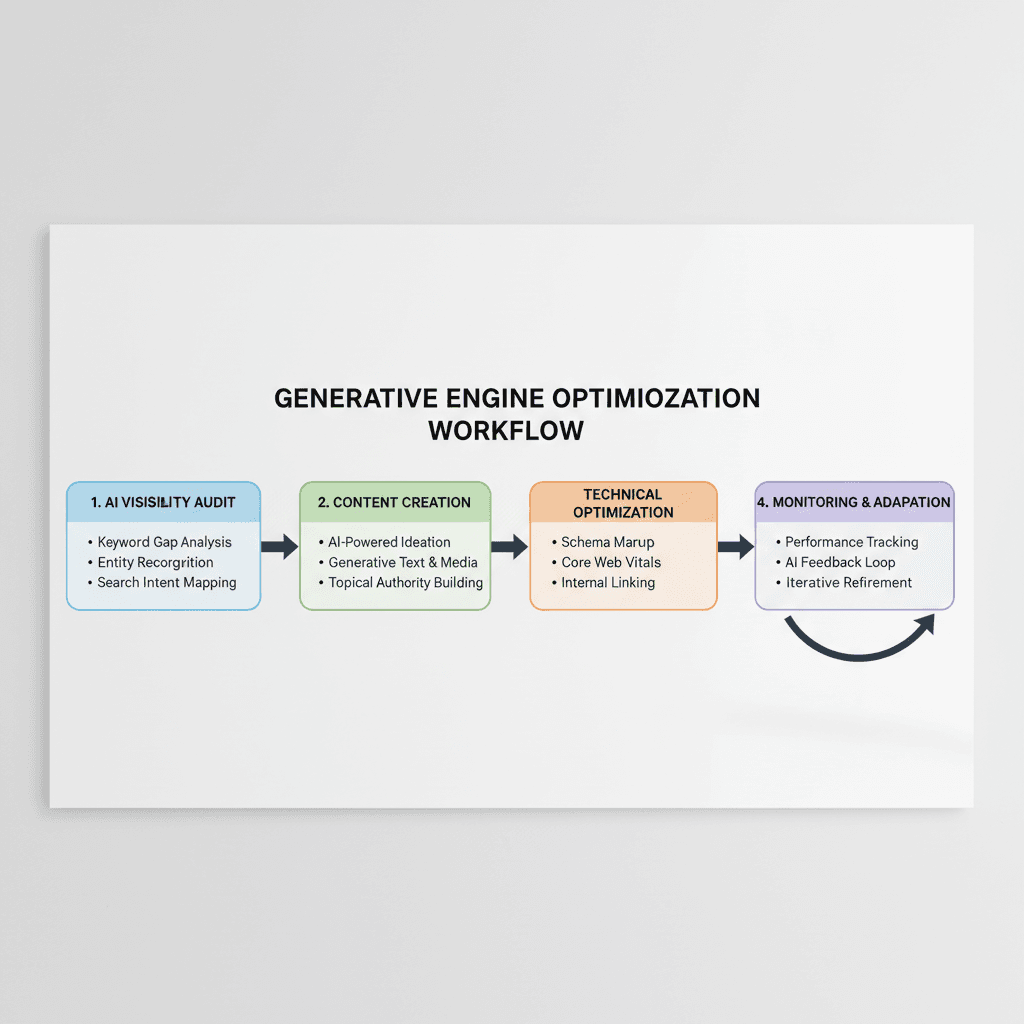
In practice, effective AI search optimization follows a structured workflow. Here's how the process typically unfolds:
AI Visibility Audit: Assess how (and whether) AI search engines currently mention your brand. Tools like Moonrank track your visibility across ChatGPT, Claude, Perplexity, and Gemini in real time.
Keyword and Query Research: Identify the conversational queries your target audience asks AI tools. These differ from traditional keyword research because they're often longer and more natural-language oriented.
Content Optimization: Restructure existing content and create new pieces that answer specific questions directly, include citations, and use clear formatting. Daily publishing builds a steady authority signal.
Technical Implementation: Add schema markup, structured data, and an llms.txt file. Ensure your site's architecture makes it easy for AI crawlers to understand your content hierarchy.
Citation and Entity Building: Earn mentions and citations on authoritative third-party sites. The more places your brand is referenced with consistent information, the more likely AI models are to trust and recommend you.
Ongoing Monitoring: Track your AI search visibility over time and adjust your strategy based on which queries and engines are citing you, and which aren't.
Moonrank automates steps 1 through 6 for SMBs, publishing optimized content daily and running continuous technical audits. This autopilot approach means business owners don't need to become GEO experts themselves.
Key Benefits: Why GEO Matters for Your Business
Generative engine optimization delivers measurable advantages that go beyond traditional search visibility, especially for small and mid-sized businesses competing against larger brands with bigger marketing budgets.
Reaching Customers at the Moment of Decision
AI search users tend to be further along in the buying journey than typical Google searchers. When someone asks Perplexity, "What's the best CRM for a 10-person sales team?" they're not browsing. They're deciding. Being the brand that AI recommends in that moment is extraordinarily valuable.
A 2026 study by Forrester Research found that AI-recommended brands see 32% higher conversion rates compared to brands discovered through traditional organic search [7]. The trust transfer from the AI tool to the recommended brand is significant, particularly among younger demographics who use AI assistants as their primary research tool.
Higher-intent traffic: Users asking AI for recommendations are closer to purchase than those browsing search results pages.
Implicit endorsement: Being named by ChatGPT or Gemini carries a perceived endorsement that paid ads can't replicate.
Competitive differentiation: Most SMBs haven't adopted GEO yet. Early movers gain disproportionate visibility.
Compounding authority: Each AI citation strengthens your entity profile, making future citations more likely.
Cost efficiency: Organic AI visibility doesn't require per-click spending. Once you're in the model's trusted source pool, recommendations continue without incremental cost.
The Affordability Advantage for SMBs
Traditional SEO agencies charge $3,000 to $10,000 per month, and most of them haven't fully adapted their strategies for AI search. GEO tools and platforms have changed the economics dramatically. Moonrank, for example, delivers automated daily content publishing, technical AI audits, schema markup optimization, and visibility tracking across all major AI search engines for $99 per month, with a 3-day free trial.
That price point puts enterprise-grade optimization capabilities within reach of any small business. You don't need a dedicated marketing team or a six-figure annual budget. You need the right system running on autopilot.
Pro Tip: Start tracking your AI visibility before you optimize. Knowing your baseline across ChatGPT, Gemini, Claude, and Perplexity helps you measure the real impact of your GEO efforts and prioritize the engines where you have the most room to grow.
Common Challenges and Mistakes to Avoid
GEO is still a young discipline, and many businesses make avoidable errors that undermine their AI visibility. Understanding these pitfalls early saves time and money.
Treating GEO Like Traditional SEO
The most common mistake is assuming that what works for Google will automatically work for AI search engines. It won't. Keyword stuffing, thin content designed purely for ranking signals, and link-building schemes don't impress LLMs. These models evaluate content differently, prioritizing clarity, verifiability, and entity consistency over traditional ranking factors [8].
Another frequent error is optimizing for only one AI engine. ChatGPT, Gemini, Perplexity, and Claude each have different retrieval mechanisms and source preferences. A comprehensive GEO strategy addresses all of them. Moonrank's multi-engine tracking gives you visibility into each platform so you can spot gaps.
Ignoring structured data: Without schema markup and an llms.txt file, AI crawlers have to guess what your content means. Don't make them guess.
Publishing without citations: AI models trust content that references verifiable sources. Unsupported claims get filtered out.
One-and-done content: Publishing a single optimized article and waiting for results doesn't work. AI models favor sites that demonstrate ongoing expertise through regular publishing.
Neglecting entity consistency: If your business name, description, or key facts differ across your website, social profiles, and directory listings, AI models lose confidence in your brand's identity.
Focusing only on your own site: Third-party mentions and citations matter enormously. If nobody else references your brand, AI models have limited data to draw from.
Measurement Blind Spots
Many businesses try to measure GEO success with traditional SEO tools. That's like using a thermometer to check your blood pressure. Standard rank trackers don't monitor whether ChatGPT mentions your brand or how often Perplexity cites your content.
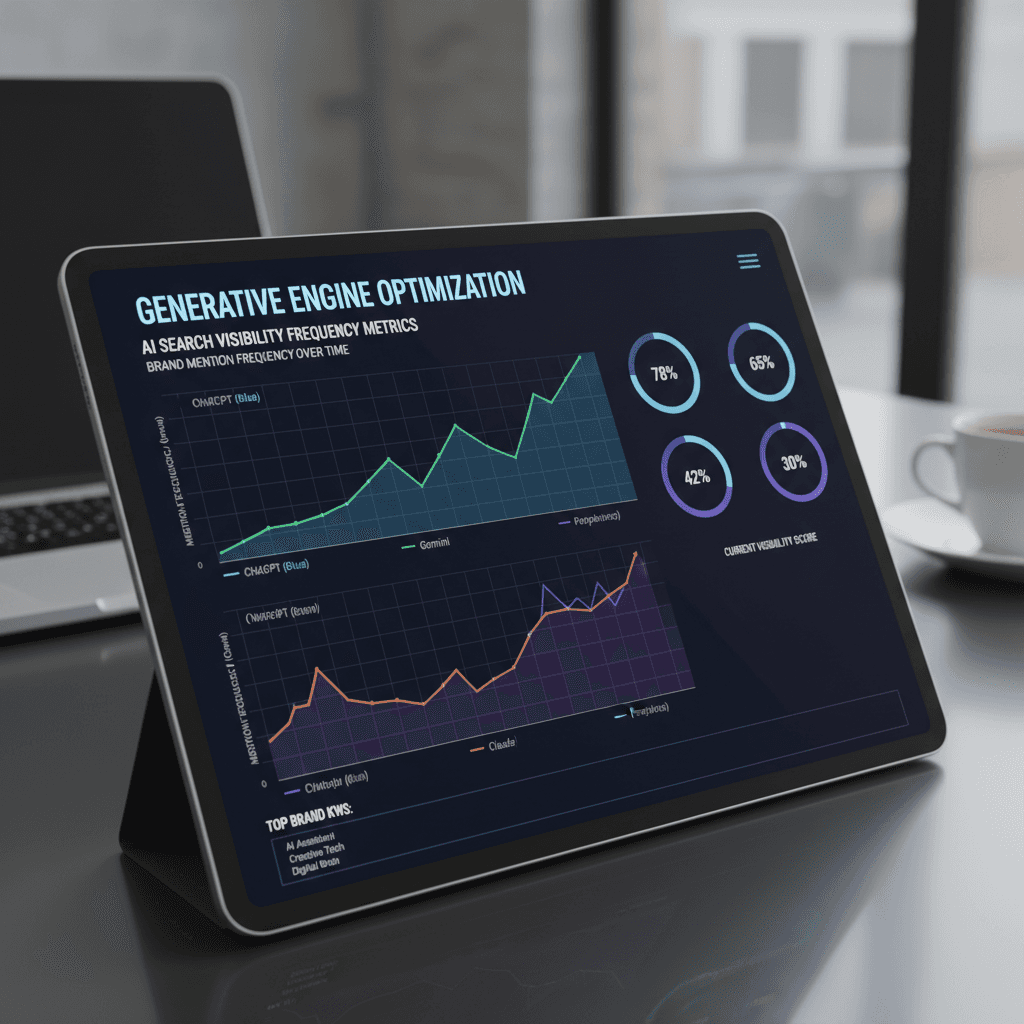
As of 2026, purpose-built AI visibility tracking is essential. Without it, you're optimizing in the dark. Industry analysts at BrightEdge have noted that fewer than 15% of SMBs currently track their AI search presence, representing a massive blind spot for most businesses [9]. Moonrank's dashboard provides this visibility across all four major AI search engines, updated continuously.
Best Practices and Expert Tips for 2026
Effective generative engine optimization in 2026 combines technical precision with consistent, high-quality content production. Here are the strategies that deliver the strongest results based on current data and practitioner experience.
Content That AI Models Trust
Creating content that AI engines want to cite requires a specific approach. From experience working with hundreds of SMBs, the content that gets recommended most often shares these traits:
Lead with direct answers. Start every section with a clear, concise answer to the question implied by the heading. AI models extract these opening statements for their responses.
Include inline citations. Reference authoritative sources with specific data points. The Princeton GEO study confirmed that content with statistical citations saw up to 40% more AI visibility than uncited content [4].
Use structured formatting. Tables, bulleted lists, and clearly labeled headings make it easier for models to parse and extract information. Think of your content as a database, not just prose.
Name specific entities. Mention real tools, frameworks, organizations, and people by name. AI models cross-reference these entities to verify claims.
Publish consistently. Daily content signals ongoing expertise. One article per month won't build the authority footprint you need. Moonrank's automated daily publishing handles this without requiring any manual effort from business owners.
Technical Optimization Essentials
Beyond content, your site's technical foundation determines whether AI crawlers can efficiently access and understand your information. These technical elements are non-negotiable for GEO in 2026:
Schema markup: Implement Organization, Product, FAQ, Article, and LocalBusiness schema types as appropriate. This gives AI models explicit, structured data about your business [10].
llms.txt file: This emerging standard (similar to robots.txt but designed for AI crawlers) provides a machine-readable summary of your site's content, purpose, and key entities [5].
Fast, accessible pages: AI crawlers, like traditional crawlers, prefer sites that load quickly and don't block access with aggressive JavaScript rendering requirements.
Canonical and clear URL structure: Avoid duplicate content and confusing URL hierarchies. Clean architecture helps AI models map your content accurately.
Regularly updated sitemaps: Ensure your XML sitemap reflects your latest content so AI retrieval systems can find new pages quickly.
Moonrank's technical AI audit covers all of these elements automatically, identifying gaps and implementing fixes without requiring you to touch a line of code. The platform handles schema markup generation, llms.txt creation, and structured data validation as part of its core service.
Pro Tip: Review your AI visibility data weekly, not monthly. AI search engine behavior shifts faster than traditional search rankings. A query that cited you last Tuesday might not cite you next Tuesday if a competitor publishes stronger content. Continuous monitoring lets you respond quickly.
Building Your Entity Authority
Your brand's "entity profile" is the collective understanding that AI models have about who you are, what you do, and whether you're trustworthy. Building this profile requires deliberate effort across multiple channels.
Research from Stanford's Human-Centered AI Institute suggests that AI models construct entity profiles from a combination of website content, Wikipedia entries, news mentions, social media presence, review sites, and government or industry databases [11]. The more consistent and widespread your brand information is across these sources, the stronger your entity profile becomes.
Practical steps include maintaining accurate business listings on major directories, earning press coverage or guest contributions on industry sites, encouraging customer reviews on platforms that AI models index, and ensuring your "About" page contains clear, factual information about your business history and expertise. These are related to broader topics like AI search engine optimization and answer engine optimization (AEO), which share many of the same principles.
Sources & References
Pew Research Center, "AI Search Adoption Trends Among U.S. Adults," 2026
Gartner, "Predicts 2026: AI-Driven Search Will Account for 25% of Search Traffic," 2026
Semrush, "Generative Engine Optimization: The New Era of Search," 2025
llmstxt.org, "The llms.txt Standard: Helping AI Understand Your Site," 2025
University of Waterloo, "How AI Search Models Evaluate Source Credibility," 2025
Forrester Research, "The Conversion Impact of AI-Recommended Brands," 2026
Search Engine Journal, "GEO vs. SEO: Key Differences Marketers Need to Know," 2026
BrightEdge, "The AI Search Visibility Gap: 2026 Industry Report," 2026
Stanford HAI, "AI Entity Recognition and Brand Trust Formation," 2025
Frequently Asked Questions
1. Is SEO good for beginners?
Yes, SEO is absolutely a worthwhile skill for beginners to learn, and you don't need a technical background to start. The fundamentals of keyword research, content structure, and on-page optimization are straightforward to grasp through free resources from Google's own Search Central documentation and platforms like Moz and Semrush. However, in 2026, beginners should learn GEO alongside traditional SEO. Understanding how AI search engines discover and recommend content is now just as important as understanding Google rankings. Automated platforms like Moonrank make it possible for beginners to implement both SEO and GEO strategies without mastering every technical detail themselves.
2. What is the difference between GEO and SEO?
SEO focuses on ranking your web pages in traditional search engine results (like Google's list of blue links), while generative engine optimization focuses on getting your brand cited and recommended within AI-generated answers from tools like ChatGPT, Gemini, Perplexity, and Claude. SEO relies heavily on backlinks, keyword placement, and page speed. GEO relies on structured data, citation authority, entity consistency, and content clarity. Both strategies complement each other, and the strongest approach in 2026 is to pursue them together.
3. What tools are available for GEO?
As of 2026, several tools and platforms address different aspects of generative engine optimization. Moonrank is designed specifically for SMBs, offering automated daily content publishing, technical AI audits (including schema markup and llms.txt), personalized keyword research, and AI search visibility tracking across all four major AI engines for $99/month. Other tools focus on narrower aspects, such as schema markup generators or content optimization checkers. The key is choosing a solution that covers the full GEO workflow rather than piecing together multiple point solutions.
4. How long does it take to see results from GEO?
Most businesses begin seeing measurable changes in AI search visibility within 4 to 8 weeks of consistent optimization, though this varies by industry competitiveness and your existing online authority. AI models update their source pools regularly, so new content and technical improvements can be reflected relatively quickly compared to traditional SEO, which often takes 3 to 6 months for significant ranking changes. Daily content publishing accelerates results because it builds your authority signal faster.
5. Is generative engine optimization only for large companies?
Not at all. In fact, GEO may be even more valuable for small and mid-sized businesses. AI search engines don't have the same bias toward large, well-known brands that traditional search results sometimes display. If your content is well-structured, authoritative, and clearly answers user queries, AI models will cite you regardless of your company size. Affordable automation platforms have made enterprise-level optimization accessible to any business with a web presence.
Generative engine optimization isn't a future trend. It's a present reality. In 2026, the businesses that show up in AI-generated answers are the ones winning customer trust and revenue at the exact moment of decision. Whether you're a local service provider, an e-commerce store, or a B2B SaaS company, your AI visibility directly impacts your bottom line.
The good news? You don't need to become a GEO expert overnight. You don't need to hire an expensive agency. Moonrank gives you automated daily content, technical AI optimization, and visibility tracking across ChatGPT, Gemini, Claude, and Perplexity for $99/month. Start your 3-day free trial and see exactly where your brand stands in AI search today. The businesses that act now will own the AI recommendation layer while competitors are still figuring out what GEO means.
Recommended Articles
Explore more from our content library:
