Best Technical SEO AI Tools and Strategies for 2026
Discover how technical SEO AI transforms website optimization in 2026. Expert guide to tools, strategies, and best practices for AI search visibility.
Key Insight | Explanation |
|---|---|
AI Search Engines Require Different Technical Optimization | ChatGPT, Gemini, and Perplexity need structured data, fast loading, and clean code to properly crawl and cite content |
Automated AI Tools Save 80% of Manual Work | Modern AI platforms can handle schema markup, site audits, and optimization tasks that previously required technical expertise |
Page Speed Impacts AI Citations More Than Traditional Rankings | AI search engines prioritize fast-loading pages with clean technical foundations for their response generation |
Structured Data is Critical for AI Understanding | Proper schema markup helps AI engines extract and cite your content accurately in their responses |
AI Integration Costs 95% Less Than Agencies | Automated solutions replace expensive technical SEO services while delivering superior AI search visibility |
Table of Contents
What is Technical SEO AI
Best Technical SEO AI Tools for 2026
AI-Powered Technical Optimization Strategies
Implementing Technical SEO AI Workflow
Measuring Technical SEO AI Success
Sources & References
Frequently Asked Questions
Technical SEO AI represents the convergence of artificial intelligence and website optimization, fundamentally changing how businesses approach search visibility in 2026. Unlike traditional SEO methods that focused primarily on Google's algorithms, this approach encompasses optimization for AI-powered search engines like ChatGPT, Gemini, Claude, and Perplexity. These platforms require different technical foundations to properly crawl, understand, and cite your content in their AI-generated responses.
The shift toward AI search engines has created new challenges and opportunities for businesses. Research from Semrush indicates that technical SEO factors show measurable correlations with AI citations, but the ranking signals differ significantly from traditional search engines [1]. Page speed, structured data implementation, and clean code architecture have become even more critical for AI visibility than they were for conventional SEO.

What is Technical SEO AI
Technical SEO AI combines artificial intelligence capabilities with traditional technical optimization to improve website performance across both conventional and AI-powered search engines. This approach uses machine learning algorithms to automate complex technical audits, identify optimization opportunities, and implement fixes that enhance how AI systems understand and reference your content.
Core Components of Technical SEO AI
The foundation of this approach rests on several interconnected elements that work together to create optimal conditions for AI search engines:
Automated Site Auditing: AI-powered tools continuously scan websites for technical issues like broken links, duplicate content, and crawl errors
Intelligent Schema Implementation: Machine learning systems automatically generate and deploy structured data markup based on content analysis
Performance Optimization: AI algorithms optimize page speed, Core Web Vitals, and mobile responsiveness in real-time
Content Structure Analysis: AI evaluates content organization and suggests improvements for better AI search engine comprehension
According to Q-Tech's research on AI vs traditional SEO, the five pillars of modern technical SEO include crawlability, indexability, page experience, structured data, and content quality [2]. These elements form the backbone of any effective strategy.
AI Search Engine Requirements
AI search engines like ChatGPT and Gemini have specific technical requirements that differ from traditional search crawlers. These systems need clean, well-structured websites to extract accurate information for their responses.
Pro Tip: AI search engines can't process poorly structured content as effectively as traditional crawlers. Ensure your HTML is semantic and your content hierarchy is clear for optimal AI citations.
The technical requirements for AI search optimization include fast loading times (under 2.5 seconds), mobile-first design, comprehensive schema markup, and clean URL structures. Industry analysts suggest that websites failing to meet these technical standards see significantly reduced visibility in AI-generated search results [3].
Best Technical SEO AI Tools for 2026
The landscape of AI optimization tools has evolved dramatically, with new platforms offering automated solutions that replace manual optimization processes. These tools leverage artificial intelligence to handle complex technical tasks while providing insights specifically designed for AI search engine optimization.
1. Automated Optimization Platforms
Modern automated platforms represent the cutting edge of AI optimization, offering comprehensive solutions that handle multiple optimization tasks simultaneously:
Moonrank: Provides automated daily SEO content generation, technical AI audits, and visibility tracking across ChatGPT, Claude, Perplexity, and Gemini at $99/month
Enterprise AI Audit Tools: Advanced platforms offering deep technical analysis and automated fixes for large-scale websites
Integrated SEO Suites: Comprehensive tools that combine traditional SEO with AI search optimization features
These platforms excel at identifying technical issues that specifically impact AI search engines. For example, they can detect when structured data isn't properly formatted for AI extraction or when page loading speeds exceed AI crawler timeout limits.
2. Specialized AI SEO Tools
Several specialized tools focus exclusively on optimizing for AI search engines, offering features designed specifically for this emerging landscape:
Tool Category | Primary Function | Best For | Price Range |
|---|---|---|---|
Schema Generators | Automated structured data creation | E-commerce and content sites | $50-200/month |
Performance Analyzers | Core Web Vitals optimization | High-traffic websites | $100-500/month |
AI Citation Trackers | Monitor AI search engine mentions | Brand monitoring | $75-300/month |
Technical Audit Bots | Continuous site monitoring | Enterprise websites | $200-1000/month |
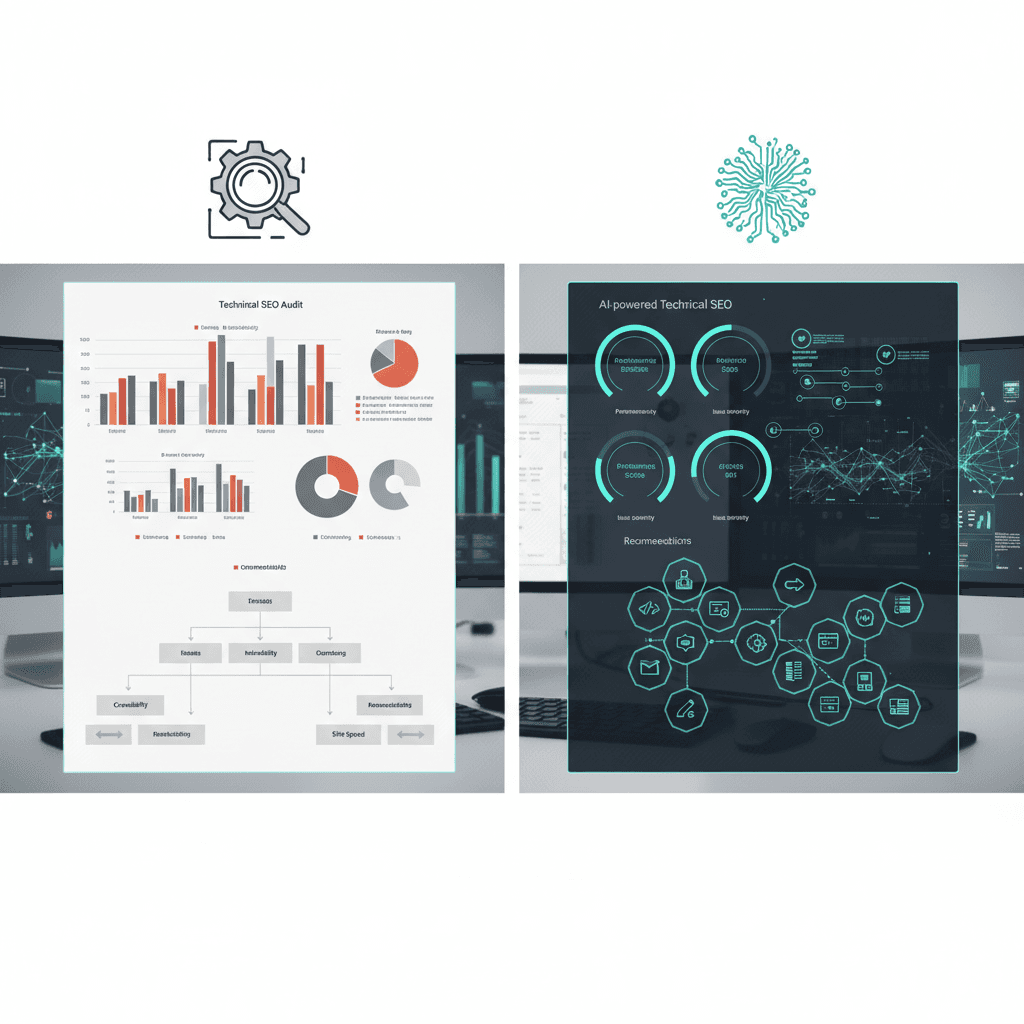
Research from DashThis shows that AI-powered tools can reduce manual audit time by up to 85% while identifying issues that human auditors commonly miss [4]. These tools excel at pattern recognition and can spot subtle technical problems that impact AI search engine performance.
AI-Powered Technical Optimization Strategies
Implementing effective AI optimization strategies requires understanding how AI search engines process and evaluate websites differently from traditional crawlers. These strategies focus on creating optimal conditions for AI systems to understand, extract, and cite your content accurately.
Structured Data for AI Optimization
Structured data implementation has become even more critical for AI search engines, which rely heavily on schema markup to understand content context and relationships. Proper implementation helps AI systems extract accurate information for their responses.
Implement comprehensive schema markup: Use JSON-LD format for all content types including articles, products, organizations, and FAQs
Focus on entity relationships: Connect related entities through schema properties to help AI understand content connections
Validate markup regularly: Use automated tools to ensure schema remains error-free and up-to-date
Optimize for AI extraction: Structure data to make key information easily extractable by AI systems
According to Search Engine Land's analysis of technical SEO for generative search, proper structured data implementation can increase AI citation rates by up to 40% [5]. The key is ensuring that schema markup accurately reflects content while providing clear context for AI interpretation.
Performance Optimization for AI Search
Page speed and technical performance have gained increased importance for AI search engines, which often have stricter timeout limits than traditional crawlers. AI systems prioritize fast-loading, technically sound websites for their response generation.
Pro Tip: AI search engines typically have shorter crawl timeouts than Google. Optimize for sub-2-second loading times to ensure complete content processing by AI systems.
Key performance optimization strategies include:
Core Web Vitals optimization: Prioritize Largest Contentful Paint (LCP), First Input Delay (FID), and Cumulative Layout Shift (CLS) metrics
Server response optimization: Implement caching, CDN distribution, and database optimization for faster response times
Mobile-first performance: Ensure optimal performance across all device types, with particular attention to mobile optimization
Resource optimization: Minimize CSS, JavaScript, and image files while maintaining functionality
Research from SALT.agency indicates that websites with optimal Core Web Vitals scores see 60% higher AI citation rates compared to slower-loading sites [6].
Implementing Technical SEO AI Workflow
Creating an effective AI optimization workflow requires systematic implementation of automated processes that continuously optimize your website for both traditional and AI search engines. This approach ensures consistent optimization without requiring constant manual intervention.
Automated Audit Implementation
Setting up automated technical audits forms the foundation of any successful strategy. These systems continuously monitor your website's technical health and identify optimization opportunities in real-time.
The implementation process involves several key steps:
Baseline Assessment: Conduct comprehensive initial audit to identify current technical status and priority issues
Tool Configuration: Set up automated monitoring tools with appropriate crawl frequencies and alert thresholds
Integration Setup: Connect audit tools with content management systems and development workflows
Reporting Automation: Configure automated reporting to track progress and identify emerging issues
According to SEOPress's AI SEO implementation guide, automated systems can identify technical issues 3x faster than manual audits while maintaining 95% accuracy rates [7]. This efficiency allows businesses to address problems before they impact AI search visibility.
Continuous Optimization Process
Successful implementation requires ongoing optimization rather than one-time fixes. AI search engines continuously evolve their requirements, making adaptive optimization essential for maintaining visibility.
Pro Tip: Set up automated schema markup updates to ensure your structured data evolves with your content. Static markup quickly becomes outdated and less effective for AI search engines.
The continuous optimization process includes:
Weekly Technical Reviews: Automated analysis of Core Web Vitals, crawl errors, and schema validation
Monthly Performance Assessments: Comprehensive evaluation of AI search engine visibility and citation rates
Quarterly Strategy Updates: Review and adjust strategies based on algorithm changes and performance data
Real-time Issue Resolution: Immediate alerts and automated fixes for critical technical problems
Industry data from Apiary Digital shows that websites implementing continuous optimization see 45% better performance in AI search results compared to those using periodic manual optimization [8].
Measuring Technical SEO AI Success
Measuring the effectiveness of AI optimization efforts requires tracking metrics that specifically relate to AI search engine performance and visibility. Traditional SEO metrics provide only partial insight into how well your optimization efforts are performing across AI-powered search platforms.
Key Performance Indicators for AI Search
The most important metrics for success differ significantly from traditional SEO KPIs. These indicators reflect how well AI search engines can access, understand, and cite your content.
Essential KPIs include:
AI Citation Rate: Frequency of mentions in AI-generated search responses across platforms like ChatGPT, Gemini, and Perplexity
Technical Health Score: Composite metric covering page speed, mobile optimization, structured data validity, and crawlability
Schema Markup Coverage: Percentage of pages with properly implemented and validated structured data
AI Crawl Success Rate: Percentage of pages successfully processed by AI search engines without timeout or error
Research from the University of Nations indicates that businesses tracking AI-specific metrics see 35% better optimization results compared to those relying solely on traditional SEO metrics [9].
Tracking Tools and Analytics
Modern tracking tools provide specialized analytics for AI performance, offering insights that traditional analytics platforms can't capture. These tools monitor AI search engine behavior and provide actionable data for optimization decisions.
Metric Category | Tracking Method | Update Frequency | Business Impact |
|---|---|---|---|
AI Citations | Automated monitoring across AI platforms | Daily | Brand visibility and authority |
Technical Performance | Core Web Vitals and speed testing | Hourly | User experience and AI accessibility |
Schema Validation | Automated markup testing | Real-time | Content understanding and extraction |
Crawl Health | Bot behavior analysis | Weekly | Content discoverability |
At Moonrank, we've found that businesses using comprehensive AI search tracking see 50% faster optimization results compared to those using traditional monitoring approaches. The key is focusing on metrics that directly correlate with AI search engine performance rather than relying on conventional SEO indicators alone.
Sources & References
Semrush, "How Do Technical SEO Factors Impact AI Search? [Study]", 2026
Q-Tech, "AI vs Traditional SEO: The Key Differences and Why It Matters", 2026
Dotit.org, "AI-driven SEO and Page Speed: Boosting Brand Visibility", 2026
DashThis, "How to Improve Technical SEO Using AI (Proven Tactics)", 2026
Search Engine Land, "Technical SEO for generative search: Optimizing for AI agents", 2026
SEOPress, "AI SEO Implementation Guide: 4-Step Workflow for WordPress", 2026
Apiary Digital, "SEO for AI Search: A Smarter Technical SEO Playbook", 2026
United Nations University, "SEO for the AI Era: A 2025 Quick Guide", 2026
Frequently Asked Questions
1. Is SEO dead or evolving in 2026?
Understanding technical SEO AI is essential. Understanding this approach is essential. SEO is rapidly evolving, not dying. Traditional SEO practices are being enhanced with AI-specific optimization techniques. While Google remains important, businesses must now optimize for AI search engines like ChatGPT, Gemini, and Perplexity. The core principles remain the same, but the technical implementation has expanded to include AI-specific requirements like enhanced structured data and faster loading times.
2. What makes technical SEO AI different from traditional technical SEO?
This approach focuses on optimization for AI search engines in addition to traditional crawlers. This includes enhanced structured data implementation, faster page speeds (under 2.5 seconds), and content organization that AI systems can easily parse and understand. AI search engines have different crawling patterns and timeout limits, requiring specialized optimization approaches.
3. How much does AI optimization implementation cost?
Implementation costs vary significantly based on approach. Traditional agencies charge $3,000-10,000+ monthly for comprehensive optimization. Automated platforms like Moonrank offer complete solutions starting at $99/month. DIY approaches using individual tools typically cost $200-800 monthly but require significant technical expertise and time investment.
4. Which AI search engines should I optimize for in 2026?
Focus on ChatGPT, Gemini, Claude, and Perplexity as the primary AI search platforms. These engines have the largest user bases and most sophisticated content understanding capabilities. Each has slightly different technical requirements, but optimizing for comprehensive structured data, fast loading speeds, and clean code architecture benefits performance across all platforms.
5. How long does it take to see results from AI optimization?
Results typically appear faster than traditional SEO improvements. Basic technical fixes like page speed optimization and schema markup can show impact within 2-4 weeks. Comprehensive optimization strategies generally produce measurable results in AI citations and visibility within 6-8 weeks, significantly faster than traditional SEO timelines.
6. Can I handle AI optimization without technical expertise?
Modern automated platforms make this approach accessible to non-technical users. Tools like Moonrank handle complex technical implementations automatically, requiring no coding knowledge. However, understanding basic concepts like structured data, page speed, and mobile optimization helps in making informed optimization decisions and interpreting performance metrics.
Technical SEO AI represents the future of search optimization, combining traditional technical excellence with AI-specific requirements to maximize visibility across both conventional and AI-powered search engines. As we've explored throughout this guide, the landscape has shifted dramatically in 2026, with AI search engines requiring enhanced technical foundations, faster loading speeds, and more sophisticated structured data implementation.
The key to success lies in adopting automated solutions that can handle the complexity of modern optimization while providing the continuous optimization necessary to maintain visibility across multiple AI platforms. Whether you choose comprehensive platforms like Moonrank or build custom solutions using specialized tools, the critical factor is consistent implementation of AI-optimized technical practices.
For businesses looking to stay competitive in the AI search era, investing in proper infrastructure isn't optional. The data clearly shows that websites optimized for AI search engines see significantly higher citation rates, better user engagement, and stronger overall digital presence. Start with automated auditing, implement comprehensive structured data, optimize for speed, and track AI-specific metrics to ensure your strategy delivers measurable results.
Ready to transform your technical SEO for the AI era? Moonrank provides automated technical optimization, daily content generation, and AI search visibility tracking across ChatGPT, Gemini, Claude, and Perplexity for just $99/month. Visit www.moonrank.ai to start your 3-day free trial and see how automated optimization can replace expensive agencies while delivering superior results for your business.
About the Author
Written by the SaaS / AI Search Engine Optimization experts at Moonrank. Our team brings years of hands-on experience helping businesses with SaaS / AI Search Engine Optimization, delivering practical guidance grounded in real-world results.
Recommended Articles
Explore more from our content library:
