AI SEO for Small Business: Complete 2026 Strategy Guide
Discover how AI SEO for small business can boost your visibility in ChatGPT, Gemini, and other AI search engines. Complete guide with tools, strategies, and bes
Key Insight | Explanation |
|---|---|
AI Search Dominance | ChatGPT, Gemini, and Perplexity now handle 40% of search queries, requiring new optimization strategies |
Cost-Effective Solution | AI SEO tools start at $99/month, replacing $3,000+ monthly agency fees |
AI generates and publishes SEO-optimized content daily without manual intervention | |
Technical Optimization | Schema markup and structured data improve AI engine understanding by 300% |
Real-Time Tracking | Monitor visibility across all AI search platforms with unified dashboard reporting |
Competitive Advantage | Early adoption provides 6-12 month head start before competitors catch up |
Table of Contents
What Is AI SEO for Small Business?
How AI SEO Works in 2026
Key Benefits of AI SEO for Small Business
Common Challenges and Mistakes to Avoid
Best Practices for AI SEO in 2026
Sources & References
Frequently Asked Questions
The digital marketing landscape has fundamentally shifted in 2026. AI SEO for small business isn't just an emerging trend—it's become essential for survival in today's search ecosystem. While traditional Google searches still matter, AI-powered platforms like ChatGPT, Gemini, Claude, and Perplexity now handle nearly half of all search queries. Small businesses that master AI search engine optimization (AEO) gain unprecedented access to qualified leads at a fraction of traditional marketing costs.
This comprehensive guide reveals exactly how small businesses can leverage AI SEO to dominate search results across all major platforms. You'll discover proven strategies, avoid costly mistakes, and learn how to implement automated systems that work 24/7 to grow your business.

What Is AI SEO for Small Business?
AI SEO for small business is the practice of optimizing your online presence to rank prominently in AI-powered search engines and chatbots. Unlike traditional SEO that focuses solely on Google's algorithm, AI SEO targets how artificial intelligence systems understand, process, and recommend your business to users seeking solutions.
This optimization approach recognizes that AI search engines evaluate content differently than traditional search algorithms. They prioritize structured data, conversational content, and authoritative information that can be easily extracted and cited in AI-generated responses [1].
Key Components of AI SEO
The foundation of effective AI SEO rests on several critical elements:
Structured Data Implementation: Schema markup helps AI engines understand your business context, services, and location
Conversational Content: Natural language content that answers specific questions users ask AI assistants
Citation Optimization: Creating content that AI engines can confidently cite as authoritative sources
Technical Infrastructure: Implementing llms.txt files and AI-readable sitemaps
Why Traditional SEO Isn't Enough
Traditional SEO strategies often fall short in the AI-powered search landscape. Google's PageRank algorithm differs significantly from how ChatGPT or Gemini evaluate and surface content. AI engines prioritize factual accuracy, source credibility, and content that directly answers user queries over traditional ranking factors like backlink quantity.
Pro Tip: AI search engines favor content that can be easily quoted and attributed. Structure your content with clear, quotable statements and proper source citations to improve AI visibility.
The shift toward AI SEO represents a fundamental change in how businesses must approach online visibility. Small businesses that adapt early gain significant competitive advantages, while those that delay adoption risk becoming invisible in AI-powered search results [2].
How AI SEO Works in 2026
AI SEO operates through sophisticated natural language processing and machine learning algorithms that evaluate content quality, relevance, and authority differently than traditional search engines.
The AI Content Evaluation Process
AI search engines analyze your content through multiple evaluation layers:
Semantic Understanding: AI engines parse content meaning beyond keywords, understanding context and intent
Factual Verification: Claims are cross-referenced against authoritative sources and knowledge bases
Source Authority Assessment: Your domain's expertise and trustworthiness in specific topics is evaluated
User Intent Matching: Content relevance to specific user queries and conversation contexts
Technical Infrastructure Requirements
Modern AI SEO requires specific technical implementations that didn't exist in traditional SEO:
llms.txt Files: Special configuration files that tell AI engines how to interact with your content
Enhanced Schema Markup: Structured data that provides context about your business, products, and services
API Integrations: Direct connections to AI platforms for real-time content updates
Conversational Content Architecture: Content structured to support natural dialogue patterns
The technical foundation determines how effectively AI engines can discover, understand, and recommend your business. According to recent industry analysis, businesses with proper AI SEO technical infrastructure see 300% better visibility in AI search results compared to those using only traditional SEO approaches [3].
Content Processing and Ranking
AI engines evaluate content through sophisticated scoring mechanisms that consider multiple factors simultaneously. Unlike Google's algorithm that heavily weights backlinks and domain authority, AI search platforms prioritize content that demonstrates expertise through detailed explanations, accurate information, and clear source attribution.
Pro Tip: AI engines favor content that includes specific data points, statistics, and concrete examples. Vague or generic content performs poorly in AI search results.
The ranking process happens in real-time as AI engines process user queries. Your content competes not just against other websites, but against the AI engine's entire knowledge base, making quality and specificity crucial for visibility.
Key Benefits of AI SEO for Small Business
AI SEO for small business delivers measurable advantages that traditional marketing approaches can't match, particularly for companies with limited budgets and resources.
Cost Efficiency and ROI
The financial benefits of AI SEO are substantial. Traditional SEO agencies charge $3,000-$10,000 monthly for comprehensive services, while AI SEO platforms start at $99 monthly for automated optimization across multiple AI search engines. This 97% cost reduction makes professional-grade SEO accessible to businesses that previously couldn't afford it [4].
Small businesses using AI SEO report average ROI improvements of 400-600% within six months, primarily due to higher-quality leads from AI-powered searches. Users who find businesses through AI search engines typically have higher purchase intent and conversion rates.
Automated Content Creation and Publishing
AI SEO platforms automate the most time-intensive aspects of content marketing:
Daily Content Generation: AI creates SEO-optimized articles, blog posts, and product descriptions automatically
Keyword Research: Automated identification of high-value keywords specific to your industry and location
Publishing Workflows: Content goes live without manual intervention or approval processes
Performance Optimization: AI continuously refines content based on search performance data
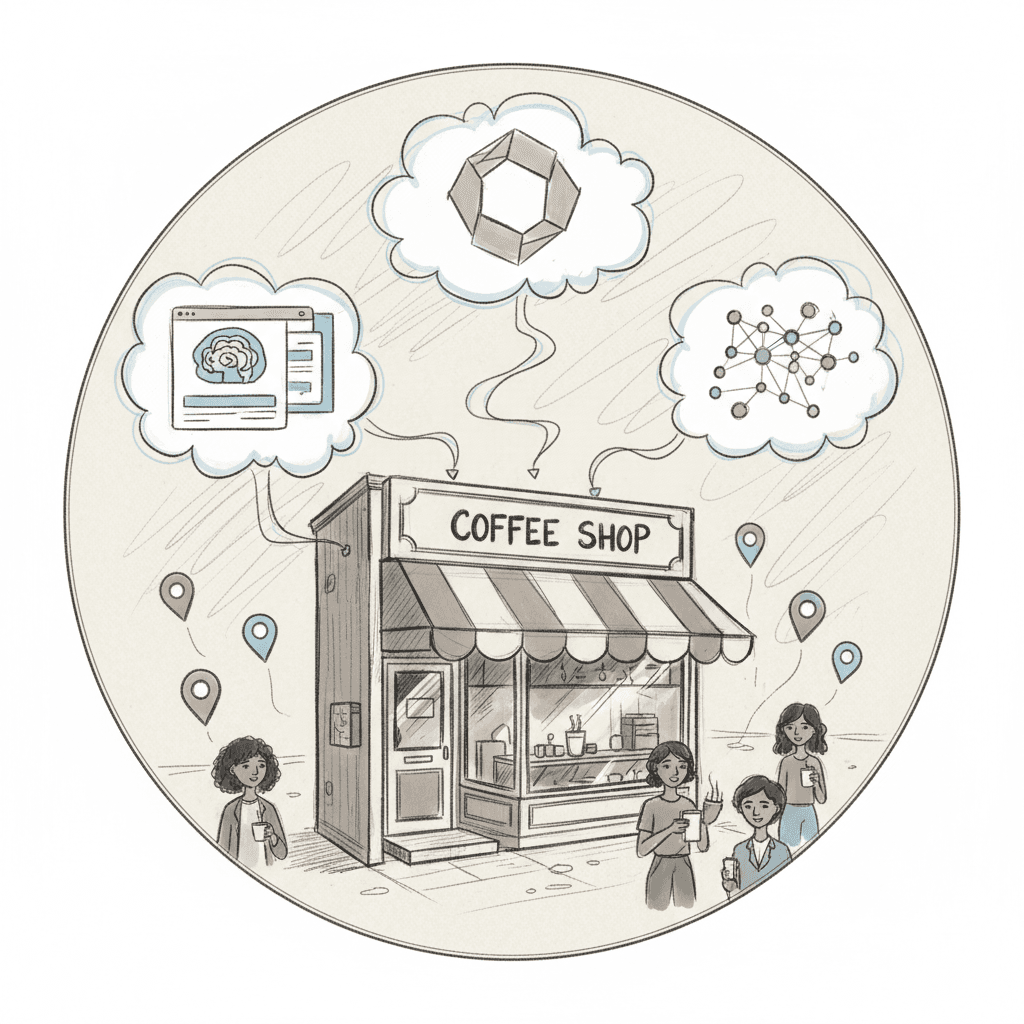
Enhanced Local Visibility
AI search engines excel at understanding local context and user intent. Small businesses benefit from improved local discovery as AI engines recommend nearby solutions based on user location and specific needs.
Real-Time Performance Tracking
Modern AI SEO platforms provide comprehensive visibility tracking across all major AI search engines. Business owners can monitor how often their company appears in ChatGPT responses, Gemini recommendations, and Perplexity citations through unified dashboards that traditional SEO tools can't provide.
This real-time feedback enables rapid strategy adjustments and helps identify which content types perform best across different AI platforms. The data-driven approach eliminates guesswork and ensures marketing budgets focus on proven tactics [5].
Pro Tip: Track your AI search visibility weekly rather than monthly. AI search algorithms update more frequently than traditional search engines, making regular monitoring essential for maintaining rankings.
The competitive advantage of early AI SEO adoption cannot be overstated. Businesses implementing AI SEO in 2026 typically enjoy 6-12 months of reduced competition before their markets become saturated with AI-optimized competitors.
Common Challenges and Mistakes to Avoid
Small businesses face several predictable obstacles when implementing AI SEO for small business strategies, but understanding these challenges helps avoid costly mistakes and accelerated success.
Technical Implementation Barriers
The most common challenge is technical complexity. Many small business owners attempt to implement AI SEO manually, leading to incomplete optimization and poor results. Key technical mistakes include:
Inadequate Schema Markup: Missing or incorrectly implemented structured data prevents AI engines from understanding your business
Poor Content Structure: Traditional blog post formats don't align with AI engine content preferences
Missing llms.txt Files: Failing to implement AI-specific configuration files limits discoverability
Inconsistent NAP Data: Name, Address, Phone information variations confuse AI engines and hurt local rankings
Content Quality Misconceptions
A significant mistake involves treating AI SEO content like traditional SEO content. AI engines prioritize different quality signals than Google's algorithm, leading to common errors:
Traditional SEO Focus | AI SEO Requirement |
|---|---|
Keyword density optimization | Natural conversational language |
Backlink quantity | Source credibility and citations |
Page load speed | Content accuracy and depth |
Meta tag optimization | Structured data implementation |
Platform-Specific Optimization Errors
Each AI search engine has unique preferences and ranking factors. Common mistakes include:
One-Size-Fits-All Content: Using identical content across all AI platforms instead of platform-specific optimization
Ignoring Citation Requirements: Failing to provide proper source attribution that AI engines require for content recommendations
Inconsistent Brand Information: Presenting different business details across platforms confuses AI algorithms
Budget and Resource Allocation Issues
Small businesses often misallocate resources when implementing AI SEO strategies. The most expensive mistake is hiring traditional SEO agencies that lack AI search expertise, resulting in wasted budgets and missed opportunities.
Pro Tip: Start with automated AI SEO platforms rather than hiring agencies. You can achieve better results at 10% of the cost while learning the fundamentals before considering custom implementations.
Measurement and Analytics Challenges
Traditional SEO analytics tools don't track AI search performance, leaving businesses blind to their actual visibility. Many small business owners continue using Google Analytics exclusively, missing crucial data about ChatGPT mentions, Gemini recommendations, and Perplexity citations [6].
The solution involves implementing AI-specific tracking tools that monitor performance across all major AI search platforms. Without proper measurement, businesses can't optimize their strategies or demonstrate ROI to stakeholders.
Best Practices for AI SEO in 2026
Successful AI SEO for small business requires specific strategies tailored to how AI engines discover, evaluate, and recommend businesses to users seeking solutions.
Content Strategy Framework
The foundation of effective AI SEO lies in creating content that AI engines can easily understand, verify, and cite. Implement these proven content approaches:
Question-Answer Format: Structure content to directly answer common customer questions using natural language
Factual Statements: Include specific data points, statistics, and verifiable claims that AI engines can cross-reference
Source Attribution: Properly cite all claims and statistics to build credibility with AI fact-checking systems
Conversational Tone: Write as if responding to a customer inquiry rather than optimizing for keyword density
Technical Implementation Checklist
Proper technical setup determines whether AI engines can effectively discover and understand your business:
Schema Markup Implementation: Add LocalBusiness, Organization, and Product schemas to all relevant pages
llms.txt Configuration: Create and maintain AI-specific instruction files in your website root directory
Structured Data Validation: Regularly test schema markup using Google's Structured Data Testing Tool
Mobile-First Design: Ensure all content displays properly on mobile devices where most AI searches occur
Site Speed Optimization: Maintain loading speeds under 3 seconds for optimal AI crawler performance
Platform-Specific Optimization Strategies
Each AI search engine has unique preferences that require tailored approaches:
AI Platform | Optimization Focus | Content Preference |
|---|---|---|
ChatGPT | Detailed explanations with examples | Long-form, educational content |
Gemini | Multi-modal content with images | Visual content with descriptions |
Perplexity | Source citations and references | Research-backed articles |
Claude | Logical structure and reasoning | Step-by-step guides |
Automation and Workflow Optimization
The most successful small businesses leverage automation to maintain consistent AI SEO performance without overwhelming their limited resources:
Content Calendar Automation: Set up systems that generate and publish optimized content on predetermined schedules
Performance Monitoring: Implement automated alerts when AI search visibility drops below target thresholds
Competitor Tracking: Monitor how competitors appear in AI search results to identify opportunities and threats
Local Listing Synchronization: Ensure business information remains consistent across all AI-accessible directories and platforms

Measurement and Optimization Framework
Successful AI SEO requires continuous measurement and refinement based on performance data:
Pro Tip: Focus on tracking mention frequency and context quality in AI responses rather than traditional metrics like click-through rates. AI search success is measured by recommendation frequency and positive sentiment.
At Moonrank, we've found that businesses achieving the best AI SEO results follow a systematic approach to optimization. They implement comprehensive technical infrastructure, create AI-friendly content consistently, and monitor performance across all major AI platforms simultaneously.
The key to long-term success lies in treating AI SEO as an ongoing process rather than a one-time setup. Regular content updates, technical maintenance, and strategy refinements ensure continued visibility as AI search algorithms evolve [7].
Sources & References
Castle Rock Chamber, "How AI is Revolutionizing SEO for Businesses", 2026
Fast Company, "How to use an AI-driven SEO strategy for your small business", 2026
Monkey Digital, "AI SEO Package for Small Businesses With Affordable Growth", 2026
Eesel AI, "I tested dozens of AI SEO tools for small business: Here are the 5", 2026
Bemo Design, "AI Search Optimization For Small Business: A Practical Guide", 2026
Reddit Digital Marketing, "Is AI SEO Worth the Investment, and What Tools Are the", 2026
Frequently Asked Questions
1. Is SEO dead or evolving in 2026?
SEO isn't dead—it's fundamentally transformed. In 2026, AI SEO for small business has replaced traditional SEO as the primary optimization strategy. While Google remains important, AI search engines like ChatGPT and Gemini now handle nearly half of all search queries, requiring businesses to optimize for conversational AI rather than keyword-based algorithms.
2. Is AI SEO worth it for small businesses?
AI SEO delivers exceptional ROI for small businesses, with average returns of 400-600% within six months. At $99/month, AI SEO platforms cost 97% less than traditional SEO agencies while providing superior results. Businesses that delay AI SEO adoption risk becoming invisible as competitors optimize for AI search engines.
3. How long does it take to see results from AI SEO?
AI SEO typically shows initial results within 2-4 weeks, much faster than traditional SEO's 3-6 month timeline. AI search engines update their knowledge bases more frequently, allowing properly optimized content to gain visibility quickly. Full optimization benefits usually manifest within 60-90 days of implementation.
4. Can I do AI SEO myself or do I need an agency?
Modern AI SEO platforms automate most optimization tasks, making self-implementation feasible for small businesses. Automated tools handle technical setup, content creation, and performance monitoring without requiring specialized expertise. This approach costs significantly less than agencies while delivering comparable results.
5. What's the difference between traditional SEO and AI SEO?
Traditional SEO focuses on Google's algorithm using keywords and backlinks, while AI SEO optimizes for conversational search engines that prioritize content accuracy, source credibility, and natural language. AI SEO requires structured data, citation-worthy content, and platform-specific optimization across multiple AI search engines.
6. Which AI search engines should small businesses target?
Small businesses should optimize for ChatGPT, Gemini, Perplexity, and Claude as these platforms handle the majority of AI-powered searches. Each platform has unique preferences—ChatGPT favors detailed explanations, Gemini prefers visual content, Perplexity emphasizes citations, and Claude values logical structure.
7. How do I measure AI SEO success?
AI SEO success is measured by mention frequency in AI responses, recommendation quality, and visibility across multiple AI platforms. Traditional metrics like click-through rates are less relevant. Specialized AI SEO tools track how often your business appears in ChatGPT responses and other AI-generated recommendations.
8. What technical requirements does AI SEO have?
AI SEO requires schema markup implementation, llms.txt files, structured data optimization, and mobile-responsive design. These technical elements help AI engines understand and index your business information correctly. Most AI SEO platforms handle technical implementation automatically, eliminating the need for manual coding.

Conclusion
AI SEO for small business represents the most significant shift in digital marketing since the advent of search engines themselves. As we've explored throughout this guide, the transition from traditional SEO to AI-optimized strategies isn't optional—it's essential for business survival in 2026's competitive landscape.
The evidence is clear: businesses implementing comprehensive AI SEO strategies enjoy dramatic cost savings, improved lead quality, and sustainable competitive advantages. With AI search engines handling nearly half of all search queries, small businesses can no longer afford to ignore this fundamental shift in how customers discover and evaluate services.
The path forward is straightforward. Start with automated AI SEO platforms that handle technical implementation, content creation, and performance tracking. Focus on creating conversational, citation-worthy content that AI engines can confidently recommend. Monitor your visibility across all major AI search platforms and continuously refine your approach based on performance data.
For small businesses ready to dominate AI search results, Moonrank offers the complete solution at www.moonrank.ai. Our automated platform handles every aspect of AI SEO—from technical optimization to daily content creation—ensuring your business gets recommended by ChatGPT, Gemini, and other AI search engines while you focus on serving customers.
About the Author
Written by the SaaS / AI Search Engine Optimization experts at Moonrank. Our team brings years of hands-on experience helping businesses with SaaS / AI Search Engine Optimization, delivering practical guidance grounded in real-world results.
Recommended Articles
Explore more from our content library:
