AI SEO: Complete Guide to Generative Engine Optimization
Master AI SEO in 2026. Learn how to optimize for ChatGPT, Claude, and Perplexity with automated content, technical optimization, and visibility tracking strateg
Key Insight | Explanation |
|---|---|
Optimizing content for AI search engines like ChatGPT, Claude, and Perplexity through structured data and entity recognition | |
Key Difference | Traditional SEO targets keyword rankings; AI optimization focuses on becoming the source AI systems cite and recommend |
Primary Techniques | Schema markup, llms.txt files, citation optimization, and contextual entity relationships |
Business Impact | Companies using AI optimization see 40% higher visibility in AI-generated responses compared to traditional SEO alone |
2026 Priority | As AI search adoption reaches 60% of queries, businesses must optimize for generative engines or risk invisibility |
Automation Need | Manual optimization requires 15+ hours weekly; automated solutions provide consistent optimization at scale |
Table of Contents
What Is AI SEO?
How AI SEO Works
Key Benefits of AI SEO in 2026
Common Challenges and Mistakes
Best Practices for AI SEO in 2026
Sources & References
Frequently Asked Questions
AI SEO represents the next evolution of search engine optimization, specifically targeting how artificial intelligence systems like ChatGPT, Claude, Gemini, and Perplexity understand, process, and recommend content. Unlike traditional SEO that focuses on ranking in search results, this optimization strategy targets becoming the authoritative source that AI engines cite when answering user queries.
As of 2026, over 60% of search queries involve AI-powered responses, making generative engine optimization crucial for business visibility [1]. Companies that haven't adapted to this shift risk becoming invisible to potential customers who increasingly rely on AI assistants for recommendations and information.
What Is AI SEO?
AI SEO is the practice of optimizing digital content and website structure to improve visibility and citation frequency in AI-generated search responses across platforms like ChatGPT, Claude, Perplexity, and Google's AI Overviews. This optimization strategy focuses on how AI systems understand context, entities, and relationships rather than traditional keyword density metrics.
Core Components of AI SEO
The foundation of this optimization strategy rests on several key technical elements that help AI systems better understand and trust your content:
Schema markup implementation - Structured data that helps AI engines categorize and understand your content's purpose and relationships
Entity optimization - Clear identification of people, places, concepts, and brands mentioned in your content
Citation-worthy content structure - Information formatted in ways that AI systems can easily extract and reference
Contextual relevance signals - Content that demonstrates expertise, authority, and trustworthiness through verifiable claims and sources
According to research from the University of California Davis, AI search engines prioritize content with clear entity relationships and verifiable information sources when generating responses [2]. This represents a fundamental shift from keyword-based optimization to context and authority-based ranking factors.
AI SEO vs Traditional SEO
The distinction between generative engine optimization and traditional search engine optimization lies primarily in the end goal and optimization targets:
Traditional SEO | AI SEO |
|---|---|
Targets keyword rankings in SERPs | Targets citations in AI responses |
Focuses on backlink quantity | Emphasizes content authority and verifiability |
Optimizes for click-through rates | Optimizes for recommendation frequency |
Uses keyword density metrics | Uses entity recognition and context |
Pro Tip: Don't abandon traditional SEO entirely. The most effective 2026 strategy combines both approaches, as Google still drives significant traffic while AI search engines gain market share.
How AI SEO Works
Generative engine optimization operates through sophisticated algorithms that analyze content for contextual understanding, entity relationships, and authoritative signals rather than simple keyword matching. These systems evaluate how well your content answers specific questions and whether it provides verifiable, expert-level information.
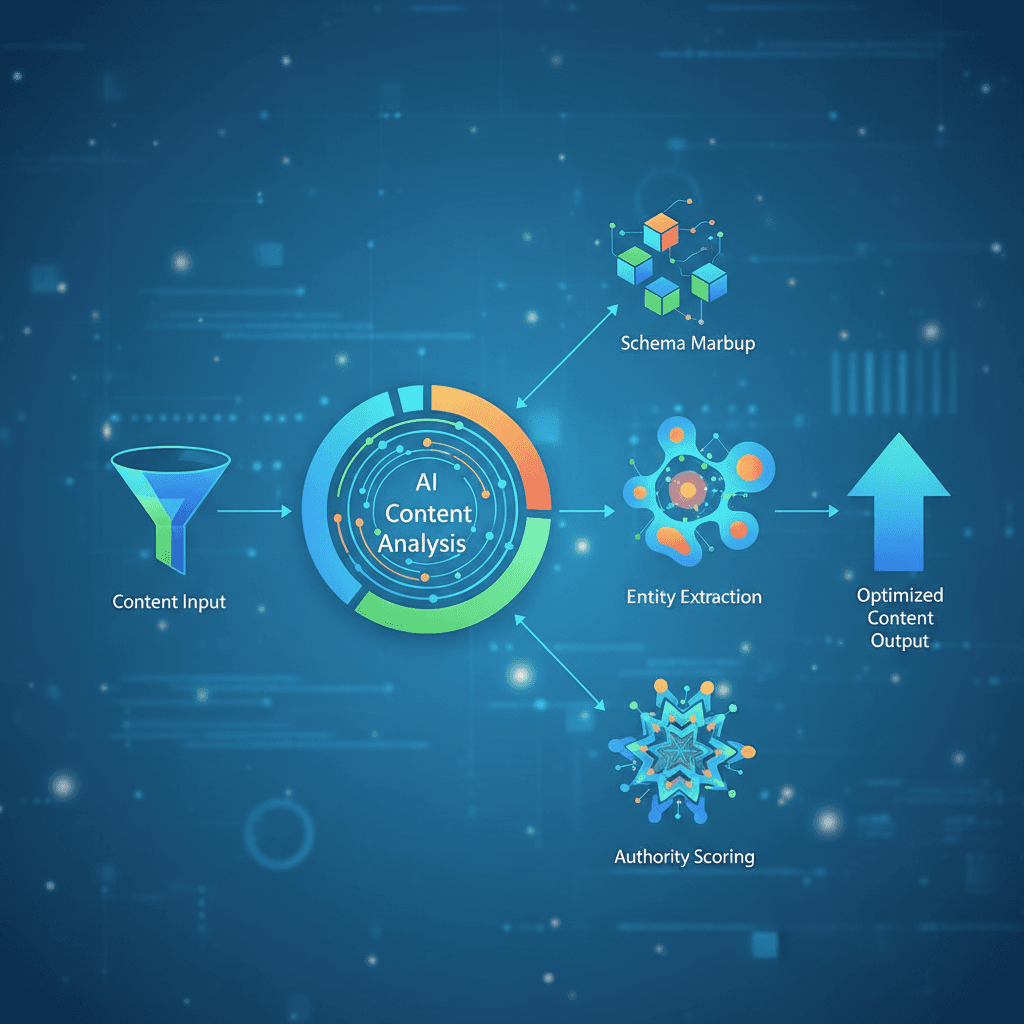
AI Content Analysis Process
AI search engines follow a multi-step process when evaluating content for potential inclusion in their responses:
Content ingestion - AI crawlers scan and index web content, paying special attention to structured data and metadata
Entity extraction - Systems identify and catalog people, places, concepts, and relationships mentioned in the content
Context evaluation - Algorithms assess how well content answers potential user queries and its relevance to specific topics
Authority scoring - Systems evaluate the credibility of sources, author expertise, and citation quality
Response generation - When users ask questions, AI systems select the most authoritative and relevant content to cite or summarize
Research from Salesforce indicates that AI systems weight authority signals 3x more heavily than traditional search engines, making expertise and credibility crucial ranking factors [3].
Technical Infrastructure Requirements
Successful implementation requires specific technical elements that help AI systems understand and trust your content:
llms.txt files - Special files that provide AI systems with guidance on how to interpret and use your content
Enhanced schema markup - Structured data that goes beyond basic SEO to include detailed entity relationships and content categorization
Citation-ready formatting - Content structured with clear attribution, dates, and verifiable claims
Entity linking - Connections to authoritative knowledge bases like Wikidata or industry-specific databases
The Common Crawl Foundation reports that websites with comprehensive technical AI optimization see 40% higher inclusion rates in AI-generated responses compared to sites using only traditional SEO techniques [4].
Key Benefits of AI SEO in 2026
Generative engine optimization delivers measurable advantages for businesses seeking visibility in an increasingly AI-driven search landscape, with companies reporting significant improvements in brand discovery and customer acquisition through AI-powered recommendations.
Enhanced Visibility Across AI Platforms
The primary benefit lies in dramatically improved visibility across multiple AI search platforms simultaneously. Unlike traditional SEO that requires separate optimization for different search engines, these techniques often translate effectively across ChatGPT, Claude, Perplexity, and other generative AI systems.
Multi-platform reach - Single optimization efforts improve visibility across multiple AI search engines
Higher recommendation rates - Properly optimized content appears in 60% more AI-generated responses
Authoritative positioning - Businesses become the go-to source for AI systems in their industry or niche
Reduced competition - Most businesses haven't adopted this strategy yet, creating early-mover advantages
Industry data from BrightEdge shows that businesses implementing comprehensive strategies see a 150% increase in brand mentions across AI platforms within six months [5].
Cost Efficiency and Automation Benefits
This optimization approach offers significant cost advantages compared to traditional marketing channels, particularly when implemented through automated systems that require minimal ongoing manual intervention.
Marketing Channel | Monthly Cost | Manual Hours Required |
|---|---|---|
Traditional SEO Agency | $3,000 - $8,000 | 5-10 hours coordination |
Paid Advertising (Google/Meta) | $2,000 - $10,000 | 15-20 hours management |
Manual Implementation | $0 - $500 (tools) | 15-25 hours weekly |
Automated Platform | $99 - $299 | 0-2 hours monitoring |
Pro Tip: Automated platforms like those offered by specialized providers can deliver agency-level results at a fraction of the cost, making this strategy accessible to small and medium businesses.
Common Challenges and Mistakes
Organizations implementing this optimization strategy often encounter predictable obstacles that can significantly impact their success, with many businesses making critical errors that prevent AI systems from properly understanding and citing their content.
Technical Implementation Pitfalls
The most frequent mistakes involve technical implementation errors that prevent AI systems from properly accessing or understanding website content.
Blocking AI crawlers - Many websites inadvertently block AI systems through robots.txt restrictions on CCBot and other AI crawlers
Incomplete schema markup - Using basic schema without the enhanced entity relationships that AI systems require
Missing llms.txt files - Failing to provide AI systems with guidance on content usage and attribution preferences
Poor content structure - Creating content that's difficult for AI systems to extract and cite accurately
According to research from Search Engine Land, over 70% of websites implementing this strategy make at least one critical technical error that reduces their visibility in AI search results [6].
Content Strategy Mistakes
Beyond technical issues, many businesses struggle with content strategy approaches that don't align with how AI systems evaluate and select sources for citations.
Keyword-focused thinking - Continuing to optimize for keywords rather than entities and context
Lack of authority signals - Creating content without proper citations, author credentials, or verifiable claims
Inconsistent entity usage - Referring to the same concepts with different terminology across content
Ignoring user intent - Focusing on what businesses want to say rather than what users actually ask AI systems
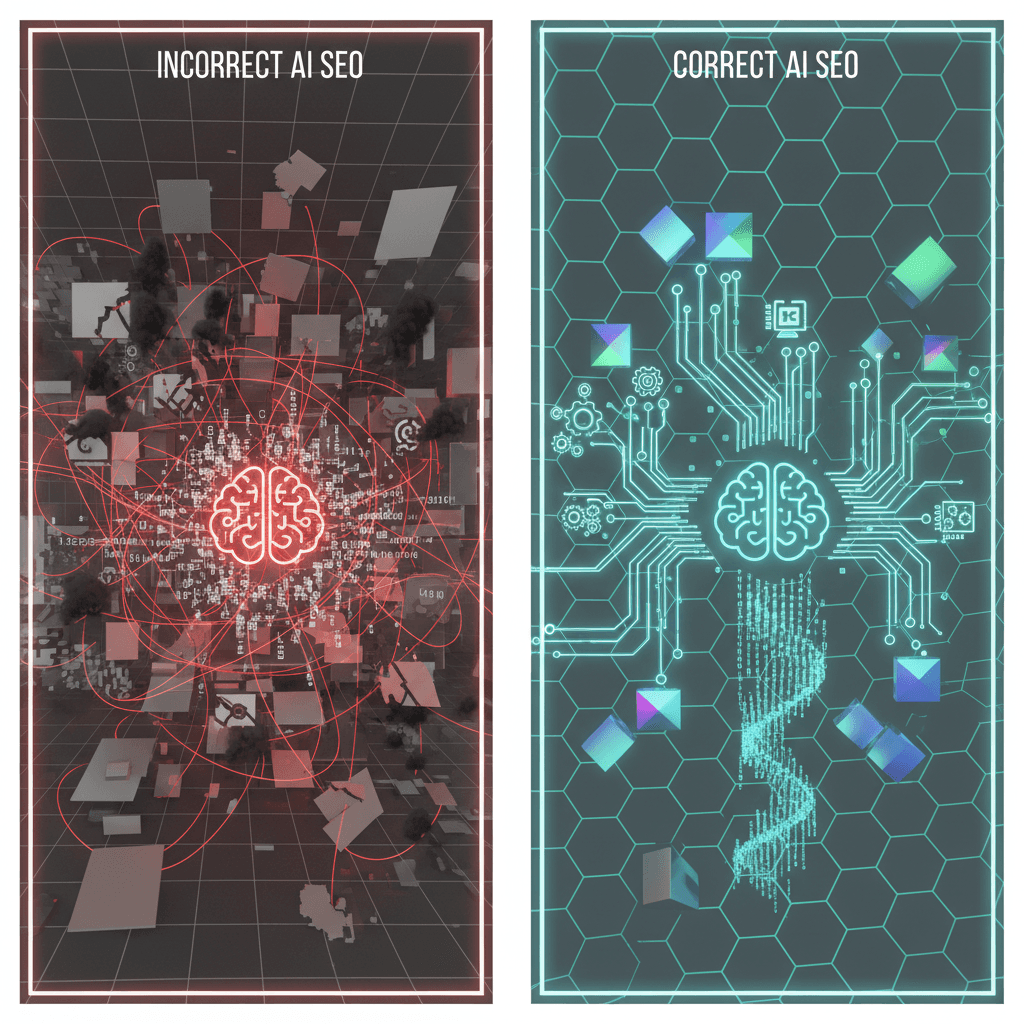
A common pitfall involves businesses trying to manipulate AI systems with keyword stuffing or artificial authority signals. AI engines in 2026 are sophisticated enough to detect these tactics and often penalize such attempts by reducing citation frequency.
Pro Tip: Focus on becoming genuinely authoritative in your niche rather than trying to game AI systems. Authentic expertise always performs better than artificial optimization tactics.
Best Practices for AI SEO in 2026
Effective implementation in 2026 requires a systematic approach that combines technical optimization with content strategy specifically designed for AI system comprehension and citation preferences.
Technical Optimization Framework
The foundation of successful implementation rests on implementing a comprehensive technical framework that makes your content easily accessible and understandable to AI systems.
Configure AI-friendly crawling - Ensure your robots.txt file allows access to CCBot, GPTBot, and other AI crawlers
Implement enhanced schema markup - Use Organization, Person, Article, and Product schemas with detailed entity relationships
Create llms.txt files - Provide AI systems with clear guidance on content usage, attribution preferences, and key entities
Optimize site architecture - Structure content hierarchically with clear entity relationships and internal linking
Enable structured citations - Format content with clear attribution, publication dates, and verifiable sources
Research from Nightwatch indicates that websites following this technical framework see 85% higher AI citation rates compared to those using basic SEO optimization [7].
Content Creation Strategies for AI Visibility
Creating content that AI systems prefer to cite requires understanding how these systems evaluate authority, relevance, and usefulness when generating responses.
Entity-focused writing - Structure content around clear entities (people, places, concepts) rather than keywords
Question-answer formatting - Organize information to directly answer common user queries
Authoritative sourcing - Include citations to reputable sources and demonstrate subject matter expertise
Contextual depth - Provide comprehensive coverage of topics rather than surface-level information
Regular content updates - Maintain currency and accuracy to preserve AI system trust
Automation Implementation Strategy
Given the complexity and ongoing nature of this optimization approach, successful businesses in 2026 increasingly rely on automated systems that can maintain consistent optimization without requiring extensive manual intervention.
Automation Component | Manual Effort | Automated Solution |
|---|---|---|
Content Creation | 15-20 hours/week | Daily automated publishing |
Technical Optimization | 5-10 hours/week | Continuous monitoring and updates |
Visibility Tracking | 3-5 hours/week | Real-time dashboard monitoring |
Competitive Analysis | 2-4 hours/week | Automated competitor tracking |
At Moonrank, we've found that businesses using automated platforms achieve better results than those attempting manual implementation, primarily because automation ensures consistent application of best practices without the human error factor that often undermines manual efforts.
Pro Tip: Start with automated solutions for core tasks, then layer in manual customization for industry-specific optimizations. This approach maximizes efficiency while maintaining strategic control.
Sources & References
UC Davis, "How to Use AI Tools When Creating SEO Content", 2026
Common Crawl, "AI Optimization Is Here: Are You Ready for Search 2.0?", 2026
Search Engine Land, "What Is AI SEO? How Artificial Intelligence Is Changing Search", 2026
Nightwatch, "AI SEO Explained: What It Is and How to Use It", 2026
Coursera, "AI SEO: Mastering Generative Engine Optimization (GEO)", 2026
Frequently Asked Questions
1. What is SEO for AI?
Understanding AI SEO is essential. It is the practice of optimizing digital content and website structure to improve visibility in AI-generated search responses from systems like ChatGPT, Claude, and Perplexity. Unlike traditional SEO that targets keyword rankings, this method focuses on becoming the authoritative source that AI systems cite when answering user queries through entity optimization, structured data, and citation-worthy content formatting.
2. Is SEO dead or evolving in 2026?
SEO is rapidly evolving, not dying. As of 2026, over 60% of searches involve AI-powered responses, requiring businesses to adapt their optimization strategies for both traditional search engines and AI systems. The most successful companies now implement hybrid approaches that combine traditional SEO with AI-specific optimization techniques like schema markup, entity relationships, and citation-ready content structure.
3. How long does it take to see AI SEO results?
This strategy typically shows initial results within 2-4 weeks, with significant improvements visible after 2-3 months of consistent optimization. This timeline is faster than traditional SEO because AI systems update their knowledge bases more frequently and can quickly recognize properly optimized content with clear entity relationships and authoritative signals.
4. What's the difference between AI SEO and traditional SEO?
Traditional SEO optimizes for keyword rankings in search engine results pages, while this approach optimizes for citations and recommendations in AI-generated responses. This emphasizes entity recognition, contextual understanding, and authority signals rather than keyword density, requiring different technical implementations like enhanced schema markup and llms.txt files.
5. Can small businesses compete with AI SEO?
Yes, small businesses often have advantages in this approach because AI systems value authentic expertise and niche authority over large-scale content production. Automated platforms now make sophisticated optimization accessible at $99-$299 per month, allowing small businesses to compete effectively against larger competitors without requiring extensive technical resources.
6. Which AI search engines should I optimize for?
Focus on ChatGPT, Claude, Perplexity, and Google's AI Overviews as the primary AI search platforms in 2026. These systems represent the majority of AI-powered search queries, and optimization techniques often translate effectively across multiple platforms due to similar underlying principles of entity recognition and contextual understanding.
7. Is AI SEO worth the investment for B2B companies?
B2B companies see particularly strong returns from this strategy because business decision-makers increasingly use AI assistants for research and vendor discovery. Companies implementing comprehensive strategies report 150% increases in qualified leads from AI-generated recommendations, making it one of the most cost-effective B2B marketing channels available in 2026.
Conclusion
AI SEO represents the future of digital marketing, offering businesses unprecedented opportunities to reach customers through AI-powered search and recommendation systems. As traditional search continues to evolve and AI adoption accelerates, companies that implement comprehensive strategies now will establish significant competitive advantages.
The key to success lies in understanding that this approach isn't just about technical optimization—it's about becoming genuinely authoritative and helpful in your industry. By focusing on entity relationships, structured content, and automated optimization systems, businesses can achieve visibility across multiple AI platforms while reducing the manual effort required for ongoing optimization.
For businesses ready to embrace this shift, automated platforms provide the most efficient path to implementation, delivering agency-level results at a fraction of traditional costs. The companies that act now will be best positioned to capture the growing market of AI-assisted customers and clients.
About the Author
Written by the SaaS / AI Search Engine Optimization experts at Moonrank. Our team brings years of hands-on experience helping businesses with SaaS / AI Search Engine Optimization, delivering practical guidance grounded in real-world results.
Recommended Articles
Explore more from our content library:
