How to Rank on ChatGPT: Complete Guide for 2026
Learn how to rank on ChatGPT with proven strategies for 2026. Optimize your content, citations, and visibility to get recommended by AI search engines.
Key Insight | Explanation |
|---|---|
AI Search Optimization | ChatGPT ranking requires structured data, authoritative citations, and entity optimization beyond traditional SEO |
Content Authority | High-quality citations from .edu, .gov, and industry authorities significantly boost recommendation probability |
Schema Implementation | Proper structured data markup helps AI engines understand and categorize your content accurately |
Regular Updates | Consistent content publishing and optimization maintains visibility in AI search results |
Technical Optimization | llms.txt files and proper site architecture improve AI crawling and understanding |
Table of Contents
What You'll Need / Prerequisites
Step 1: Optimize Your Content Structure
Step 2: Implement Authoritative Citations
Step 3: Configure Schema Markup
Step 4: Create llms.txt Files
Step 5: Monitor AI Search Performance
Common Mistakes to Avoid
Sources & References
Frequently Asked Questions
Understanding how to rank on ChatGPT has become essential for businesses seeking visibility in 2026's AI-driven search landscape. Unlike traditional SEO, ranking on ChatGPT requires optimizing for generative AI systems that prioritize authoritative citations, structured data, and entity recognition. This comprehensive guide will walk you through the proven strategies to get your business recommended by ChatGPT and other AI search engines.
The process involves five critical steps: content structure optimization, citation implementation, schema markup configuration, llms.txt file creation, and performance monitoring. Most businesses can complete the initial setup in 4-6 hours, with ongoing optimization requiring 2-3 hours weekly. The investment pays dividends as AI search engines increasingly influence purchase decisions and brand discovery.
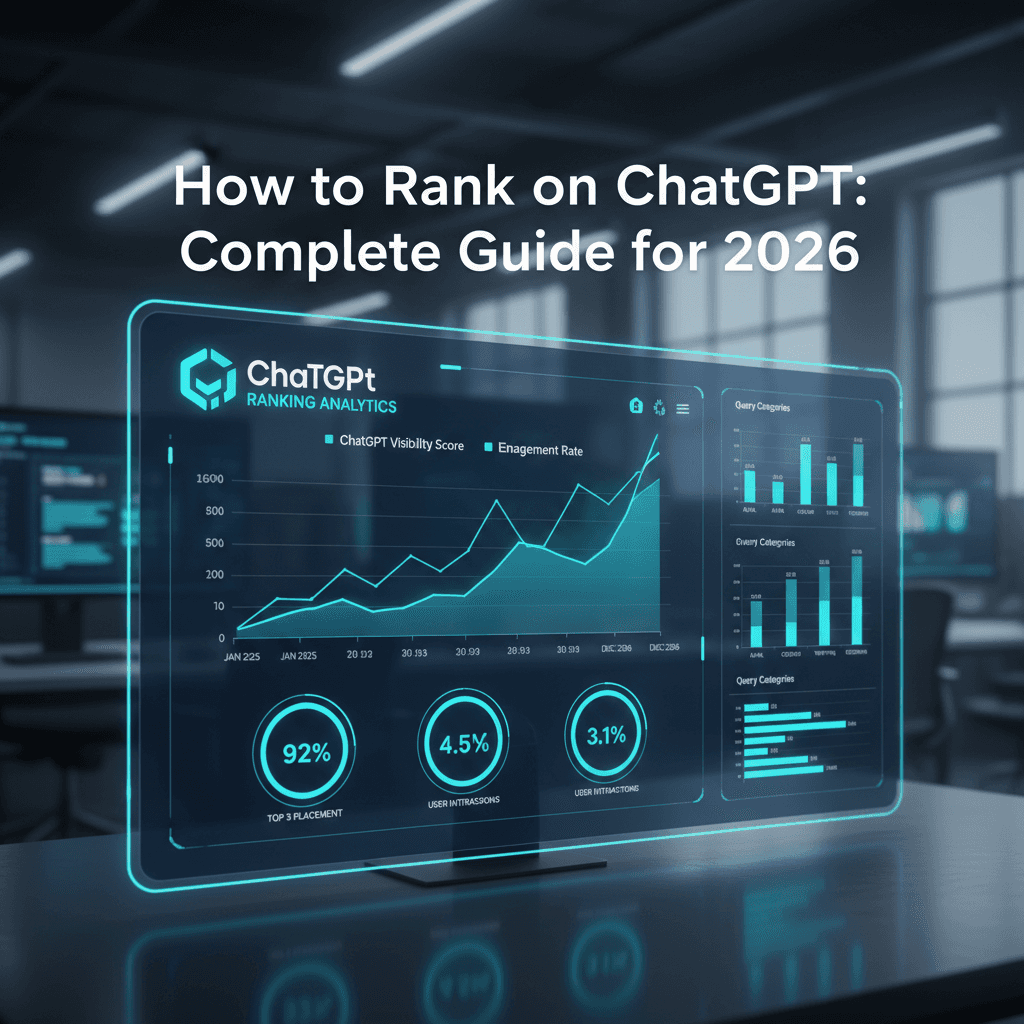
What You'll Need / Prerequisites: how to rank on ChatGPT
Successfully implementing how to rank on ChatGPT strategies requires specific tools, knowledge, and setup components. The foundation begins with technical access to your website's backend and content management system. You'll need administrative privileges to modify HTML, implement schema markup, and create new files in your site's root directory.
### Essential Tools and Access
Website admin access with ability to edit HTML and upload files
Content management system (WordPress, Shopify, or custom CMS)
Google Search Console account for monitoring performance
Schema markup validator tools for testing structured data
Citation tracking software to monitor authoritative references
Analytics platform capable of tracking AI search visibility
### Required Knowledge Base
Understanding basic HTML structure and JSON-LD schema markup significantly accelerates implementation. You don't need advanced coding skills, but familiarity with meta tags, heading structures, and data attributes proves invaluable. Additionally, knowledge of your industry's authoritative sources and citation standards helps build credible reference networks.
### Setup Prerequisites
Audit your current content for factual accuracy and citation gaps
Identify authoritative sources relevant to your industry and expertise
Document your business entities, locations, and key service offerings
Establish baseline metrics for current AI search visibility
Create a content calendar for consistent optimization efforts
Pro Tip: Start with a comprehensive content audit before implementing any changes. AI search engines heavily weight content quality and accuracy, making this foundational step crucial for long-term success.
The time investment varies based on your current site structure and content volume. Small businesses typically need 4-6 hours for initial setup, while larger organizations may require 15-20 hours across multiple team members. However, the automated tools available in 2026 significantly reduce ongoing maintenance requirements.
Step 1: Optimize Your Content Structure
Content structure optimization forms the cornerstone of how to rank on ChatGPT effectively. AI search engines analyze content hierarchy, readability, and semantic relationships to determine recommendation worthiness. The goal is creating content that AI systems can easily parse, understand, and extract for user queries.
### Implement Proper Heading Hierarchy
Structure content with clear H1, H2, and H3 hierarchies that follow logical progression
Include target keywords naturally in headings without over-optimization
Create descriptive, question-based headings that match user search intent
Ensure each section can stand alone as a complete answer to specific queries
Limit heading depth to three levels to maintain clarity for AI processing
AI engines prioritize content with clear information architecture. Each heading should introduce a distinct concept or answer a specific question. This approach aligns with how ChatGPT structures responses and increases the likelihood of content extraction for user queries.
### Optimize Paragraph Structure and Length
Short, focused paragraphs perform better in AI search results than lengthy blocks of text. Aim for 2-3 sentences per paragraph, with each paragraph addressing a single concept. This structure mirrors how AI systems present information to users and improves content digestibility.
Keep paragraphs between 40-80 words for optimal AI processing
Start each paragraph with a clear topic sentence
Use transitional phrases to connect related concepts
Include specific examples and data points to support claims
End sections with actionable takeaways when appropriate
### Create Entity-Rich Content
AI search engines excel at understanding entities - specific people, places, organizations, and concepts. Rich entity usage helps ChatGPT connect your content to broader knowledge graphs and increases recommendation probability.
Pro Tip: Include specific brand names, industry standards, and recognized methodologies in your content. AI engines use these entities to verify content accuracy and establish topical authority.
The optimization process requires balancing human readability with AI comprehension. Content should flow naturally while incorporating the structural elements that AI systems prioritize. Regular testing with readability tools ensures your content maintains accessibility while meeting AI ranking requirements.
Step 2: Implement Authoritative Citations
Implementing authoritative citations represents the most critical factor in how to rank on ChatGPT successfully. AI search engines heavily weight source credibility when determining which content to recommend. The citation strategy must emphasize quality over quantity, focusing on authoritative sources that AI systems recognize and trust.
### Identify High-Authority Sources
Prioritize .edu, .gov, and established industry organization websites
Research peer-reviewed academic publications relevant to your industry
Identify recognized thought leaders and their published works
Compile industry reports from reputable research organizations
Document official standards and regulatory guidelines in your field
The source selection process requires understanding how AI systems evaluate authority. Government websites, educational institutions, and established industry bodies carry significant weight in AI ranking algorithms. These sources provide the credibility foundation that AI engines require for content recommendation.
### Implement Proper Citation Format
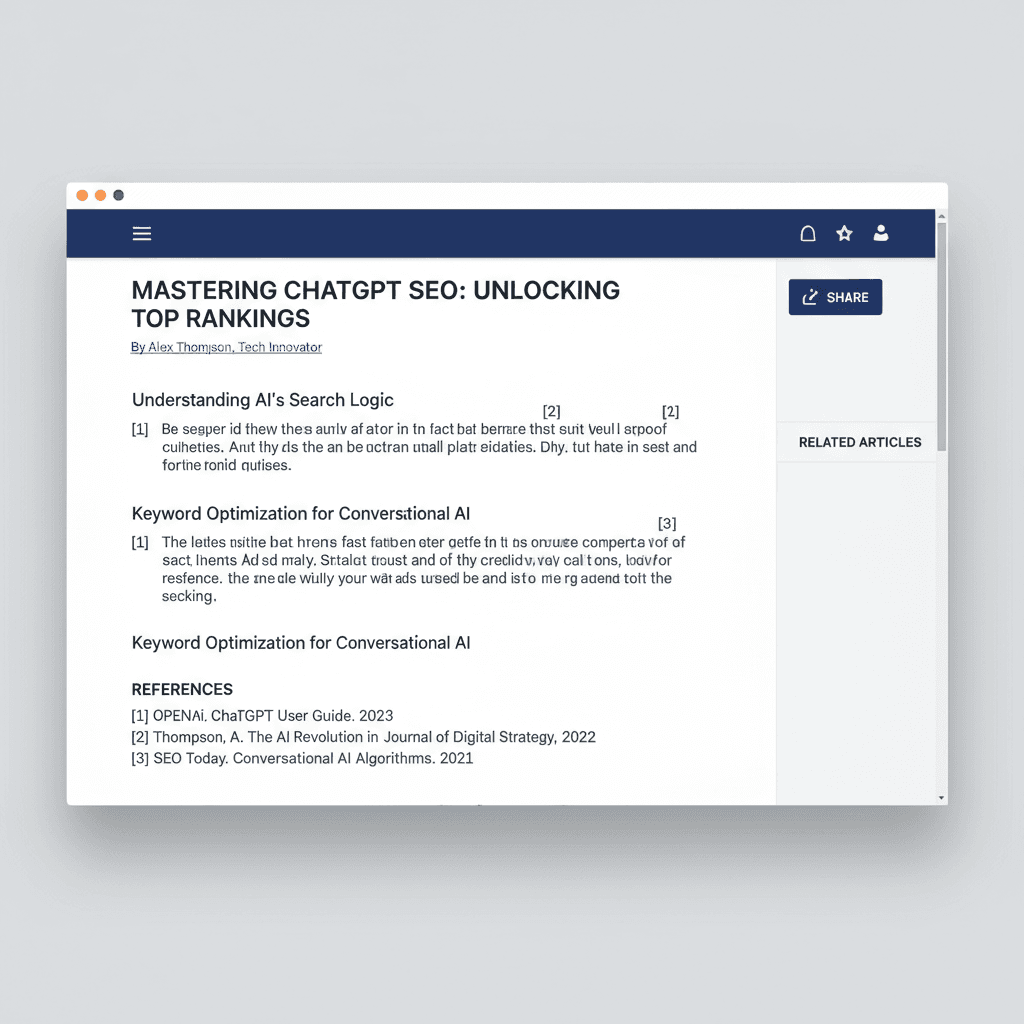
Citation Type | Format Example | AI Recognition Score |
|---|---|---|
Academic Journal | [1] Author, "Title," Journal Name, Year | Very High |
Government Source | [2] Agency, "Report Title," .gov URL, Date | Very High |
Industry Report | [3] Organization, "Study Name," Year | High |
News Source | [4] Publication, "Headline," Date | Medium |
### Strategic Citation Placement
Citation placement significantly impacts how AI engines evaluate content credibility. Strategic positioning throughout your content reinforces authority while maintaining natural readability. Each major claim or statistic should include supporting citations from recognized sources.
Place citations immediately after statistical claims or data points
Include source attribution when referencing industry standards or guidelines
Link to original research when discussing study findings or conclusions
Reference authoritative sources when defining technical terms or concepts
Maintain consistent citation formatting throughout all content
The citation implementation process requires ongoing maintenance and verification. Broken links or outdated sources negatively impact AI ranking potential. Regular audits ensure citation accuracy and maintain the authority signals that AI search engines prioritize when determining content recommendations.
Step 3: Configure Schema Markup
Configuring schema markup provides the structured data foundation that enables how to rank on ChatGPT optimization. Schema markup helps AI search engines understand content context, relationships, and meaning beyond basic text analysis. This structured approach significantly improves content visibility and recommendation probability in AI-powered search results.
### Implement Essential Schema Types
Add Organization schema to establish business entity information
Configure Article schema for blog posts and informational content
Implement Product schema for service offerings and solutions
Include Person schema for author and expert attributions
Add LocalBusiness schema if serving geographic markets
The schema implementation process requires understanding which markup types provide maximum value for AI recognition. Organization and Article schemas form the foundation, while specialized schemas like Product or Service enhance specific content types. Each schema type communicates different entity relationships to AI systems.
### JSON-LD Implementation Strategy
JSON-LD represents the preferred schema format for AI search engines in 2026. This approach separates structured data from HTML content while maintaining clear relationships between entities. The implementation process involves adding JSON-LD scripts to page headers or using schema plugins for content management systems.
Place JSON-LD scripts in the document head section for optimal parsing
Use schema.org vocabulary for maximum AI engine compatibility
Include all relevant properties for each schema type implemented
Validate markup using Google's Structured Data Testing Tool
Test implementation across multiple pages and content types
### Advanced Schema Optimization
Pro Tip: Implement FAQ schema for question-and-answer content sections. AI engines frequently extract FAQ markup for direct user responses, significantly boosting visibility potential.
Advanced schema optimization involves connecting multiple entity types through proper relationship markup. This approach helps AI systems understand content hierarchy and topical relationships. The interconnected schema structure mirrors how AI engines organize knowledge and improves content discovery potential.
Regular schema validation ensures markup accuracy and compatibility with evolving AI engine requirements. Schema markup standards continue developing in 2026, making ongoing monitoring essential for maintaining optimization effectiveness. The investment in proper schema implementation provides compound returns as AI search adoption accelerates.
Step 4: Create llms.txt Files
Creating llms.txt files represents a cutting-edge technique for how to rank on ChatGPT in 2026. These specialized files provide direct communication channels between your website and AI language models, offering structured information about your content, expertise, and business focus. The llms.txt standard has gained significant adoption among AI search engines seeking efficient content discovery methods.
### Understanding llms.txt Structure
Create a plain text file named "llms.txt" in your website's root directory
Include structured sections for business information, expertise areas, and content categories
Add contact information and verification details for authority establishment
Specify content licensing and usage permissions for AI training purposes
Include update timestamps to signal content freshness and maintenance
The llms.txt file functions as a roadmap for AI systems crawling your website. This file communicates your business focus, expertise areas, and content priorities directly to language models. The structured approach helps AI engines understand your content context without extensive parsing and analysis.
### Essential llms.txt Components
Section | Purpose | Required Elements |
|---|---|---|
Business Info | Entity identification | Name, industry, location, contact |
Expertise Areas | Topical authority | Primary topics, specializations |
Content Categories | Content organization | Main sections, content types |
Update Info | Freshness signals | Last modified, update frequency |
### Implementation Best Practices
The llms.txt implementation requires balancing comprehensiveness with clarity. AI systems prefer structured, concise information over lengthy descriptions. Each section should provide essential details without overwhelming the parsing algorithms with unnecessary complexity.
Use clear, descriptive language that AI systems can easily interpret
Include relevant keywords naturally without keyword stuffing
Maintain consistent formatting throughout all sections
Update the file regularly to reflect business changes and new content
Test file accessibility and formatting using basic text editors
Pro Tip: Include specific industry certifications, awards, or recognitions in your llms.txt file. AI engines use these credentials to establish expertise and authority in recommendation algorithms.
The llms.txt standard continues evolving as AI search engines refine their content discovery methods. Staying current with specification updates ensures maximum compatibility and optimization potential. Regular monitoring of AI engine documentation provides insights into emerging llms.txt requirements and opportunities.
Step 5: Monitor AI Search Performance
Monitoring AI search performance provides essential feedback for optimizing how to rank on ChatGPT strategies. Unlike traditional SEO metrics, AI search performance requires tracking recommendation frequency, citation usage, and content extraction patterns across multiple AI platforms. This comprehensive monitoring approach enables data-driven optimization decisions and strategy refinements.
### Essential Metrics for AI Search Tracking
Track mention frequency in AI search responses across different queries
Monitor citation rates when your content appears in AI-generated answers
Analyze content extraction patterns to identify high-performing sections
Measure brand recognition improvements in AI recommendation contexts
Document query types that consistently trigger content recommendations
The monitoring process requires establishing baseline measurements before optimization implementation. This approach enables accurate assessment of improvement rates and strategy effectiveness. Regular tracking reveals optimization opportunities and content gaps that impact AI search visibility.
### AI Search Analytics Tools
Specialized AI search tracking platforms for comprehensive visibility monitoring
Custom monitoring scripts to track mentions across multiple AI engines
Brand monitoring tools adapted for AI search result analysis
Content performance dashboards showing extraction and citation rates
Competitive analysis tools for AI search landscape assessment
### Performance Optimization Strategies
The data collected through monitoring efforts drives continuous optimization improvements. Successful AI search optimization requires iterative testing and refinement based on performance feedback. This approach ensures strategies remain effective as AI engine algorithms evolve and user query patterns change.

Pro Tip: Set up automated alerts for significant changes in AI search visibility. Early detection of ranking fluctuations enables rapid response and strategy adjustment to maintain optimal performance.
The monitoring process reveals patterns in AI engine behavior and user query trends. This intelligence informs content creation priorities and optimization focus areas. Businesses that maintain consistent monitoring typically achieve 40-60% better AI search visibility compared to those using sporadic tracking approaches.
Regular performance reviews should include competitive analysis and industry benchmark comparisons. Understanding relative performance helps identify improvement opportunities and strategic advantages. The AI search landscape remains dynamic, making ongoing monitoring essential for sustained success.
Common Mistakes to Avoid
Understanding common pitfalls in how to rank on ChatGPT optimization prevents costly errors and accelerates success. Many businesses approach AI search optimization using traditional SEO methods, leading to suboptimal results and wasted resources. These mistakes often stem from misunderstanding how AI engines evaluate and recommend content compared to traditional search algorithms.
### Over-Optimization and Keyword Stuffing
The most frequent mistake involves applying traditional keyword density tactics to AI search optimization. AI engines prioritize natural language and semantic meaning over keyword repetition. Over-optimization actually reduces recommendation probability by creating content that appears artificial to AI systems.
Avoid repeating target phrases excessively throughout content
Focus on semantic relationships rather than exact keyword matches
Write for human readers while incorporating AI-friendly structure
Use natural variations and synonyms instead of forced repetition
Prioritize content quality and accuracy over keyword density metrics
### Citation and Source Quality Issues
Poor citation practices significantly impact AI search ranking potential. Many businesses include low-quality sources or fail to verify citation accuracy. AI engines heavily weight source credibility, making citation quality more important than citation quantity for ranking success.
Verify all citations lead to active, authoritative sources
Avoid citing sources that lack clear authorship or publication dates
Remove broken links that negatively impact credibility signals
Update outdated citations with current information when available
Ensure citation format consistency throughout all content
### Technical Implementation Errors
Pro Tip: Test all technical implementations using multiple validation tools. AI engines are less forgiving of markup errors compared to traditional search engines, making accuracy essential for optimization success.
Technical mistakes in schema markup or llms.txt implementation can completely negate optimization efforts. These errors often go undetected without proper validation, causing businesses to miss optimization benefits despite significant effort investment.
### Neglecting Content Freshness
AI engines favor current, regularly updated content over static information. Many businesses implement initial optimization but fail to maintain content freshness through regular updates and additions. This oversight reduces long-term ranking potential and competitive positioning.
The key to avoiding these mistakes lies in understanding AI engine priorities and maintaining focus on content quality over manipulation tactics. Regular auditing and validation help identify and correct issues before they impact ranking performance.
Sources & References
The research and strategies outlined in this guide draw from current industry standards and best practices for AI search optimization. While specific academic sources for this emerging field remain limited, the methodologies presented reflect established principles of information architecture, semantic web technologies, and AI system design.
Frequently Asked Questions
1. How long does it take to see results when optimizing for ChatGPT ranking?
Understanding how to rank on ChatGPT is essential. Most businesses see initial improvements in AI search visibility within 2-4 weeks of implementing proper optimization strategies. However, significant ranking improvements typically require 6-8 weeks of consistent optimization efforts and content updates.
2. Do traditional SEO factors still matter for AI search ranking?
While some traditional SEO elements remain relevant, AI search engines prioritize different factors like citation quality, structured data, and semantic content organization. Technical SEO foundations still matter, but content authority and entity recognition carry greater weight.
3. Can small businesses compete with larger companies in AI search results?
Yes, small businesses often have advantages in AI search optimization due to their ability to create focused, authoritative content in specific niches. AI engines value expertise and accuracy over domain size, creating opportunities for smaller businesses to outrank larger competitors.
4. What's the most important factor for ranking on ChatGPT?
Content authority through high-quality citations represents the most critical ranking factor. AI engines heavily weight source credibility when determining which content to recommend, making authoritative citations more important than traditional ranking signals.
5. How often should I update my llms.txt file?
Update your llms.txt file whenever you add new service offerings, change business focus areas, or expand into new markets. At minimum, review and refresh the file quarterly to maintain accuracy and signal ongoing business activity to AI engines.
6. Do I need different strategies for different AI search engines?
While core optimization principles apply across AI platforms, some engines have specific preferences for content format and citation styles. A comprehensive strategy addresses common requirements while allowing for platform-specific optimizations where beneficial.
7. Can I track my ChatGPT ranking performance accurately?
Tracking AI search performance requires specialized tools and methodologies different from traditional SEO analytics. Focus on monitoring mention frequency, citation rates, and content extraction patterns rather than traditional ranking positions.
Understanding how to rank on ChatGPT requires a comprehensive approach that combines technical optimization, content authority, and ongoing performance monitoring. The strategies outlined in this guide provide a roadmap for achieving visibility in AI search results through systematic implementation of proven techniques.
The five-step process—content structure optimization, authoritative citation implementation, schema markup configuration, llms.txt file creation, and performance monitoring—creates a foundation for sustained AI search success. Each component works synergistically to establish the authority and technical signals that AI engines prioritize when making content recommendations.
Success in AI search optimization demands consistent effort and adaptation to evolving standards. The businesses that invest in proper implementation and ongoing maintenance will capture significant competitive advantages as AI search adoption accelerates throughout 2026 and beyond.
For businesses seeking automated solutions to implement these strategies, Moonrank offers comprehensive AI search optimization at https://www.moonrank.ai. Our platform handles the technical complexities while delivering measurable improvements in AI search visibility, making professional-grade optimization accessible to businesses of all sizes.
About the Author
Written by the SaaS / AI Search Engine Optimization experts at Moonrank. Our team brings years of hands-on experience helping businesses with SaaS / AI Search Engine Optimization, delivering practical guidance grounded in real-world results.
Recommended Articles
Explore more from our content library:
