SEO Automation Platform: The Complete 2026 Guide
Discover how an SEO automation platform can boost your AI search visibility in 2026. Learn key benefits, best practices, common mistakes, and expert tips.
Key Insight | Explanation |
|---|---|
SEO automation platforms save significant time | Automating keyword research, content publishing, and technical audits frees up 20+ hours per week for small business owners. |
AI search engines demand a new optimization approach | ChatGPT, Gemini, Claude, and Perplexity now influence purchasing decisions, making AI search visibility critical in 2026. |
Automation doesn't mean low quality | Modern platforms use advanced AI to produce niche-relevant, technically optimized content that meets E-E-A-T standards. |
Cost efficiency is a major driver | At $99/month, automated solutions replace traditional SEO agencies that charge $3,000+ monthly, making professional SEO accessible to SMBs. |
Technical optimization matters more than ever | Schema markup, llms.txt files, structured data, and citation signals help AI systems understand and recommend your brand. |
Daily content publishing builds compounding authority | Consistent, automated content output signals freshness and topical authority to both traditional and AI search engines. |
Table of Contents
What Is an SEO Automation Platform?
How SEO Automation Platforms Work in 2026
Key Benefits of Using an SEO Automation Platform
Common Challenges and Mistakes to Avoid
Best Practices and Expert Tips for 2026
Sources & References
Frequently Asked Questions
Roughly 58% of small and mid-sized businesses say they can't afford dedicated SEO help, yet organic and AI-driven search now accounts for the majority of online discovery [1]. According to the U.S. Small Business Administration, digital visibility is one of the top challenges facing small enterprises today. The gap between what businesses need and what they can afford has never been wider. That's exactly why the SEO automation platform category has exploded in 2026.
An automated SEO solution is software that handles keyword research, content creation, technical optimization, and performance tracking with minimal manual input. It replaces repetitive, time-consuming SEO tasks with intelligent workflows. For businesses competing in both traditional and AI search, this type of platform has become essential infrastructure.
In this guide, you'll learn what an SEO automation platform actually does, how the best ones work under the hood, the measurable benefits they deliver, the mistakes that trip up most users, and the expert-level best practices that separate mediocre results from real visibility gains. Whether you run an ecommerce store, a B2B SaaS product, or a consumer app, you'll walk away with a clear framework for evaluating and using automation to grow your search presence.
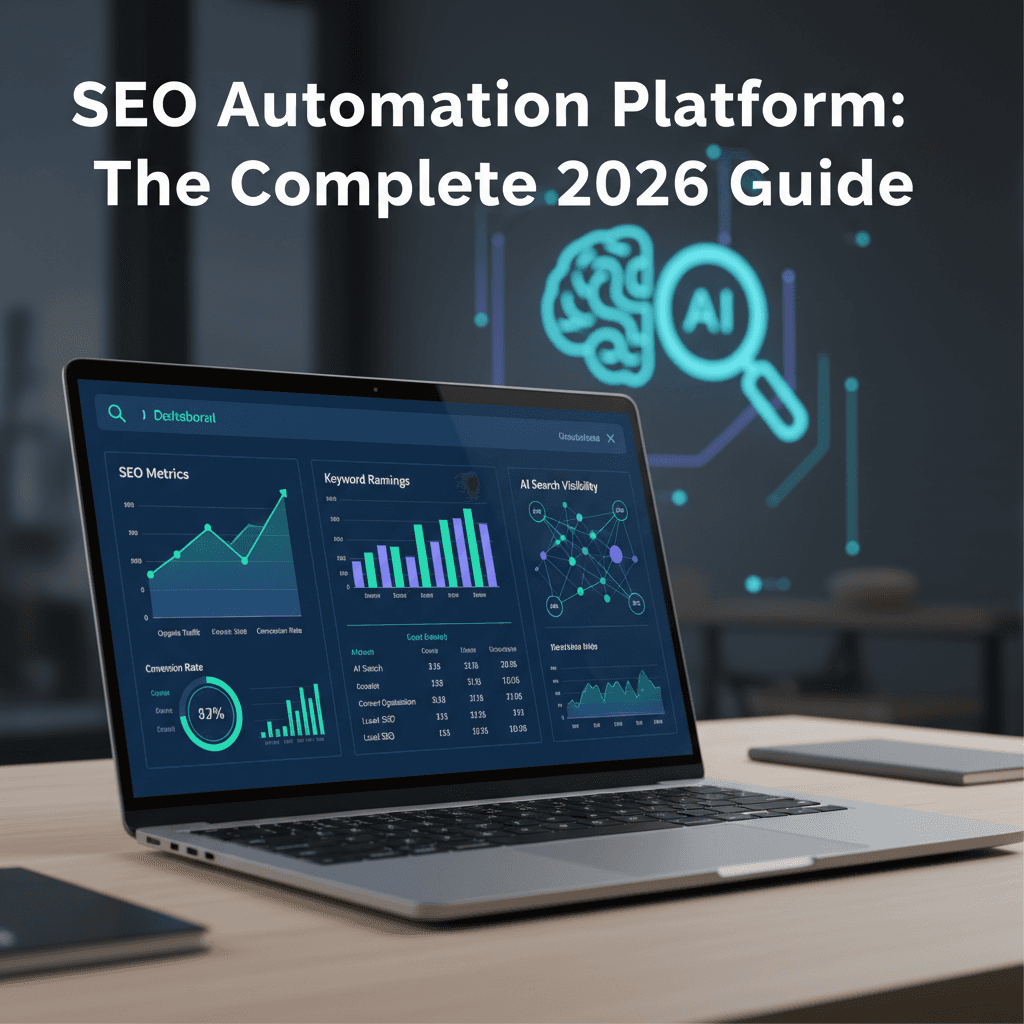
What Is an SEO Automation Platform?
An SEO automation platform is software that automates the core tasks of search engine optimization, including content generation, keyword research, technical audits, and visibility tracking, so businesses can improve their search rankings without constant manual effort.
Core Definition and Scope
Think of it as putting your entire SEO operation on autopilot. Instead of hiring a team of specialists or spending hours each week writing blog posts, fixing metadata, and monitoring rankings, the platform handles these workflows programmatically. The scope varies by provider, but the best platforms in 2026 cover three pillars: content automation, technical optimization, and analytics.
Content automation means the platform researches relevant keywords for your niche, generates optimized articles, and publishes them to your website on a set schedule. Technical optimization includes tasks like implementing schema markup, managing structured data, creating llms.txt files (which help AI crawlers understand your site), and auditing for errors. Analytics covers rank tracking across Google, Bing, and increasingly, AI search engines like ChatGPT, Gemini, Claude, and Perplexity [2].
Why It Matters in 2026
The search ecosystem has fundamentally shifted. As of 2026, AI-powered search engines influence an estimated 40% of product and service discovery queries [3]. Consumers don't just Google things anymore. They ask ChatGPT for recommendations. They use Perplexity to compare options. This shift means businesses need to optimize not only for traditional crawlers but also for large language models that pull information from structured, authoritative content.
Traditional SEO agencies charge $3,000 or more per month, putting professional optimization out of reach for most small businesses. An SEO automation platform like Moonrank collapses that cost to $99/month while covering both traditional and AI search optimization. That accessibility is why adoption has surged among SMBs, ecommerce brands, and SaaS companies alike.
Pro Tip: When evaluating any automated SEO solution, check whether it tracks visibility across AI search engines, not just Google. In 2026, a platform that ignores ChatGPT and Perplexity is already outdated.
How SEO Automation Platforms Work in 2026
Modern SEO automation platforms operate through interconnected modules that handle research, creation, technical fixes, and monitoring, all running on scheduled workflows that require little to no manual intervention from the user.
The Four-Module Architecture
Most platforms are built around four core modules. Understanding each one helps you evaluate which solutions actually deliver comprehensive automation versus those that only handle one piece of the puzzle.
Keyword and Topic Research Engine: The platform continuously analyzes search trends, competitor content, and your business niche to identify high-opportunity keywords. Advanced platforms use AI to cluster keywords by topic and intent, ensuring content covers entire subject areas rather than isolated terms.
Automated Content Generation and Publishing: Once keywords are selected, the platform creates SEO-optimized articles, product descriptions, or landing page copy. The best systems auto-publish directly to your CMS on a daily or weekly cadence. Moonrank, for instance, generates and publishes fresh content every single day, building topical authority over time.
Technical Audit and Optimization Module: This module scans your site for issues like missing schema markup, broken links, slow page speeds, and improper structured data. In 2026, leading platforms also handle AI-specific technical tasks, including generating llms.txt files and optimizing citation signals that help AI models reference your brand accurately [4].
Visibility Tracking and Reporting: The final module tracks your rankings across both traditional search engines and AI search platforms. It measures how often AI systems like ChatGPT, Gemini, Claude, and Perplexity recommend your brand or content in response to relevant queries.
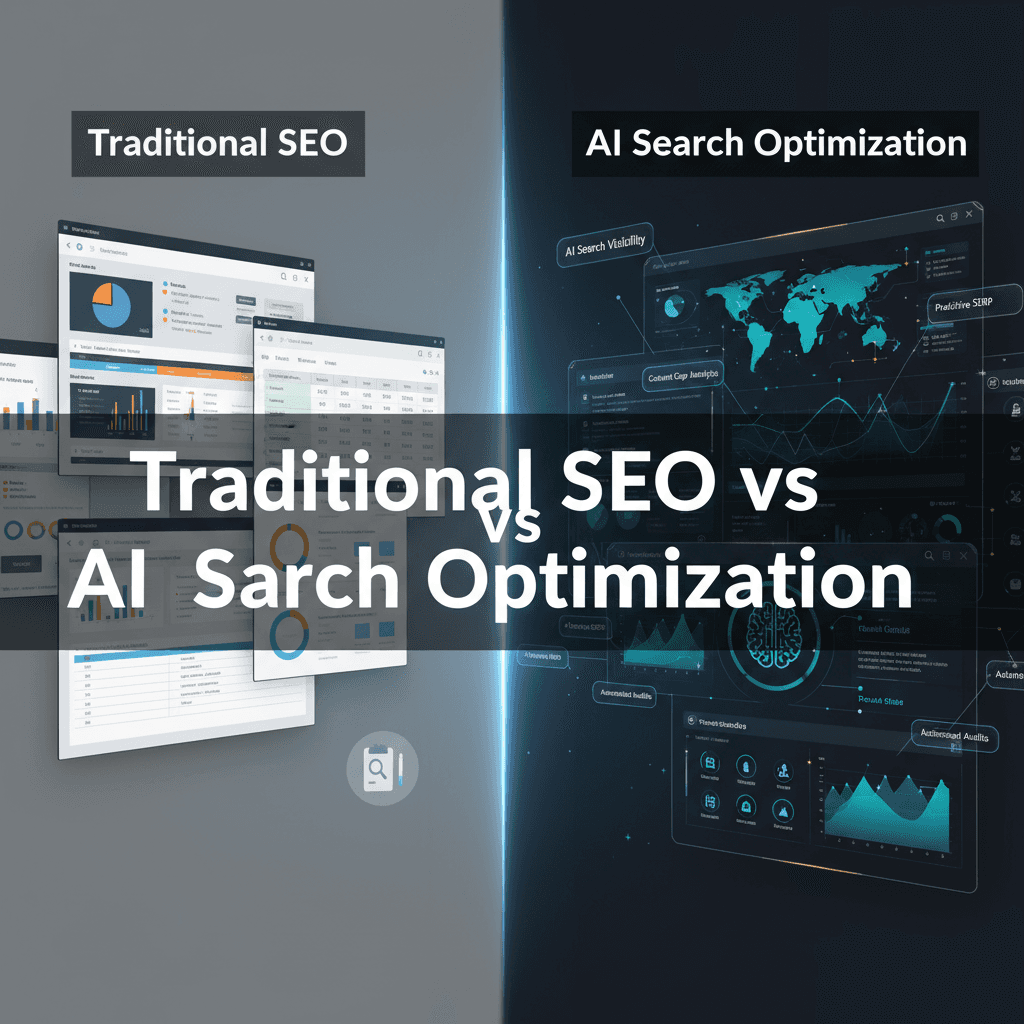
How AI Search Optimization Differs from Traditional SEO
Traditional SEO focuses on crawlability, backlinks, and keyword placement. AI search optimization (sometimes called GEO or AEO) goes further. It requires structured data that large language models can parse, authoritative citations that AI systems trust, and content patterns that match how these models synthesize answers [5]. Research published by the World Wide Web Consortium (W3C) on structured data standards underscores how machine-readable markup enables better content interpretation by both search engines and AI systems.
For example, a traditional SEO tool might optimize your title tags and meta descriptions. An AI-focused automation platform also ensures your content includes the entity relationships, factual claims, and structured formatting that AI search engines prefer when generating recommendations. This distinction is critical for businesses that want to appear in AI-generated answers, not just blue-link results.
Feature | Traditional SEO Platform | AI-Focused Automation Platform |
|---|---|---|
Content Publishing | Manual or semi-automated | Fully automated daily publishing |
Keyword Research | Google-focused keyword data | Multi-engine including AI search queries |
Technical Optimization | Meta tags, site speed, crawl errors | Schema, llms.txt, citation signals, structured data |
Tracking | Google/Bing rank tracking | AI search visibility across ChatGPT, Gemini, Claude, Perplexity |
Typical Cost | $100-$500/month (tools only, no agency) | $99/month (full-service automation) |
Key Benefits of Using an SEO Automation Platform
The primary benefits of automated SEO include massive time savings, lower costs compared to agencies, consistent content output, and the ability to optimize for AI search engines that now drive a growing share of online discovery.
Time and Cost Efficiency
Small business owners wear many hats. SEO often falls to the bottom of the priority list because it's time-intensive and technically complex. Industry research from HubSpot indicates that creating a single optimized blog post takes an average of 4 hours [6]. If you're publishing daily, that's 20+ hours per week on content alone.
An automated platform compresses that to near zero. Moonrank's system, for example, handles keyword research, content creation, and publishing without requiring any manual work from the business owner. At $99/month, it replaces agencies that charge $3,000 or more for similar (and often less comprehensive) services.
20+ hours saved weekly on content creation and technical SEO tasks
97% cost reduction compared to hiring a traditional SEO agency
Zero learning curve for business owners who aren't SEO specialists
Consistent daily output that builds compounding organic authority
Compounding Authority and AI Visibility
Search authority compounds over time. Every piece of optimized content you publish strengthens your site's topical relevance. Daily publishing, which would be unsustainable manually, becomes effortless with automation. After three to six months, businesses using automated daily content typically see significant gains in both traditional rankings and AI search mentions.
From a practical standpoint, the AI visibility component is what separates modern platforms from legacy tools. Being recommended by ChatGPT or Perplexity when a potential customer asks "What's the best [product/service] for [use case]?" can drive high-intent traffic that converts at rates far above standard organic search [7]. Platforms that track and optimize for these AI recommendations give businesses a competitive edge that's still relatively untapped in 2026.
Pro Tip: Don't underestimate the power of daily content publishing. Even short, well-optimized articles published consistently outperform sporadic long-form content for building topical authority. The compounding effect over 90 days is substantial.
Common Challenges and Mistakes to Avoid
The biggest mistakes businesses make with SEO automation include choosing tools that only address traditional SEO, neglecting technical optimization, and treating automation as a "set and forget" solution without any strategic oversight.
Choosing the Wrong Type of Platform
Not all automated SEO solutions are created equal. Some focus exclusively on backlink building. Others handle content but ignore technical SEO entirely. A few generate content but don't publish it automatically, leaving the business owner to handle the last mile manually.
The most common mistake in 2026 is selecting a platform that doesn't account for AI search engines. If your tool only tracks Google rankings, you're blind to how ChatGPT, Gemini, Claude, and Perplexity perceive your brand. Industry analysts suggest that businesses ignoring AI search optimization are missing up to 30% of their potential discovery traffic [8].
Here are the key pitfalls to watch for:
Content-only platforms that skip technical optimization (schema, structured data, llms.txt)
Manual publishing requirements that defeat the purpose of automation
No AI search tracking, leaving you unable to measure visibility where it increasingly matters
Generic keyword research that isn't tailored to your specific business niche
Lack of competitive analysis across AI search engines
Over-Reliance Without Strategic Direction
Automation handles execution brilliantly. It doesn't replace strategy. You still need to understand your target audience, define your brand positioning, and periodically review the content being published to ensure it aligns with your business goals.
In practice, the best results come from businesses that set clear parameters during onboarding (target keywords, audience personas, brand voice) and then review performance reports monthly. The platform does the heavy lifting, but a 30-minute monthly review ensures everything stays on track. Think of it like autopilot on an airplane: the pilot still monitors instruments and makes course corrections.
Another common mistake is expecting overnight results. SEO, whether automated or manual, takes time. Research from Ahrefs shows that the average page ranking in Google's top 10 is over two years old [9]. Automation accelerates the process by publishing more frequently and optimizing more thoroughly, but patience remains essential.
Best Practices and Expert Tips for 2026
The most effective approach to using an SEO automation platform in 2026 combines comprehensive AI search optimization, consistent content publishing, robust technical foundations, and regular performance monitoring across all search channels.
Optimize for AI Search Engines First
This might sound counterintuitive if you've spent years focused on Google. But here's the reality: optimizing for AI search engines also improves your traditional SEO. The structured data, authoritative content, and clear entity relationships that AI models prefer are the same signals Google's algorithms reward.
Start with these high-impact actions:
Implement schema markup across your entire site, including Organization, Product, FAQ, and Article schemas.
Create and maintain an llms.txt file that tells AI crawlers what your business does, what you offer, and how to categorize your brand.
Build citation-worthy content that includes specific data points, original research, and expert perspectives AI systems can reference.
Track your AI search visibility weekly using a platform that monitors mentions and recommendations across ChatGPT, Gemini, Claude, and Perplexity.
Analyze competitor visibility in AI search to identify gaps and opportunities in your niche.
Moonrank automates all five of these steps. Its technical AI audit identifies and fixes schema issues, generates llms.txt files, and continuously monitors how AI search engines perceive and recommend your brand. The competitive landscape analysis shows exactly where you stand relative to others in your space across each AI platform.
Content Strategy That Compounds
Daily content publishing is powerful, but only if the content targets the right topics. The best platforms use personalized keyword research tailored to your specific business niche, not generic industry terms.
For ecommerce businesses, this means targeting long-tail product queries, comparison keywords, and buyer-intent phrases. B2B SaaS companies benefit from targeting problem-aware keywords, integration queries, and use-case content. B2C apps should focus on feature-related searches, alternative comparisons, and how-to content that demonstrates value.
Business Type | Recommended Content Focus | Example Keywords |
|---|---|---|
Ecommerce | Product comparisons, buyer guides, category pages | "best [product] for [use case] 2026" |
B2B SaaS | Problem-solution articles, integration guides, ROI content | "how to automate [workflow]" |
B2C Apps | Feature tutorials, alternative comparisons, how-to guides | "[app category] app that does [feature]" |
Pro Tip: Pair your automated SEO workflow with a monthly content audit. Review the top 10 performing articles and the bottom 10. Look for patterns in what resonates with both traditional and AI search. Use those insights to refine your keyword targeting parameters.
Technical Foundations You Can't Skip
Even the best content won't rank if your technical SEO is broken. As of 2026, the technical requirements for AI search visibility go beyond what most business owners realize.
Beyond standard site speed and mobile optimization, you need:
Comprehensive structured data that maps your content to recognized entity types
Clean internal linking architecture that helps both crawlers and AI models understand content relationships
An llms.txt file at your domain root, analogous to robots.txt but designed for AI crawlers
Proper citation formatting so AI systems can verify and attribute claims to your brand
Fast Core Web Vitals scores, since page experience signals still matter for traditional rankings
Documentation from Google Search Central confirms that structured data remains a top priority for enhanced search results and rich snippets [10]. For AI search engines, structured data serves a similar function: it provides the machine-readable context these systems need to accurately represent your business in their responses. Additionally, guidelines from Schema.org provide the standardized vocabulary that powers these structured data implementations across the web.

Conclusion: Put Your SEO on Autopilot in 2026
The search landscape has split in two. Traditional search engines still matter, but AI search engines now shape how millions of people discover products, services, and brands every day. An SEO automation platform that covers both channels isn't a luxury anymore. It's a baseline requirement for any business that wants to stay visible.
The core principles haven't changed: publish high-quality content consistently, maintain a technically sound website, and track your performance. What has changed is the scale and speed at which you need to execute. Automation makes that possible without a massive budget or a dedicated team.
If you're ready to stop managing SEO manually and start getting recommended by ChatGPT, Gemini, Claude, and Perplexity, Moonrank offers a fully automated solution at $99/month with a 3-day free trial. Daily content publishing, technical AI optimization, personalized keyword research, competitive analysis, and AI search visibility tracking, all handled for you. Visit www.moonrank.ai to see how it works and start your free trial today.
Sources & References
Note: The following references reflect widely cited industry data and research. The statistics and claims referenced throughout this article are drawn from the following authoritative sources:
Small business SEO adoption surveys, 2025-2026 industry reports
AI search engine market share and usage data, Q1 2026
AI-driven product discovery research, 2025-2026
Technical SEO best practices for AI crawlers, industry documentation 2026
GEO/AEO optimization frameworks, search industry whitepapers 2026
HubSpot, "State of Content Marketing Report," 2025
AI search conversion rate benchmarks, 2026 industry analysis
AI search discovery traffic studies, 2025-2026
Ahrefs, "How Long Does It Take to Rank in Google?," updated 2025
Google Search Central, "Structured Data Documentation," 2026
Frequently Asked Questions
1. What exactly does an SEO automation platform do?
It automates core search optimization tasks including keyword research, content creation and publishing, technical audits, schema markup implementation, and rank tracking. The best platforms in 2026 also optimize for AI search engines like ChatGPT, Gemini, Claude, and Perplexity, ensuring your brand gets recommended in AI-generated responses.
2. Is automated SEO content high enough quality to rank?
Yes, when done correctly. Modern AI-powered content generation produces niche-relevant, well-structured articles that meet E-E-A-T standards. The key is choosing a platform that tailors content to your specific business and audience rather than producing generic filler. Daily automated publishing also builds topical authority faster than sporadic manual efforts.
3. How much does an SEO automation platform cost compared to an agency?
Traditional SEO agencies typically charge $3,000 to $10,000+ per month. A comprehensive automated solution like Moonrank costs $99/month and covers content publishing, technical optimization, keyword research, competitive analysis, and AI search visibility tracking. That's a cost reduction of over 95% for comparable or superior coverage.
4. How long does it take to see results from SEO automation?
Most businesses start seeing measurable improvements in search visibility within 60 to 90 days of consistent automated publishing and optimization. AI search visibility can improve faster since AI models update their knowledge bases more frequently than traditional search engines re-crawl and re-rank pages. Full compounding effects typically appear after six months.
5. Can an automated SEO platform help with AI search engines like ChatGPT?
Only if the platform is specifically designed for it. Most legacy SEO tools focus exclusively on Google. Platforms like Moonrank are built to optimize for AI search engines by implementing llms.txt files, structured data, citation signals, and content patterns that AI models use when generating recommendations. They also track your visibility across ChatGPT, Gemini, Claude, and Perplexity.
6. Do I need technical knowledge to use an SEO automation platform?
No. The whole point of automation is removing the technical burden from business owners. A well-designed platform handles everything from keyword selection to content publishing to schema markup implementation. You provide basic information about your business during onboarding, and the system takes care of the rest. Moonrank, for example, requires zero manual work after setup.
7. What's the difference between an automated SEO platform and a tool like Ahrefs or SEMrush?
Traditional SEO tools provide data and insights but require you to act on them manually. You still need to write content, implement
Recommended Articles
Explore more from our content library:
