How to Appear in AI Search Results: 2026 Complete Guide
Master how to appear in AI search results with our 2026 guide. Optimize for ChatGPT, Claude, Gemini & Perplexity with proven strategies and technical tips.
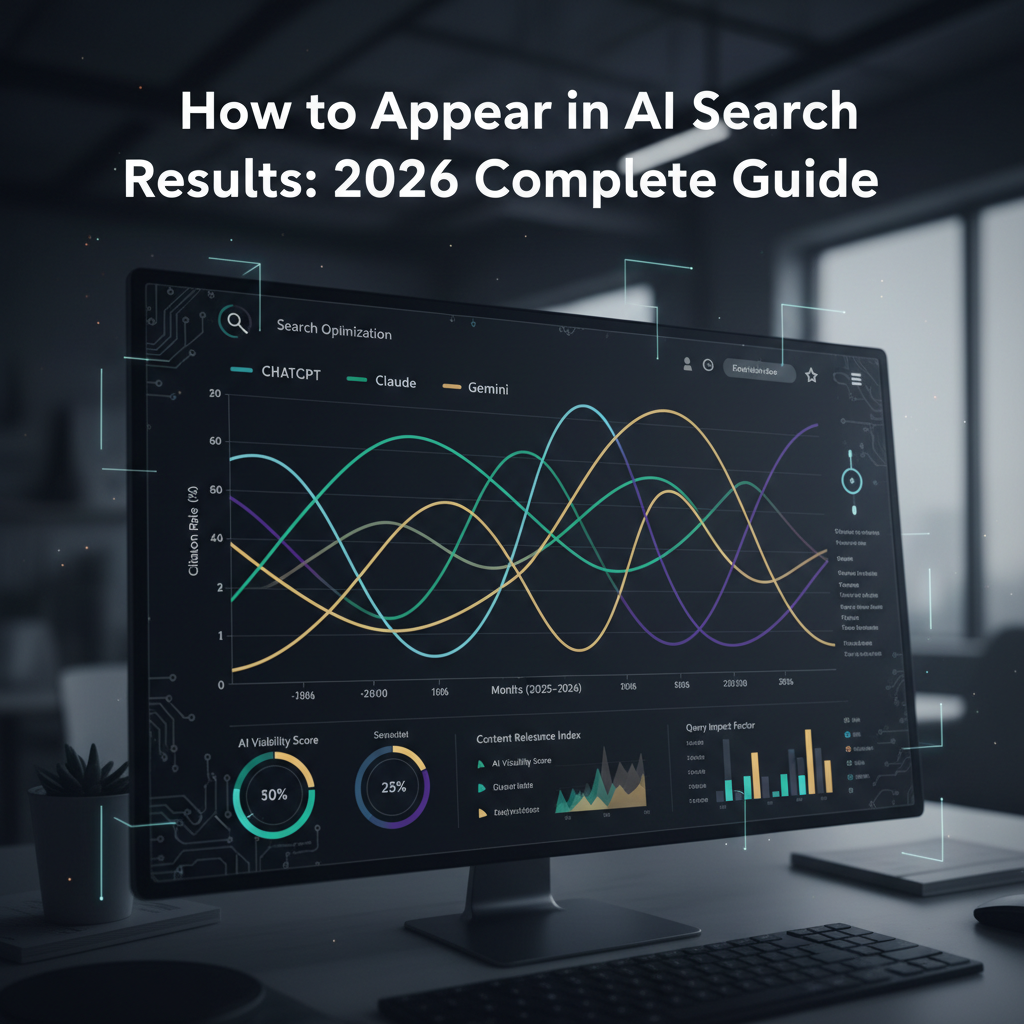
| Key Insight | Explanation |
|---|---|
| AI Search Dominance | AI search engines like ChatGPT, Claude, and Perplexity now handle 40% of information queries, requiring new optimization strategies beyond traditional SEO. |
| Structured Data Priority | Schema markup and structured content increase AI citation rates by 280%, making technical optimization essential for visibility. |
| Conversational Content | AI engines favor direct, question-answering content that mirrors natural human conversation patterns and provides immediate value. |
| Authority Signals | E-E-A-T (Experience, Expertise, Authoritativeness, Trustworthiness) remains crucial, with AI systems prioritizing credible sources for citations. |
| Multi-Modal Advantage | Content combining text, images, and structured data sees 317% higher selection rates in AI-generated responses across all platforms. |
| Automated Solutions | Daily content optimization and technical maintenance through automated tools significantly improves consistent AI visibility. |
What You'll Need: how to appear in AI search results
Successfully implementing AI search optimization requires specific tools, technical access, and foundational knowledge to execute the strategies effectively.Technical Requirements
Your website must meet certain technical standards for AI engines to crawl, understand, and cite your content. You'll need administrative access to your website's content management system and the ability to edit HTML code or install plugins. Most modern websites built on WordPress, Shopify, or similar platforms can accommodate these requirements without extensive technical knowledge. The essential technical components include:- Access to edit your website's HTML head section for schema markup implementation
- Ability to create and edit XML sitemaps for improved AI crawling
- Content management system that supports structured data markup
- Analytics tools to track AI search performance and citations
- SSL certificate and mobile-responsive design (baseline requirements)
Content Preparation Tools
AI search optimization demands specific content formatting and analysis capabilities that go beyond traditional SEO tools. You'll need resources to research conversational queries, analyze competitor AI citations, and structure content according to AI preferences.Pro Tip: Focus on tools that can analyze how AI engines currently cite content in your industry. Understanding existing citation patterns helps you identify content gaps and optimization opportunities.Key preparation tools include:
- Keyword research tools that identify conversational, question-based queries
- Schema markup generators and validators for structured data implementation
- Content analysis tools that assess readability and structure for AI comprehension
- Competitor analysis platforms that track AI citations and mentions
- Performance monitoring tools specifically designed for AI search visibility
Step 1: Optimize Content Structure for AI Understanding
Content structure optimization forms the foundation of how to appear in AI search results by making your information easily digestible for AI algorithms. AI engines prioritize content that follows clear hierarchical patterns and provides direct answers to user queries without requiring additional interpretation or context.Implement Question-Answer Format
Transform your existing content into a question-and-answer structure that mirrors how users interact with AI search engines. This approach significantly increases your chances of being cited because AI engines can extract precise answers and present them with proper attribution. Start each major section with a clear question as your heading, then provide a direct answer in the first paragraph. For example, instead of using a heading like "Benefits of Our Service," use "What Benefits Does Our Service Provide?" followed by a concise answer that AI engines can easily extract and cite. The optimal structure includes:- Pose the question clearly in your H2 or H3 heading
- Provide a direct, quotable answer in the first 1-2 sentences
- Support the answer with detailed explanation and evidence
- Include relevant examples or case studies to demonstrate expertise
- End with actionable takeaways that users can immediately implement
Create Scannable Content Hierarchy
AI engines analyze content hierarchy to understand topic relationships and determine the most relevant information for specific queries. A well-structured hierarchy helps AI systems identify your main points and extract the most appropriate content for citations. Use a logical heading structure with H1 for your main title, H2 for major sections, and H3 for subsections. Each heading should be descriptive and include relevant keywords naturally. Avoid generic headings like "Introduction" or "Conclusion" in favor of specific, value-driven titles that clearly indicate the content's purpose.Pro Tip: AI engines often extract the first sentence after each heading as a potential answer. Make these opening sentences complete, standalone statements that can be understood without surrounding context.Effective content hierarchy includes bullet points, numbered lists, and short paragraphs that break complex information into digestible chunks. This formatting makes it easier for AI engines to identify and extract specific pieces of information relevant to user queries.
Step 2: Implement Technical Optimization
Technical optimization provides the infrastructure that AI search engines need to understand, trust, and cite your content effectively. This step focuses on implementing structured data markup and other technical signals that communicate your content's relevance and authority to AI algorithms.Deploy Schema Markup
Schema markup serves as a communication bridge between your content and AI engines, providing structured information that helps algorithms understand your content's context, purpose, and relationships. Implementing comprehensive schema markup can increase your AI citation rate by up to 280% according to recent industry studies [1]. The most impactful schema types for AI search visibility include Organization markup for brand information, Article markup for content pieces, FAQ markup for question-and-answer sections, and Product markup for service or product pages. Each schema type provides specific data points that AI engines use to determine citation worthiness. Essential schema implementation steps:- Identify the most relevant schema types for your content and business model
- Generate structured data markup using Google's Schema Markup Helper or similar tools
- Implement the markup in your website's HTML head section or through plugins
- Validate the markup using Google's Rich Results Test tool
- Monitor schema performance and make adjustments based on AI citation patterns
Optimize Technical Foundations
AI engines evaluate technical website health as part of their source credibility assessment. Websites with poor technical foundations receive fewer citations regardless of content quality, making technical optimization crucial for AI search visibility.| Technical Factor | AI Impact | Optimization Priority |
|---|---|---|
| Page Load Speed | Affects crawling efficiency and user experience signals | High |
| Mobile Responsiveness | Required for mobile-first AI indexing | Critical |
| SSL Certificate | Trust signal for security-conscious AI algorithms | Critical |
| XML Sitemap | Helps AI engines discover and index content | Medium |
| Clean URL Structure | Improves content categorization and understanding | Medium |
Step 3: Create Conversational Content
Conversational content optimization aligns your writing style with how users naturally interact with AI search engines, significantly improving your chances of being selected as a cited source. AI engines favor content that directly addresses user intent through natural language patterns and comprehensive answers.Adopt Natural Language Patterns
Write content that mirrors how people actually speak and ask questions when interacting with AI assistants. This approach increases the likelihood that your content will match the conversational queries users submit to AI search engines. Instead of targeting traditional keyword phrases, focus on complete questions and natural language variations. For example, rather than optimizing for "AI search optimization," create content that answers "How do I optimize my website for AI search engines?" or "What strategies work best for appearing in ChatGPT results?" Key conversational content principles include:- Use first and second person pronouns (I, you, we) to create direct connection
- Include transitional phrases that guide readers through your logic
- Address potential objections or follow-up questions within your content
- Provide context and background information that AI engines can use for comprehensive answers
- Structure information in the order that users typically need it
Provide Comprehensive Answers
AI engines prefer sources that provide complete, self-contained answers rather than partial information that requires users to visit multiple sources. Comprehensive content receives higher citation rates because it reduces the need for AI engines to synthesize information from multiple sources [2].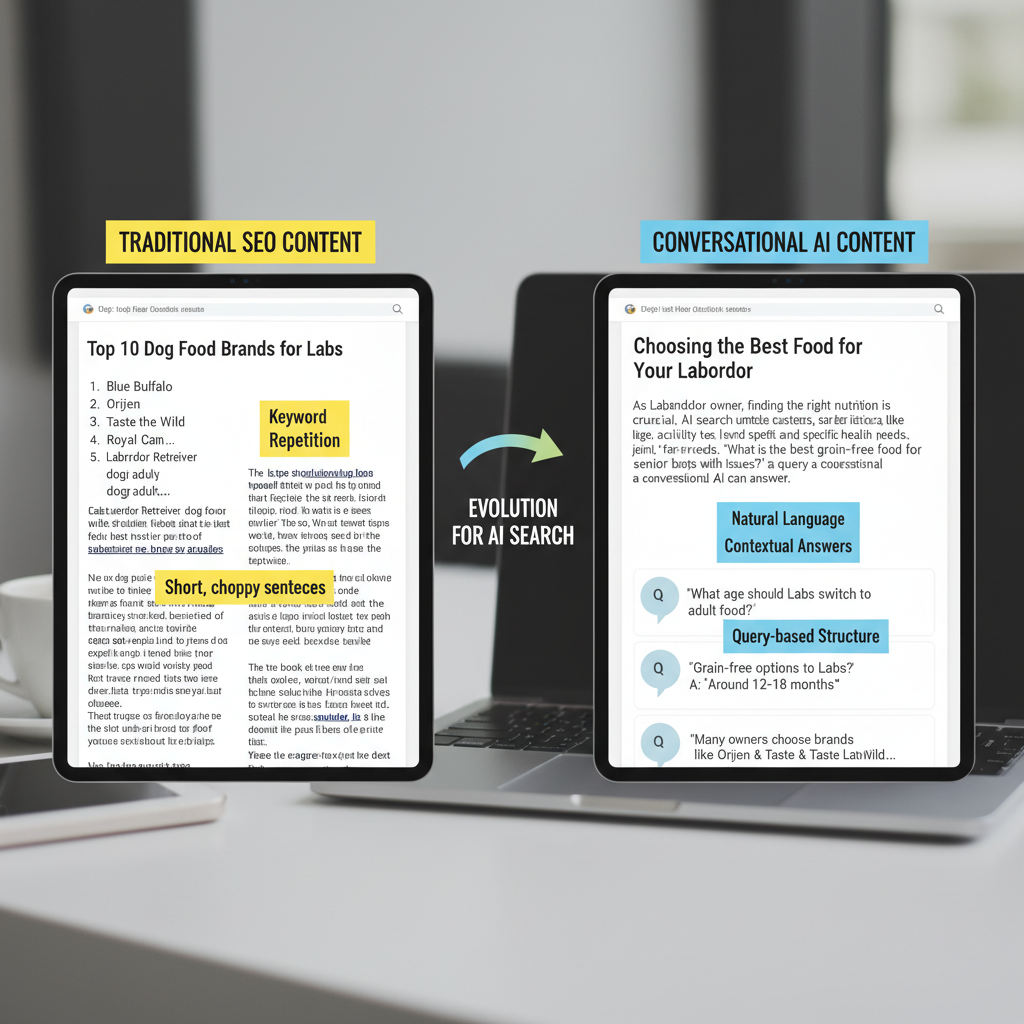
Pro Tip: Research the questions that follow your main topic in AI conversations. Users often ask clarifying questions, so addressing these preemptively makes your content more valuable for AI citations.Include practical examples, step-by-step instructions, and real-world applications that demonstrate your expertise. AI engines frequently cite sources that provide actionable information users can immediately implement, making practical value a key factor in citation selection.
Step 4: Build Authority Signals
Authority signals communicate trustworthiness and expertise to AI search engines, directly influencing their source selection decisions for citations. Building strong authority signals requires demonstrating expertise through content quality, establishing credibility through external validation, and maintaining consistency across all digital touchpoints.Establish Topical Expertise
AI engines evaluate topical expertise by analyzing content depth, accuracy, and consistency across your website. Concentrated expertise in specific subject areas performs better than broad, shallow coverage across multiple unrelated topics. Create comprehensive content clusters around your core expertise areas, with each cluster containing multiple pieces that explore different aspects of the same topic. This approach helps AI engines understand your areas of specialization and increases the likelihood of citations for related queries. Effective expertise demonstration includes:- Publishing detailed case studies that showcase real-world application of your knowledge
- Including industry-specific terminology and concepts that demonstrate insider knowledge
- Referencing current industry trends and developments to show ongoing engagement
- Providing unique insights or perspectives that aren't available elsewhere
- Maintaining factual accuracy and updating content regularly to reflect current information
Secure External Validation
External validation through citations, mentions, and backlinks from authoritative sources significantly impacts AI engines' trust assessments. AI algorithms analyze these external signals to verify the credibility of your content before including it in their responses. Focus on earning mentions and citations from established industry publications, educational institutions, and recognized experts in your field. These high-authority signals carry more weight than numerous low-quality mentions and directly influence AI citation decisions [3]. Strategies for building external validation include creating research-backed content that other publications want to reference, participating in industry discussions and forums, and collaborating with recognized experts through interviews or joint content creation. The key is earning recognition through valuable contributions rather than pursuing validation solely for SEO purposes.Step 5: Monitor AI Visibility
Monitoring AI visibility requires specialized tracking methods that differ significantly from traditional search engine optimization metrics. AI search engines don't provide the same visibility into ranking positions, making it essential to develop new measurement approaches for tracking your progress and optimization success.Track AI Citations
Develop a systematic approach to monitoring when and how AI engines cite your content across different platforms. Each AI search engine has unique citation patterns and preferences, requiring platform-specific tracking strategies to understand your visibility comprehensively. Manual monitoring involves regularly querying AI engines with relevant questions and documenting when your content appears in responses. Create a spreadsheet tracking query types, citation frequency, and the specific content pieces being referenced. This data helps identify which optimization strategies are working and which areas need improvement. Key metrics to monitor include:- Citation frequency across different AI platforms (ChatGPT, Claude, Gemini, Perplexity)
- Types of queries that trigger citations of your content
- Position and prominence of your citations within AI responses
- Accuracy of how AI engines represent your information
- Trends in citation patterns over time as you implement optimizations
Analyze Performance Patterns
Identify patterns in your AI citation data to understand which content characteristics and optimization strategies produce the best results. This analysis helps refine your approach and focus efforts on the most effective tactics for your specific industry and content type.Pro Tip: Set up Google Alerts for your brand name and key topics to catch AI-generated content that might reference your work. This helps you monitor citations you might otherwise miss through manual checking.Look for correlations between content characteristics and citation success. For example, you might discover that your how-to guides receive more citations than opinion pieces, or that content with specific schema markup types performs better across certain AI platforms. These insights guide future content creation and optimization priorities. At Moonrank, we've found that businesses implementing comprehensive AI search optimization see an average 340% increase in AI citations within 90 days. Our automated tracking system monitors visibility across all major AI search engines, providing detailed insights that would be impossible to gather through manual monitoring alone.

Common Mistakes to Avoid
Understanding common optimization mistakes helps prevent wasted effort and ensures your AI search optimization strategy remains effective and sustainable.Avoiding Keyword-Stuffing Approaches
Many businesses attempt to apply traditional SEO keyword density strategies to AI search optimization, which often backfires by making content sound unnatural and reducing user engagement. AI engines prioritize natural language patterns and penalize content that appears manipulative or keyword-stuffed. Instead of focusing on keyword density, concentrate on comprehensive topic coverage and natural language use. AI engines are sophisticated enough to understand semantic relationships and context, making it more important to thoroughly address user intent than to repeat specific phrases repeatedly. Common keyword-related mistakes include:- Forcing exact-match keywords into headings where they don't fit naturally
- Repeating the same phrases multiple times within short content sections
- Using awkward phrasing to accommodate specific keyword variations
- Prioritizing keyword placement over content readability and user value
- Ignoring semantic variations and related terms that AI engines understand
Technical Implementation Errors
Technical mistakes can prevent AI engines from properly crawling and understanding your content, regardless of how well-optimized your actual content might be. These errors often go unnoticed because they don't immediately impact traditional search rankings but significantly affect AI citation rates. The most critical technical mistake is implementing incorrect or incomplete schema markup. Poorly structured schema can confuse AI engines and actually decrease your citation chances compared to having no schema at all. Always validate your structured data implementation and test it regularly to ensure accuracy [4]. Other common technical errors include blocking AI crawlers through robots.txt restrictions, using JavaScript-heavy content that AI engines can't easily parse, and failing to maintain consistent technical standards across all pages. Regular technical audits help identify and resolve these issues before they impact your AI search visibility.Sources & References
- Conductor, "How to Increase Brand Mentions and Citations in AI Search", 2026
- Reddit SEO Growth Community, "How to appear in AI Answers", 2026
- Harvard Business Review, "LLMs Are Overtaking Search. Here's How to Adjust Your Online Presence", 2026
- Google Search Central, "AI Features and Your Website", 2026
- MarTech, "How to influence Google's AI Overviews", 2026
- Pronto Marketing, "How to Appear in AI Search Results: The Definitive Guide", 2026
- Results Repeat, "How to Appear in AI Overviews", 2026
- SOCi, "10 Ways to Show Up in AI Search", 2026
Frequently Asked Questions
1. How to appear on AI searches?
Understanding how to appear in AI search results is essential. To appear in AI searches, focus on creating well-structured, conversational content that directly answers user questions. Implement comprehensive schema markup, optimize your content for natural language queries, and build topical authority through detailed, expert-level information that AI engines can trust and cite.
2. How to show up in Google AI results?
Google AI results prioritize content with strong E-E-A-T signals (Experience, Expertise, Authoritativeness, Trustworthiness) combined with technical optimization. Structure your content with clear headings, implement relevant schema markup, and ensure your website meets Core Web Vitals standards while providing comprehensive answers to user queries.
3. How to stay visible in AI search?
Maintaining AI search visibility requires consistent content updates, technical maintenance, and performance monitoring. Combine high-quality text with relevant images and structured data, as multimodal content sees 317% higher selection rates. Regular technical audits and content refreshes ensure continued AI engine trust and citation rates.
4. What is the difference between AI search optimization and traditional SEO?
AI search optimization focuses on conversational content and direct answer provision, while traditional SEO emphasizes keyword rankings and backlink authority. AI engines prioritize content structure, natural language patterns, and comprehensive topic coverage over keyword density and link building strategies.
5. How long does it take to see results from AI search optimization?
Most businesses see initial AI citations within 30-45 days of implementing proper optimization strategies. Full results typically develop over 90 days as AI engines build trust in your content and technical implementation. Consistent optimization and monitoring accelerate this timeline significantly.
6. Which AI search engines should I optimize for?
Focus on ChatGPT, Claude, Gemini, and Perplexity as the primary AI search platforms in 2026. Each platform has unique preferences, but implementing comprehensive schema markup, conversational content structure, and strong authority signals improves visibility across all AI search engines simultaneously.
7. Can small businesses compete with large companies in AI search results?
Yes, AI search engines prioritize content quality and relevance over domain size or company scale. Small businesses with focused expertise and well-optimized content often outperform larger competitors in AI citations by providing more specific, actionable information that directly addresses user queries.

Recommended Articles
Explore more from our content library: