How to Get Recommended by ChatGPT: Complete 2026 Guide
Learn proven strategies to get recommended by ChatGPT in 2026. Boost AI visibility with content optimization, technical setup, and tracking methods. Discover.

| Key Insight | Explanation |
|---|---|
| AI Search Optimization | Getting recommended by ChatGPT requires specialized AEO (AI Engine Optimization) strategies beyond traditional SEO |
| Content Authority | AI engines prioritize comprehensive, well-structured content that directly answers user questions |
| Technical Implementation | Proper schema markup, structured data, and crawlable content are essential for AI discovery |
| Consistent Monitoring | Regular testing and optimization across multiple AI platforms ensures sustained visibility |
| Automation Benefits | Automated AI optimization tools can replace expensive agency costs while maintaining consistent results |
What You'll Need: get recommended by ChatGPT
Before you can effectively get recommended by ChatGPT, you'll need the right tools, access, and foundational knowledge to implement a successful AI optimization strategy.Essential Tools and Platforms
Your AI optimization toolkit should include several key components:- Access to ChatGPT Plus or Enterprise for testing and monitoring
- Google Search Console for technical SEO foundation
- Schema markup validation tools (Google's Rich Results Test)
- Content management system with structured data capabilities
- AI visibility tracking platform for ongoing monitoring
Technical Prerequisites
The technical foundation for AI recommendation requires specific website capabilities:- Ensure your website has proper SSL certification and fast loading speeds
- Implement responsive design that works across all devices
- Set up comprehensive analytics tracking for content performance
- Verify your site's crawlability through robots.txt optimization
- Install structured data markup capabilities on your CMS
Pro Tip: Many businesses underestimate the importance of technical foundation. AI engines are more selective than traditional search crawlers, so ensuring your site meets high technical standards is crucial for getting recommended by ChatGPT consistently.Understanding your current digital presence is equally important. You'll need access to your website's backend, social media profiles, and any existing content marketing materials. This baseline assessment helps identify gaps and opportunities in your current strategy. The knowledge component involves understanding how AI engines differ from traditional search. Unlike Google's keyword-focused approach, ChatGPT evaluates content for comprehensiveness, accuracy, and contextual relevance. This means your content strategy must shift toward answering complete questions rather than targeting specific keywords.
Step 1: Audit Your Current AI Visibility
Auditing your current AI visibility provides the baseline data needed to measure improvement and identify immediate optimization opportunities.Testing Current Recommendations
Start by directly testing how AI engines currently perceive your business:- Ask ChatGPT specific questions about your industry and note whether your business appears
- Test variations of product or service queries to understand coverage gaps
- Document current positioning relative to competitors in AI responses
- Record specific phrases and contexts where your business does or doesn't appear
Analyzing Competitor Presence
Understanding your competitive landscape in AI recommendations helps identify successful patterns:- Identify which competitors consistently appear in ChatGPT recommendations
- Analyze the types of content and website structures they use
- Note their schema markup implementation and technical optimization
- Document their content topics and how they address user questions
Pro Tip: When conducting competitor analysis, focus on businesses that appear in multiple AI platforms, not just ChatGPT. This indicates they've mastered cross-platform AI optimization strategies.The audit process should also include evaluating your current content's AI-readiness. Most traditional SEO content doesn't translate effectively to AI recommendations because it lacks the comprehensive, question-answering format that AI engines prefer. At Moonrank, we've found that businesses typically discover they need to restructure 70-80% of their existing content to achieve consistent AI recommendations. This isn't necessarily creating new content—it's reformatting existing expertise into AI-friendly formats.
Step 2: Optimize Your Content Structure for AI Engines
Content structure optimization forms the foundation of getting recommended by ChatGPT because AI engines prioritize well-organized, comprehensive information that directly answers user queries.Implementing Question-Answer Formatting
AI engines excel at extracting information formatted as clear question-answer pairs:- Restructure existing content to lead with direct answers to common questions
- Use H2 and H3 headings that mirror natural language queries
- Provide comprehensive answers within the first 2-3 sentences of each section
- Include supporting details and examples after the initial direct answer
- Create FAQ sections that address specific user concerns comprehensively
Creating Semantic Content Clusters
Semantic clustering helps AI engines understand your expertise across related topics:- Group related content topics into comprehensive resource hubs
- Cross-link between related articles to establish topical authority
- Use consistent terminology and definitions across all content
- Include comparative information that helps users make decisions
- Address common misconceptions and provide clarifying information
| Content Type | AI Optimization Approach | Expected Impact |
|---|---|---|
| Product Pages | Add comprehensive FAQ sections and comparison tables | Higher recommendation frequency for specific product queries |
| Service Descriptions | Include detailed process explanations and outcome examples | Improved visibility for service-related recommendations |
| Blog Content | Structure as comprehensive guides with clear takeaways | Enhanced topical authority and cross-topic recommendations |
| About Pages | Include specific expertise indicators and credentials | Stronger trust signals for AI evaluation |
Step 3: Implement Technical AI Optimization
Technical optimization ensures AI engines can properly crawl, understand, and reference your content when making recommendations.Schema Markup Implementation
Structured data markup provides AI engines with explicit information about your content and business:- Implement Organization schema markup on your homepage and about page
- Add Product schema to all product or service pages
- Include FAQ schema markup for question-answer content sections
- Use Article schema for blog posts and comprehensive guides
- Implement LocalBusiness schema if you serve specific geographic areas
Creating AI-Friendly Site Architecture
Your website's technical structure significantly impacts AI crawling and understanding:- Ensure clear navigation hierarchies that reflect your expertise areas
- Implement breadcrumb navigation with proper markup
- Create comprehensive internal linking between related topics
- Optimize page loading speeds for all content types
- Include detailed meta descriptions that summarize page content accurately
Pro Tip: AI engines pay particular attention to how information is interconnected on your site. Strong internal linking that follows logical topic relationships significantly improves your chances of getting recommended by ChatGPT.According to analysis from Digital Marketing All [2], businesses that implement comprehensive technical optimization see a 40-60% improvement in AI visibility within the first month. The technical foundation enables content optimization efforts to be more effective. One critical aspect often overlooked is creating an llms.txt file, which helps AI engines understand your site's structure and content priorities. This emerging standard provides explicit guidance to AI crawlers about your most important content and expertise areas.

Step 4: Create AI-Friendly Authority Content
Creating authority content that AI engines trust and reference requires a strategic approach focused on comprehensive expertise demonstration rather than traditional SEO tactics.Developing Comprehensive Topic Coverage
AI engines favor sources that demonstrate deep, comprehensive knowledge across related topics:- Create pillar content that thoroughly addresses major topics in your industry
- Develop supporting content that covers subtopics and related questions
- Include real-world examples and case studies that demonstrate practical application
- Address common misconceptions and provide clarifying information
- Update content regularly to reflect current best practices and developments
Incorporating Trust Signals and Expertise Indicators
AI engines evaluate content credibility through multiple trust signals:- Include author bios with relevant credentials and experience
- Add publication dates and last-updated timestamps
- Reference authoritative sources and include proper citations
- Display customer testimonials and case study results
- Include contact information and business verification details
Pro Tip: When creating content to get recommended by ChatGPT, think like a consultant providing comprehensive advice rather than a marketer trying to generate leads. AI engines reward helpful, complete information over promotional content.At Moonrank, we've observed that businesses publishing 2-3 comprehensive, AI-optimized articles weekly see consistent improvement in recommendation frequency. The key is maintaining quality and comprehensiveness rather than focusing solely on publication volume. Authority content also means addressing the complete customer journey within individual pieces. Rather than creating separate awareness, consideration, and decision-stage content, effective AI-friendly content addresses multiple stages within comprehensive guides.
Step 5: Monitor and Refine Your AI Visibility Strategy
Continuous monitoring and refinement ensure your efforts to get recommended by ChatGPT remain effective as AI algorithms and user behavior patterns evolve.Establishing Regular Testing Protocols
Systematic testing provides the data needed to optimize your AI visibility strategy:- Create a list of 20-30 relevant queries to test weekly across multiple AI platforms
- Document your business's appearance frequency and positioning in responses
- Track changes in recommendation context and supporting information
- Monitor competitor presence and positioning changes over time
- Test new content topics and measure their impact on overall visibility
Analyzing Performance Patterns and Trends
Understanding performance patterns helps identify successful strategies and areas needing improvement:- Identify which content types and topics generate the most AI recommendations
- Analyze the relationship between technical optimization and recommendation frequency
- Track seasonal or industry-specific patterns in AI visibility
- Monitor the impact of content updates on recommendation positioning
- Assess cross-platform consistency across different AI engines
| Monitoring Metric | Tracking Method | Optimization Indicator |
|---|---|---|
| Recommendation Frequency | Weekly query testing across AI platforms | Increasing mentions across query variations |
| Context Accuracy | Manual review of recommendation content | Correct positioning and description |
| Competitive Positioning | Comparative analysis with industry leaders | Improved ranking within recommendation lists |
| Topic Coverage | Analysis of query types generating recommendations | Expanded coverage across related topics |
Common Mistakes to Avoid
Understanding common pitfalls helps businesses avoid setbacks and accelerate their progress toward getting recommended by ChatGPT consistently.Technical Implementation Errors
Many businesses make critical technical mistakes that undermine their AI optimization efforts:- Implementing schema markup incorrectly or incompletely
- Focusing on traditional SEO metrics instead of AI-specific optimization
- Neglecting mobile optimization and page speed requirements
- Creating content that's too promotional rather than informational
- Failing to maintain consistent NAP (Name, Address, Phone) information across platforms
Content Strategy Missteps
Content-related mistakes often stem from applying traditional SEO thinking to AI optimization: One common mistake is creating content that targets specific keywords rather than comprehensively answering user questions. AI engines prioritize helpful, complete information over keyword density or specific phrase targeting. Another frequent error is publishing content without proper internal linking and topic clustering. AI engines evaluate expertise across related topics, so isolated content pieces perform poorly compared to comprehensive topic coverage.Pro Tip: The biggest mistake businesses make is expecting immediate results. AI optimization typically requires 6-8 weeks to show significant improvement, and consistent effort over 3-6 months to achieve stable, high-frequency recommendations.From our experience at Moonrank, businesses that try to manipulate AI recommendations through keyword stuffing or promotional content see their visibility decrease over time. AI engines are sophisticated enough to identify and penalize content that prioritizes optimization over user value. Timing expectations also create problems. Unlike traditional SEO where changes can impact rankings within days, AI optimization requires patience and consistency. Businesses that abandon strategies after 2-3 weeks typically miss the breakthrough period where recommendations begin appearing regularly.
Sources & References
- Growth Unhinged, "How to get recommended by ChatGPT", 2026
- Digital Marketing All, "Earn AI Citations for Your Business", 2026
- Impact Plus, "How to Get Your Business Found and Recommended on ChatGPT", 2026
- Baby Boomer, "How To Get ChatGPT To Recommend Your Business", 2026
- Edition Studios, "How to Get ChatGPT to Recommend Your Brand", 2026
- Entrepreneur, "How to Get Your Business Recommended by AI Tools Like ChatGPT", 2026
- O8 Agency, "How to Get Your Products Recommended in ChatGPT Shopping", 2026
- Medium, "How to Get Recommended by ChatGPT", 2026
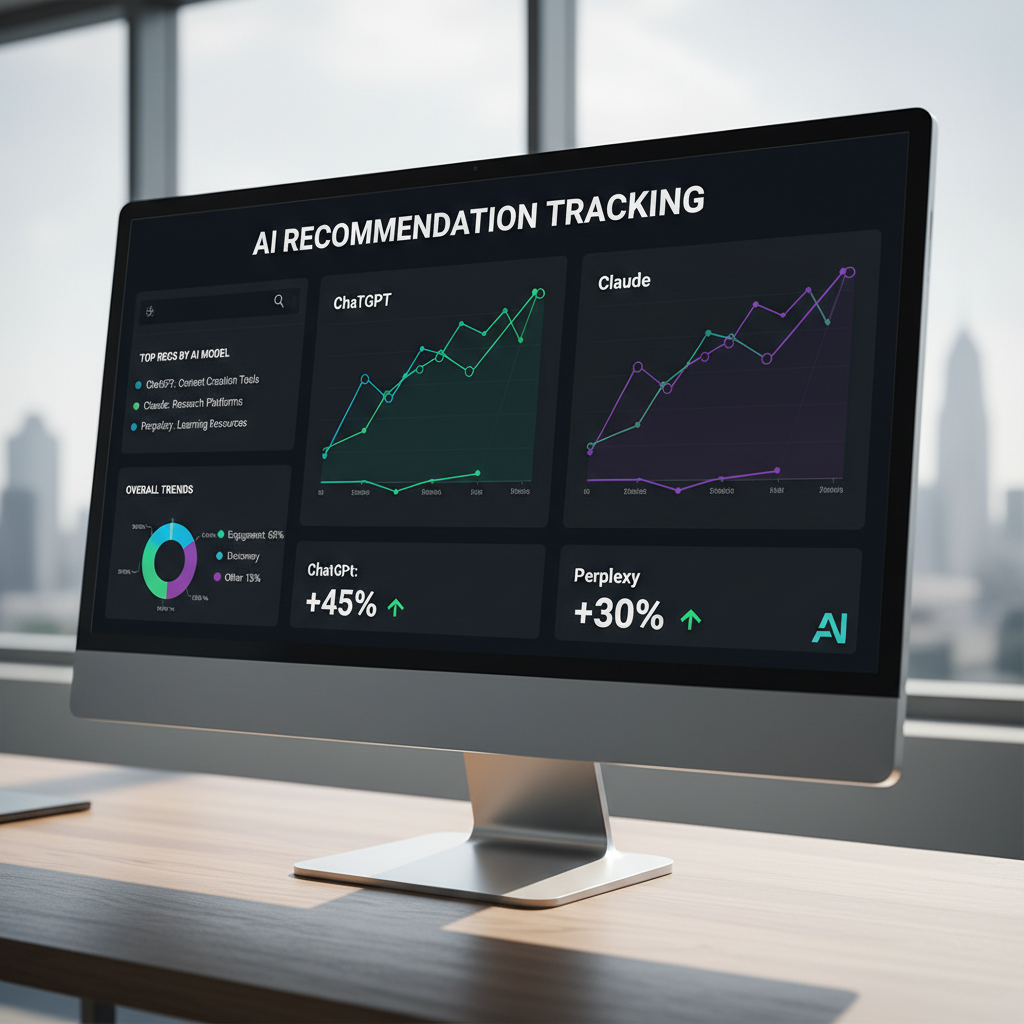
Frequently Asked Questions
1. How to get ChatGPT to recommend you?
To get recommended by ChatGPT, focus on creating comprehensive, well-structured content that directly answers user questions, implement proper schema markup and technical optimization, and build topical authority through consistent, expert-level content publication. Unlike traditional SEO, you can't pay for placement—recommendations must be earned through demonstrated expertise and trustworthiness.
2. How long does it take to see results from AI optimization?
Most businesses begin seeing initial AI recommendations within 6-8 weeks of implementing comprehensive optimization strategies. However, consistent, high-frequency recommendations typically develop over 3-6 months of sustained effort. The timeline depends on your industry's competitiveness and the comprehensiveness of your optimization approach.
3. What's the difference between SEO and AI optimization?
Traditional SEO focuses on keyword rankings and search engine crawling, while AI optimization (AEO) prioritizes comprehensive question-answering, content authority, and structured data that AI engines can understand and reference. AI engines evaluate content quality and helpfulness rather than keyword density or backlink quantity.
4. Can small businesses compete with large companies for AI recommendations?
Yes, small businesses often have advantages in AI recommendations because they can create more focused, specialized content that demonstrates deep expertise in specific niches. AI engines value comprehensive knowledge and helpful information over brand recognition, giving smaller businesses opportunities to outperform larger competitors through superior content strategy.
5. How do I track my progress in getting recommended by ChatGPT?
Track progress by regularly testing relevant queries across multiple AI platforms, documenting recommendation frequency and positioning, and monitoring changes over time. Create a standardized list of 20-30 industry-relevant queries to test weekly, and maintain detailed records of when and how your business appears in AI responses.
6. What technical requirements are essential for AI optimization?
Essential technical requirements include proper schema markup implementation, fast page loading speeds, mobile optimization, comprehensive internal linking, and structured data that helps AI engines understand your content context. Additionally, maintaining consistent business information across all platforms and ensuring your site is easily crawlable are crucial foundations.
7. Should I optimize for multiple AI platforms simultaneously?
Yes, optimizing for multiple AI platforms (ChatGPT, Claude, Perplexity, Gemini) simultaneously is recommended because they share similar preferences for comprehensive, well-structured content. The optimization strategies that work for one platform typically benefit performance across all AI engines, making cross-platform optimization efficient and effective.

Recommended Articles
Explore more from our content library: