How to Choose the Right Industrial Marketing Agency
Find out how an industrial marketing agency helps manufacturers win technical buyers with SEO, content, and lead generation built for long sales cycles.

An industrial marketing agency specializes in promoting manufacturers, OEMs, contract manufacturers, and industrial suppliers to technical buyers with long sales cycles. Unlike general B2B agencies, industrial agencies understand engineering-driven purchasing decisions, complex product specs, and niche distribution channels. They combine sector-specific content, SEO, and lead generation to help industrial companies win more qualified opportunities from engineers, procurement managers, and plant operators.
What Is an Industrial Marketing Agency and How Does It Differ from General B2B Marketing?
Industrial marketing agencies serve manufacturers, OEMs, and suppliers whose buyers evaluate specs, compliance, and reliability, not brand story or lifestyle appeal.
The buyers in this space are engineers, procurement managers, and operations leads. They read datasheets before they read case studies. They need to know whether a component meets ISO tolerances or whether a fluid handling system integrates with existing infrastructure, before any sales conversation begins. A general B2B agency applying a transferable messaging framework to CNC machining or industrial automation will almost always miss that technical nuance.
Sales cycles in industrial markets routinely run six to eighteen months and involve multiple stakeholders across engineering, procurement, and the C-suite. Content must work across every stage, building awareness, supporting evaluation, and surviving vendor-shortlisting, rather than pushing for a quick conversion. A single well-timed technical article can keep a supplier on a buyer's shortlist for months.
What goes into a comprehensive industrial marketing strategy?
An effective industrial marketing strategy combines technical content (whitepapers, spec sheets, application guides), SEO targeting the exact search terms buyers use during research, and lead nurturing sequences built around a long decision timeline.
Agencies that specialize in this space, like those focused exclusively on manufacturing and industrial sectors [2], also invest in website architecture that converts technical visitors into qualified inquiries, not just traffic. Paid search, trade publication placements, and increasingly AI search visibility each play a role depending on where target buyers spend their research time.
What are the key challenges industrial and manufacturing leaders face in marketing?
The central challenge is translation: turning complex engineering capabilities into clear, searchable content that reaches buyers at the right moment in their research process [3].
Most industrial companies are excellent at what they build and poor at describing it in the language buyers actually search. An industrial marketing agency bridges that gap, writing content that is technically accurate enough to earn an engineer's trust and optimized well enough to surface when that engineer types a query into Google, ChatGPT, or Perplexity. This translation challenge is compounded when a company offers a broad range of capabilities — each product line may require its own distinct messaging, keyword strategy, and buyer persona to reach the right audience effectively.
Core Services Industrial Marketing Agencies Provide
An industrial marketing agency typically delivers SEO, content production, website design, paid advertising, and email nurture, each adapted for technical buyers and long sales cycles.
Industrial SEO targets a different query set than standard B2B keyword work. Engineers and procurement managers search by part numbers, material specifications, and process names, queries like "316L stainless investment casting supplier" or "IP67-rated servo drive OEM." Ranking for these terms drives high-intent traffic from buyers actively sourcing, not just researching broadly.
Content marketing for industrial companies centers on assets that match the research-heavy buying process: white papers, application notes, product comparison guides, and detailed case studies. These formats do double duty, they support a six-to-twelve-month sales cycle and feed the AI search engines that now surface vendor recommendations. ChatGPT and Perplexity pull from structured, authoritative content when answering queries like "best contract manufacturer for aluminum extrusions," so agencies that produce this content improve their clients' chances of appearing in those results.
Website design for industrial clients demands more than clean visuals. Spec-rich product pages, CAD file download portals, and RFQ forms convert technical visitors who arrive knowing exactly what they need. A generic landing page built for consumer traffic fails an engineer who wants a 3D model and a lead time.
What is the difference between industrial digital marketing, SEO, and PPC services?
SEO builds long-term discoverability for high-intent technical queries; PPC captures buyers with an immediate sourcing need and a defined budget; email nurture keeps a supplier visible across the months between a first inquiry and a signed purchase order. Most agencies run all three in parallel because industrial buying decisions rarely happen in a single session.
How do industrial marketing agencies specialize by sector?
Sub-sector focus matters because messaging, channel mix, and buyer personas differ sharply across industrial niches. An agency serving OEM component suppliers emphasizes distributor relationships and catalog discoverability. One working with contract manufacturers builds content around process capabilities and quality certifications. A firm focused on robotics integrators targets plant engineers through technical webinars and LinkedIn, not trade print. Agencies that specialize by sub-sector [2] bring pre-built persona depth and channel knowledge that generalist firms have to develop from scratch on a client's budget.

How to Choose the Right Industrial Marketing Agency for Your Business
Choose an industrial marketing agency based on sector-specific experience first, general agency size and client count matter far less than proven industrial knowledge.
An agency that has marketed fluid control systems or custom machine components already knows the buyer's vocabulary, the compliance language that shapes messaging, and which trade publications engineers actually read. A generalist agency with 200 clients can still produce content that misses every technical nuance your buyers expect.
What credentials and industry-specific experience should you look for?
Published case studies from manufacturing or industrial clients are the clearest signal. Look for documented outcomes, qualified leads generated, organic traffic from industrial buyers, or pipeline contribution, not just logos on a homepage.
Check whether the team includes members with engineering backgrounds, industrial sales experience, or hands-on familiarity with platforms like ThomasNet and sector trade media such as Plant Engineering or Manufacturing Engineering. Agencies without that context tend to produce content that reads fine to a generalist but rings hollow to a plant manager or procurement engineer.
Watch for red flags: agencies that pitch content volume without a technical review process, or those that can't explain how they'd position your specific product category against competitors in search. Both signals suggest the agency is applying a generic playbook to a market that punishes generic.
What questions should you ask potential agencies about their manufacturing client history?
Three questions cut through most agency sales conversations quickly.
- How do you handle technical content review? Any credible industrial agency has a defined process, subject matter expert interviews, client sign-off cycles, or in-house technical editors.
- Who on your team has worked inside or alongside manufacturing companies? Ask for names and backgrounds, not just a general claim of "industry experience."
- How do you measure lead quality versus lead volume for long-cycle industrial sales? Industrial deals often run six to eighteen months. An agency optimizing for click volume without tracking pipeline stage contribution is measuring the wrong thing.
Agencies that answer these questions with specifics are worth a second conversation. Those that pivot back to deliverable counts are not built for industrial sales cycles.
What Results to Expect and How to Measure Agency Performance
An industrial marketing agency typically delivers measurable lead improvements within six to twelve months, as SEO compounds and content assets build authority over time.
The early phase, roughly the first two to three months, focuses on technical audits, buyer persona development, and foundational content. This groundwork is necessary but rarely produces dramatic lead volume immediately. Patience here pays off: each technical article, case study, and optimized product page adds to a content base that keeps generating inbound leads without proportional additional spend.
What is a realistic implementation timeline by quarter?
Q1: Technical site audit, persona mapping, keyword research for high-intent queries, and initial content production. Expect minimal traffic movement but a cleaner technical foundation.
Q2–Q3: Content assets accumulate authority. Search visibility for specific technical queries improves. Early inbound inquiries begin appearing.
Q4+: Compounding returns kick in. Existing content continues attracting qualified buyers without proportional new spend. Pipeline contribution becomes measurable.
Track the right metrics from day one. Qualified RFQ volume, time-to-first-contact from inbound leads, search visibility for high-intent technical queries, and pipeline contribution matter far more than raw page views or session counts.
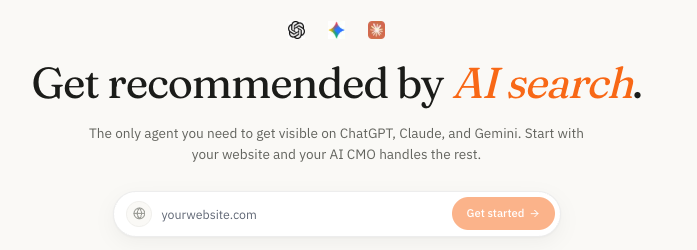
AI search visibility is now a distinct performance layer that forward-thinking agencies address directly. Industrial buyers increasingly ask ChatGPT, Perplexity, or Gemini for vendor recommendations before they ever visit a website [2]. Agencies that build structured data, entity clarity, and authoritative content, the signals AI engines use to cite sources, open an additional inbound channel that traditional SEO-only programs miss entirely. Tools like Moonrank track exactly this: how often your business appears in AI-generated recommendations across ChatGPT, Gemini, Claude, and Perplexity, so you can hold any agency accountable for that visibility layer, not just Google rankings.
How Moonrank Helps Industrial Businesses Get Found by AI Search Engines
Moonrank fills the gap between expensive agency retainers and doing nothing, automating daily AI-optimized content so industrial businesses build search visibility continuously.
Most industrial marketing agencies require multi-month onboarding and premium retainer commitments before a single piece of content goes live. Moonrank skips that timeline entirely. After a short onboarding, it publishes SEO-structured content to your site every day, automatically, building the consistent output that both Google and AI search engines reward.
The AI search channel is where this matters most. When a plant manager asks ChatGPT or Perplexity "best industrial automation supplier for mid-size manufacturers," those engines pull from sources they can parse clearly: structured data, schema markup, and entity-clear content. Moonrank handles all three, optimizing your site's technical signals so ChatGPT, Gemini, Claude, and Perplexity can read, trust, and cite your business. Most traditional industrial agencies are not yet building for this channel.
That creates a practical split for industrial businesses with limited budgets. Use Moonrank to maintain continuous content output and AI citation signals at a fraction of full-service agency cost. Direct specialized agency spend toward high-touch work that genuinely requires human expertise, trade show strategy, technical sales enablement, or account-based outreach.
To see how automated AI search optimization works for industrial and manufacturing businesses, visit www.moonrank.ai.

Frequently Asked Questions
How much does an industrial marketing agency cost?
Industrial marketing agency retainers typically fall into mid-range or premium tiers, with full-service engagements often running several thousand dollars per month. Project-based work, a website redesign or a single content campaign, can cost less, but ongoing lead generation programs are priced for sustained commitment. Manufacturers evaluating cost should weigh total spend against qualified leads delivered, not just monthly fees. Automated AI search optimization tools like Moonrank offer a budget-friendly alternative for manufacturers who need consistent content and visibility without a full agency retainer.
What is the difference between an industrial marketing agency and a manufacturing marketing agency?
The terms are largely interchangeable, both describe agencies that specialize in B2B marketing for companies that make or supply physical goods. In practice, "industrial" tends to skew toward suppliers, distributors, and component manufacturers, while "manufacturing" often signals a focus on OEMs and production-scale clients [2]. The strategic services, content, SEO, lead generation, trade show support, overlap significantly regardless of the label an agency uses.
Can a small industrial manufacturer benefit from hiring a marketing agency?
Yes, small manufacturers often see the clearest gains because they start with the least digital visibility and have the most room to grow. A specialized agency can build a content program, fix technical website gaps, and target niche buyers that a generalist firm would miss [1]. That said, agency retainers can strain a small operation's budget. Smaller manufacturers should define a specific goal, qualified leads per quarter, for example, before signing any contract.
How do industrial marketing agencies generate leads for niche B2B manufacturers?
Most industrial agencies combine SEO-driven content, paid search, and LinkedIn targeting to reach engineers, plant managers, and procurement teams during active buying research [2]. Technical content, spec sheets, application guides, case studies, builds credibility with buyers who evaluate vendors rigorously before making contact. Agencies with AI search experience also optimize for visibility in ChatGPT, Gemini, and Perplexity, where an increasing share of B2B research now starts. Appearing in those AI-generated answers is becoming a meaningful lead source for niche manufacturers.
How long does it take to see results from an industrial marketing agency?
Most industrial marketing programs require six to twelve months before delivering consistent, measurable lead volume. The first quarter is typically spent on audits, strategy, and foundational content. Search visibility and inbound inquiries begin building in the second and third quarters as content accumulates authority. Manufacturers should set realistic expectations upfront and agree on milestone metrics, such as qualified RFQ volume and pipeline contribution, rather than expecting immediate results from a market defined by long buying cycles.
Conclusion
Choosing the right industrial marketing agency comes down to three things: sector-specific experience, a clear lead generation methodology, and a pricing model your business can sustain beyond the first six months. Agencies that understand the industrial buying cycle, long sales timelines, technical buyers, multi-stakeholder decisions, will outperform generalists every time [2].
One area most agencies still underinvest in: AI search visibility. Buyers increasingly ask ChatGPT or Perplexity for vendor recommendations before they ever visit a website. If your business isn't appearing in those answers, start there. Moonrank tracks and builds that visibility automatically, audit where your brand currently stands in AI search results as your first concrete next step.
Sources & References
- Industrial Marketing Agency | Main Event Digital
- Industrial Marketing Agency for Manufacturers | Gorilla 76
- Top 10 Industrial & Manufacturing Marketing Agencies in 2025
Recommended Articles
Explore more from our content library: