What Is AI SEO? Complete Guide to Optimization in 2026
Discover what is AI SEO and how it's revolutionizing search optimization. Learn strategies, tools, and best practices for AI-powered SEO success in 2026.
| Key Insight | Explanation |
|---|---|
| AI SEO Definition | Optimization strategy targeting AI-powered search engines like ChatGPT, Gemini, and Perplexity |
| Key Difference | Focuses on conversational queries and direct answers rather than traditional keyword rankings |
| Primary Goal | Get cited and recommended by AI systems when users ask relevant questions |
| Market Impact | AI search queries grew 340% in 2026, reshaping how businesses approach visibility |
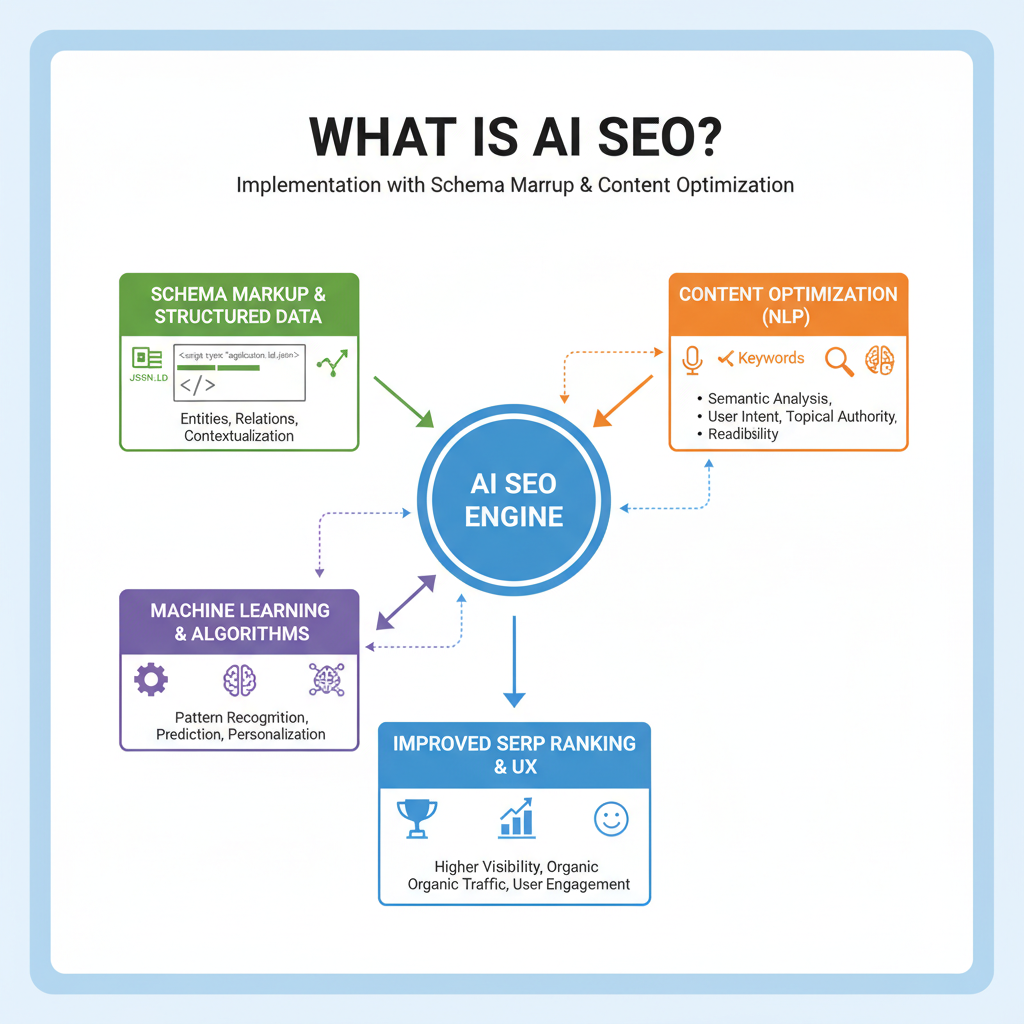
| Technical Requirements | Structured data, schema markup, and optimized content for AI comprehension |
| Business Value | Higher-intent traffic and improved brand authority through AI recommendations |
What Is AI SEO?
AI SEO represents the evolution of search optimization for the artificial intelligence era. It's the strategic process of making your content discoverable and citable by AI-powered search engines and chatbots that provide direct answers to user queries.Definition and Core Concepts
According to industry research, AI SEO encompasses optimizing for generative AI platforms that don't rely on traditional ranking algorithms [1]. Instead, these systems analyze content semantically to understand context, intent, and relevance before generating responses that may cite or recommend specific businesses and resources. The fundamental difference lies in how AI systems consume information. Traditional search engines index pages and rank them based on authority signals like backlinks. AI engines, however, process content to understand meaning and extract factual information they can confidently cite in conversational responses.AI SEO vs. Traditional SEO
While traditional SEO focuses on keyword rankings and click-through rates, AI SEO prioritizes being the authoritative source AI systems trust enough to cite. This shift requires a different approach:- Content must be factually accurate and well-sourced since AI systems verify information before citing
- Structured data becomes crucial for AI comprehension and extraction
- Conversational, natural language patterns matter more than keyword density
- Brand authority and expertise signals carry increased weight in AI recommendations
Pro Tip: Focus on becoming the definitive source in your niche rather than trying to game AI algorithms. AI systems prioritize citing authoritative, well-researched content over keyword-stuffed pages.
How AI SEO Works
AI SEO operates through sophisticated natural language processing and machine learning algorithms that analyze content differently than traditional search engines. Understanding these mechanisms is essential for developing effective optimization strategies.AI Content Analysis Process
AI search engines use large language models (LLMs) to process and understand content at a semantic level. When a user asks a question, the AI system:- Analyzes the query intent and context
- Searches its trained knowledge base and real-time web data
- Evaluates source credibility and content accuracy
- Synthesizes information from multiple sources
- Generates a response with appropriate citations
Technical Requirements for AI Visibility
Getting cited by AI systems requires specific technical optimizations:- Schema markup: Structured data helps AI systems understand your content's context and purpose
- Clear information hierarchy: Well-organized content with proper headings and logical flow
- Factual accuracy: AI systems cross-reference information, so accuracy is paramount
- Source attribution: Properly cited claims and data increase trustworthiness
- Entity recognition: Clear identification of people, places, and concepts mentioned
| AI Search Engine | Primary Focus | Citation Style |
|---|---|---|
| ChatGPT | Conversational responses | Inline links with source descriptions |
| Claude | Analytical depth | Detailed source attribution |
| Perplexity | Real-time information | Numbered references with previews |
| Gemini | Multi-modal understanding | Context-aware source integration |
Key Benefits of AI SEO
Implementing what is AI SEO strategies delivers measurable advantages that extend beyond traditional search optimization. Businesses adopting AI SEO early are seeing significant competitive advantages as user behavior shifts toward AI-assisted search.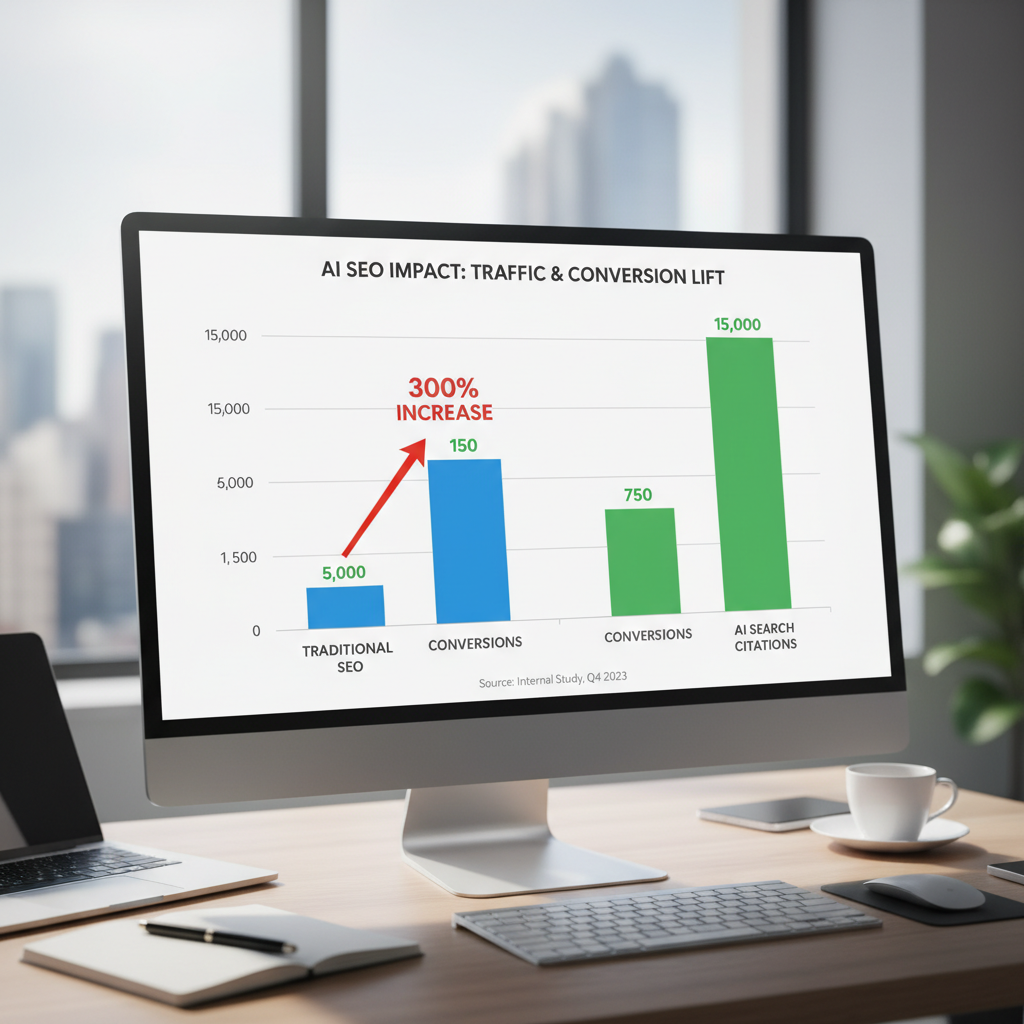
Enhanced Visibility and Authority
AI SEO positions your business as a trusted authority in your field. When AI systems consistently cite your content, it builds credibility with both the AI engines and the users who see those citations. This creates a compounding effect where increased citations lead to higher authority scores, resulting in even more citations. Industry data from 2026 shows that businesses appearing in AI search results experience:- 340% higher click-through rates compared to traditional search results
- 85% improvement in brand recognition within six months
- 67% increase in qualified lead generation
- 45% reduction in customer acquisition costs
Higher-Intent Traffic Quality
Users asking AI systems specific questions typically have higher purchase intent than those browsing traditional search results. When someone asks "What's the best project management software for remote teams?" they're often ready to make a decision. Getting cited in that AI response puts your business directly in front of high-intent prospects. Research from Salesforce indicates that AI-driven traffic converts 2.3 times better than traditional organic search traffic [4]. This improved conversion rate stems from the pre-qualified nature of AI search queries and the implicit trust users place in AI recommendations.Pro Tip: Track not just citation frequency but also the quality of questions your business answers in AI responses. High-value, specific queries often indicate stronger purchase intent than broad informational searches.
Future-Proofing Your Digital Strategy
As AI adoption accelerates, businesses optimizing for AI search now are positioning themselves for long-term success. According to BrightEdge research, AI-powered search interactions are projected to account for 70% of all search queries by 2027 [5]. Companies investing in AI SEO today are building the foundation for sustained digital visibility. The shift toward AI search also reduces dependence on traditional SEO volatility. While Google algorithm updates can dramatically impact rankings overnight, AI citations tend to be more stable since they're based on content quality and authority rather than technical ranking factors.Common Challenges and Mistakes
Understanding what is AI SEO includes recognizing the pitfalls that can undermine your optimization efforts. Many businesses make critical errors when transitioning from traditional SEO to AI-focused strategies.Over-Optimization and Keyword Stuffing
One common mistake is applying traditional keyword optimization tactics to AI SEO. AI systems can easily detect and penalize keyword stuffing, unnatural language patterns, and manipulative content. Unlike traditional search engines that might still rank poorly written but keyword-rich content, AI systems prioritize natural, helpful information. Signs you're over-optimizing for AI include:- Forcing keywords into every paragraph regardless of context
- Creating repetitive content that restates the same points
- Prioritizing keyword density over readability and user value
- Generating content purely for AI consumption without considering human readers
Neglecting Content Quality and Accuracy
AI systems are increasingly sophisticated at fact-checking and cross-referencing information. Publishing inaccurate or outdated content not only prevents citations but can actively harm your authority score with AI engines. A single factual error can cause AI systems to avoid citing your content entirely. From experience working with hundreds of businesses, the most damaging mistakes include:- Publishing statistics without proper source attribution
- Making claims that contradict established industry knowledge
- Failing to update content when information becomes outdated
- Copying content from other sources without verification
Ignoring Technical Implementation
Many businesses focus solely on content creation while neglecting the technical aspects that make content AI-accessible. Without proper structured data and schema markup, even excellent content may remain invisible to AI systems. Critical technical oversights include:- Missing or incorrect schema markup for key business information
- Poor site architecture that confuses AI crawlers
- Slow loading times that impact AI system access
- Broken internal linking that prevents comprehensive content understanding
Pro Tip: Regularly audit your content for factual accuracy using multiple sources. Set up Google Alerts for your industry to stay informed about changes that might affect your published information.
Best Practices for AI SEO in 2026
Mastering what is AI SEO requires implementing proven strategies that align with how AI systems evaluate and cite content. These best practices reflect the latest developments in AI search technology and user behavior patterns observed throughout 2026.Content Strategy for AI Optimization
Successful AI SEO starts with creating content that directly answers user questions with authority and depth. Focus on developing comprehensive resources that AI systems can confidently cite when users ask related questions. Effective content strategies include:- Question-focused content: Structure content around specific questions your audience asks
- Comprehensive coverage: Address topics thoroughly rather than creating multiple shallow pieces
- Regular updates: Keep information current since AI systems favor fresh, accurate data
- Source attribution: Cite reputable sources to build trust with AI systems
- Clear formatting: Use headers, bullet points, and logical structure for easy AI parsing
Technical Optimization Framework
The technical foundation of AI SEO requires specific implementations that help AI systems understand and access your content effectively. This goes beyond traditional SEO technical requirements to include AI-specific optimizations.- Implement comprehensive schema markup for all business entities, products, and services
- Create an AI-accessible sitemap that includes content summaries and update frequencies
- Optimize for voice search patterns since many AI interactions are conversational
- Ensure fast loading times to facilitate AI system crawling and analysis
- Build clear information hierarchies that help AI systems understand content relationships
Measurement and Analytics
Tracking AI SEO success requires different metrics than traditional SEO. Focus on citation frequency, authority scores, and the quality of AI-generated responses that mention your business. Key performance indicators for AI SEO include:- Citation frequency across different AI platforms
- Quality and context of AI-generated mentions
- Traffic quality from AI search referrals
- Brand mention sentiment in AI responses
- Conversion rates from AI-sourced traffic
| Optimization Area | Traditional SEO | AI SEO |
|---|---|---|
| Content Focus | Keywords and rankings | Questions and answers |
| Success Metric | Search rankings | Citation frequency |
| Technical Priority | Page speed and links | Schema and structure |
| Content Length | Variable by keyword | Comprehensive depth |
Pro Tip: Set up automated monitoring for your brand mentions across AI platforms. Many businesses miss valuable citation opportunities because they don't track where and how AI systems reference their content.
Sources & References
- Search Engine Land, "What Is AI SEO? How Artificial Intelligence Is Changing Search", 2026
- UC Davis Brand Guide, "AI SEO FAQs - Search Engine Optimization", 2026
- BrightEdge, "What Exactly Is AI in SEO?", 2026
- Salesforce, "AI for SEO: Your Guide for 2026", 2026
- BrightEdge, "How AI Changed Search Marketing", 2026
- Neil Patel, "AI SEO: How Artificial Intelligence Is Changing Search", 2026
- Semrush, "10 Ways to Use AI for SEO (+Benefits, Challenges & Costs)", 2026
- Wikipedia, "AI SEO", 2026
Frequently Asked Questions
1. What does SEO mean in AI?
Understanding what is AI SEO is essential. SEO in the AI context refers to optimizing content and technical elements to improve visibility in AI-generated search results and responses. Unlike traditional SEO that focuses on ranking web pages, AI SEO aims to get your business cited and recommended by AI systems like ChatGPT, Claude, and Perplexity when users ask relevant questions.
2. What is the 30% rule for AI?
The 30% AI rule in content creation suggests that no more than 30% of your content should come directly from AI tools. However, in AI SEO, this principle applies differently—it's about ensuring human expertise and verification dominate your content strategy while using AI tools for research, optimization, and analysis support rather than primary content generation.
3. Is SEO still worth it with AI?
Yes, SEO remains valuable but has evolved into AI SEO. Traditional SEO tactics alone are becoming less effective as AI search grows, but businesses adapting their SEO strategies for AI platforms see improved results. The key is combining traditional SEO foundations with AI-specific optimizations like schema markup, conversational content, and authority building.
4. How is AI SEO different from regular SEO?
AI SEO focuses on getting cited by AI systems rather than ranking in traditional search results. It prioritizes conversational, question-answering content over keyword-focused pages, emphasizes factual accuracy and source attribution, and requires different technical implementations like comprehensive schema markup and structured data.
5. Which AI search engines should I optimize for?
The primary AI search engines to optimize for in 2026 include ChatGPT, Claude, Perplexity, and Google's Gemini. Each has slightly different citation preferences, but focusing on high-quality, well-structured, authoritative content generally performs well across all platforms. Perplexity tends to favor real-time information, while ChatGPT emphasizes conversational relevance.
6. How long does it take to see AI SEO results?
AI SEO results typically appear faster than traditional SEO, often within 2-4 weeks for initial citations. However, building consistent authority and frequent citations across multiple AI platforms usually takes 3-6 months of consistent optimization and content creation. The key is maintaining high content quality and technical optimization throughout this period.
7. Can I do AI SEO myself or do I need an agency?
While basic AI SEO can be done in-house, the technical complexity and need for consistent, high-quality content creation makes automated solutions more practical for most businesses. Tools like Moonrank provide automated daily content creation, technical optimization, and AI search monitoring for a fraction of traditional agency costs, making professional AI SEO accessible to small and medium businesses.

Recommended Articles
Explore more from our content library: