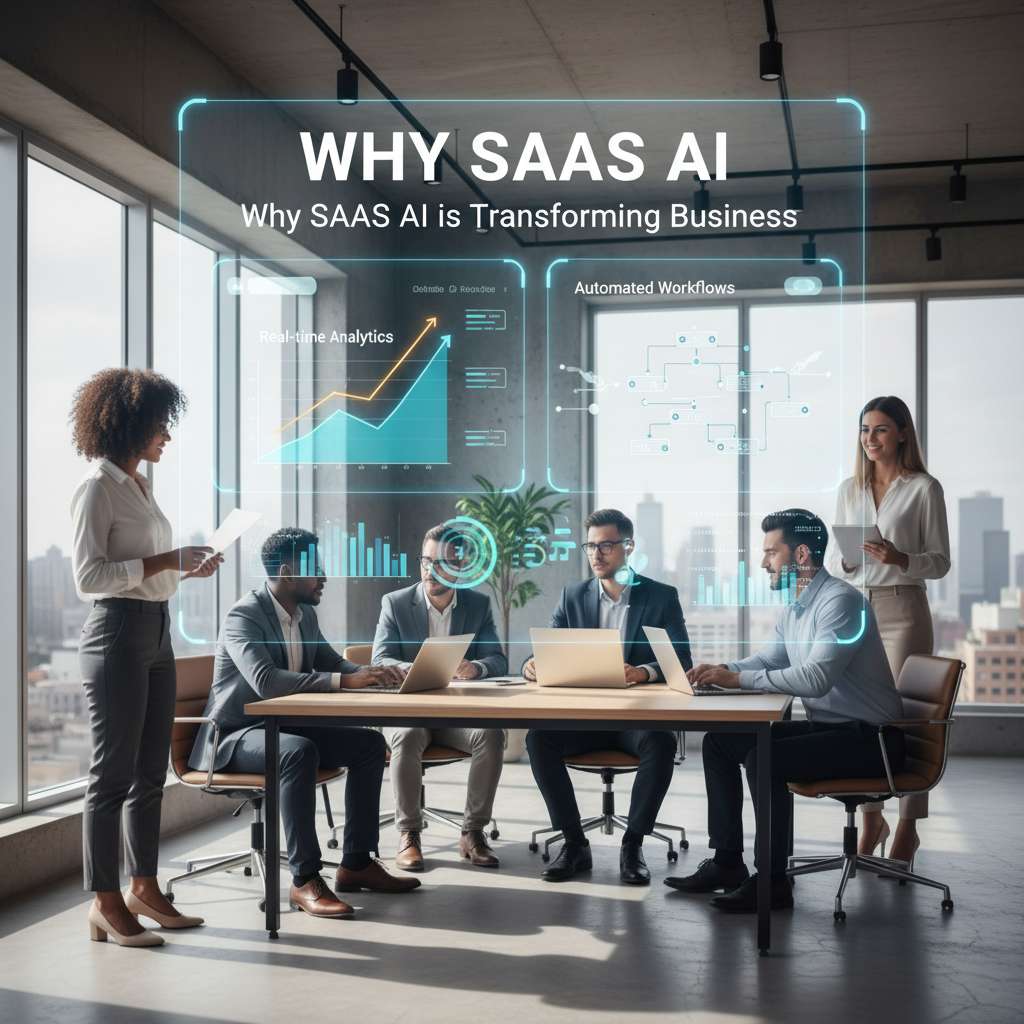
why saas ai: Why SaaS AI is Transforming Business
Discover why SaaS AI is revolutionizing business operations in 2026. Learn benefits, challenges, and best practices for AI-powered software solutions — learn...
| Key Insight | Explanation |
|---|---|
| AI-Enhanced SaaS Efficiency | AI integration in SaaS platforms increases operational efficiency by up to 40% through automated workflows and intelligent decision-making |
| Cost Reduction Benefits | Companies adopting SaaS AI solutions report average cost savings of 25-35% compared to traditional software implementations |
| Market Growth Trajectory | The AI-powered SaaS market is projected to reach $195 billion by 2026, representing a 25% annual growth rate |
| Competitive Advantage | Organizations leveraging SaaS AI gain significant competitive advantages through real-time analytics and predictive capabilities |
| Implementation Challenges | Data integration and security concerns remain primary obstacles, requiring strategic planning and expert guidance |
| Future-Proof Technology | SaaS AI platforms offer continuous updates and improvements without requiring manual software installations or upgrades |
What Is SaaS AI?: why saas ai
SaaS AI represents the integration of artificial intelligence capabilities directly into cloud-based software platforms, creating intelligent applications that learn, adapt, and optimize automatically. This convergence enables businesses to access sophisticated AI functionalities through familiar web-based interfaces without requiring extensive technical infrastructure or specialized expertise.Defining SaaS AI Components
The core components of SaaS AI include machine learning algorithms, natural language processing, predictive analytics, and automated decision-making systems embedded within traditional SaaS architectures. These elements work together to create software that doesn't just store and process data but actively analyzes patterns, predicts outcomes, and suggests optimizations. According to research from the International Finance Corporation, AI-enabled SaaS platforms are becoming the next frontier for business innovation, particularly in emerging markets where traditional IT infrastructure limitations make cloud-based AI solutions especially attractive [1]. This accessibility factor explains why saas ai organizations worldwide are rapidly adopting these technologies.Evolution from Traditional SaaS
Traditional SaaS platforms primarily focused on data storage, basic automation, and user interface standardization. Modern SaaS AI solutions extend these capabilities by incorporating:- Intelligent data analysis that identifies trends and anomalies automatically
- Predictive modeling that forecasts business outcomes and market changes
- Automated workflow optimization based on usage patterns and performance metrics
- Natural language interfaces that enable conversational interactions with business data
- Real-time personalization that adapts user experiences based on individual behavior
Pro Tip: When evaluating SaaS AI platforms, prioritize solutions that offer transparent AI decision-making processes. Understanding how the AI reaches conclusions is crucial for maintaining business control and regulatory compliance.
How SaaS AI Works
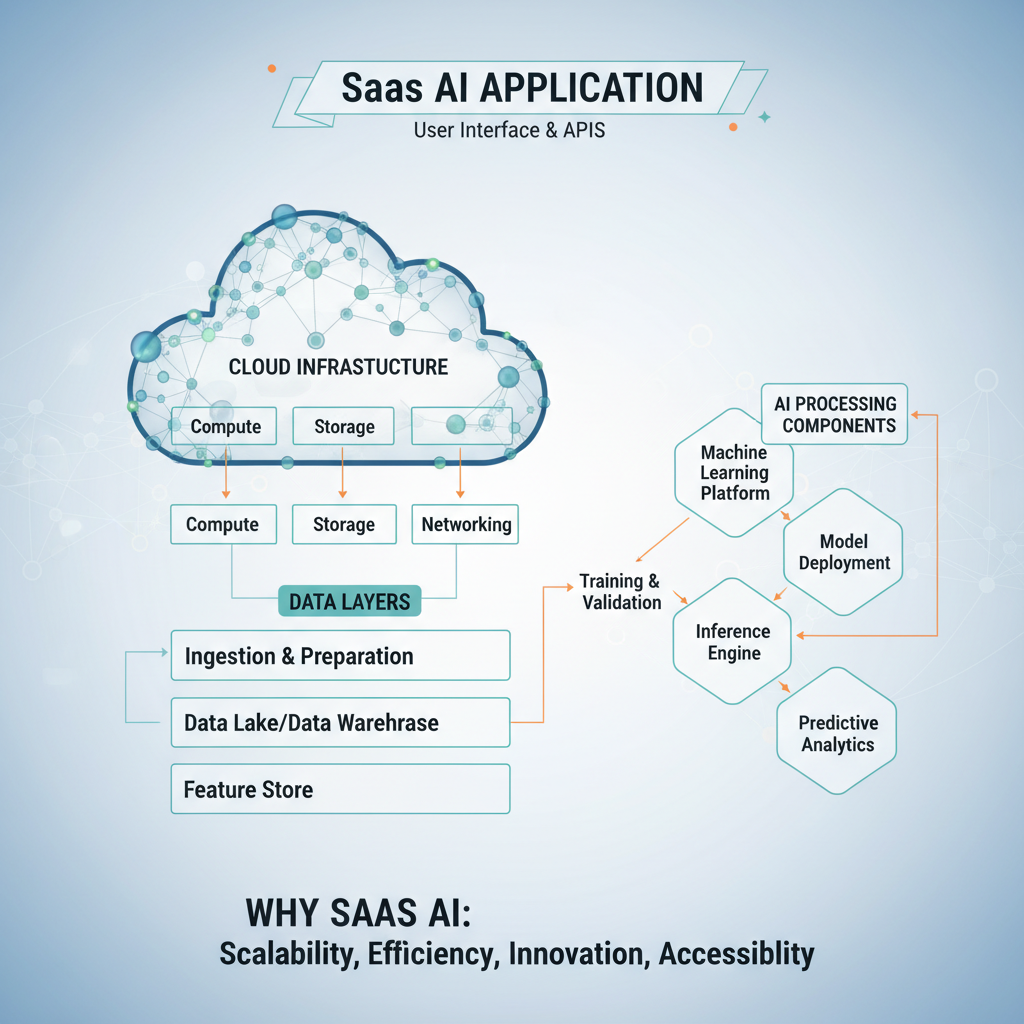
SaaS AI operates through a sophisticated architecture that combines cloud computing infrastructure with advanced artificial intelligence algorithms to deliver intelligent software services. The system processes vast amounts of data in real-time, learns from user interactions, and continuously improves its performance without requiring manual intervention from users.Technical Architecture Overview
The technical foundation of SaaS AI rests on three primary layers: the data ingestion layer that collects information from multiple sources, the AI processing layer that analyzes and interprets this data, and the application layer that presents insights and automated actions to users. This multi-tier approach ensures scalability while maintaining performance across diverse business environments. Cloud infrastructure enables SaaS AI platforms to leverage distributed computing resources, allowing them to process complex algorithms and large datasets that would be impossible for individual organizations to handle independently. The cloud-native architecture also facilitates continuous updates and improvements to AI models without disrupting user operations.AI Integration Mechanisms
The integration of AI into SaaS platforms occurs through several key mechanisms:- API-based connections that allow AI services to communicate with existing business systems
- Embedded machine learning models that operate directly within the SaaS application
- Real-time data streaming that enables immediate analysis and response
- Federated learning approaches that improve AI performance while maintaining data privacy
- Microservices architecture that allows modular AI functionality deployment
Pro Tip: Implement SaaS AI solutions gradually, starting with non-critical processes. This approach allows your team to understand the technology's capabilities while minimizing risk to essential business operations.
Key Benefits: Why SaaS AI Matters
The compelling case for why saas ai has become essential centers on its ability to deliver transformative business value through enhanced efficiency, reduced costs, and improved decision-making capabilities. Organizations implementing SaaS AI solutions consistently report significant improvements across multiple operational dimensions.Operational Efficiency Gains
SaaS AI platforms dramatically improve operational efficiency by automating routine tasks, optimizing workflows, and eliminating manual processes that traditionally consumed significant human resources. These systems can process and analyze data at speeds impossible for human operators while maintaining consistency and accuracy across all operations. The automation capabilities extend beyond simple task execution to include intelligent process optimization. AI algorithms continuously monitor system performance, identify bottlenecks, and implement improvements automatically. This self-optimizing behavior ensures that business operations become more efficient over time without requiring constant management attention. Key efficiency benefits include:- Automated data entry and processing that reduces manual errors by up to 90%
- Intelligent workflow routing that optimizes task distribution based on team capacity and expertise
- Predictive maintenance scheduling that prevents system downtime before issues occur
- Real-time performance monitoring that identifies optimization opportunities instantly
- Automated report generation that delivers insights without manual data compilation
Cost Reduction and Competitive Advantages
Financial benefits represent one of the most compelling reasons why saas ai adoption continues accelerating. Organizations typically achieve cost reductions through decreased labor requirements, reduced infrastructure expenses, and improved resource utilization efficiency. Forbes analysis reveals that AI disruption in the SaaS landscape is fundamentally changing how businesses operate, with AI systems capable of analyzing sales calls, processing customer interactions, and managing complex data relationships that previously required significant human intervention [4]. This capability transformation directly translates to substantial cost savings. A comparison of traditional software versus SaaS AI solutions demonstrates the financial advantages:| Cost Factor | Traditional Software | SaaS AI Solution | Savings Potential |
|---|---|---|---|
| Initial Implementation | $50,000 - $200,000 | $1,000 - $10,000 | 80-95% |
| Annual Maintenance | 15-20% of license cost | Included in subscription | 60-75% |
| Staff Training | $5,000 - $25,000 | $500 - $2,000 | 70-90% |
| Infrastructure | $10,000 - $100,000 | $0 | 100% |
Pro Tip: Calculate the total cost of ownership over a 3-5 year period when comparing SaaS AI solutions to traditional software. Include hidden costs like training, maintenance, and upgrade expenses for accurate comparison.
Common Challenges & Mistakes
While SaaS AI offers significant benefits, organizations frequently encounter obstacles that can derail successful implementation. Understanding these common challenges and mistakes is crucial for developing effective strategies that maximize the value of AI-powered software investments.Implementation Obstacles
Data integration complexity represents the most significant challenge organizations face when adopting SaaS AI solutions. Many companies underestimate the effort required to consolidate data from multiple sources, clean inconsistent information, and establish reliable data pipelines that AI algorithms can effectively utilize. Security and privacy concerns create additional implementation barriers. Organizations must navigate complex regulatory requirements while ensuring that sensitive business data remains protected when processed by AI systems. The challenge intensifies when dealing with cross-border data transfers and varying international privacy regulations. Common implementation mistakes include:- Insufficient data preparation leading to poor AI performance and unreliable insights
- Inadequate staff training resulting in low adoption rates and underutilized features
- Unrealistic expectations about AI capabilities causing disappointment and project abandonment
- Poor vendor selection based solely on price rather than compatibility and support quality
- Lack of clear success metrics making it impossible to measure ROI and optimization opportunities
Strategic Planning Failures
Many organizations approach why saas ai adoption without comprehensive strategic planning, leading to fragmented implementations that fail to deliver expected benefits. The absence of clear objectives and success criteria makes it difficult to evaluate progress and justify continued investment. Research from Software Equity Group indicates that most SaaS leaders believe AI will increase their competitiveness and enterprise value, but many lack concrete strategies for achieving these goals [5]. This disconnect between expectations and planning often results in suboptimal outcomes. According to analysis by ASIS International, organizations must carefully balance the benefits of AI-powered SaaS applications with security considerations [6]. The report emphasizes that while these tools boost efficiency and productivity, they require careful security planning to prevent data breaches and unauthorized access. A systematic approach to avoiding strategic planning failures includes:- Conducting thorough needs assessment before selecting SaaS AI solutions
- Establishing clear performance metrics and success criteria
- Developing comprehensive change management plans for user adoption
- Creating data governance frameworks that ensure quality and security
- Planning for scalability and future feature requirements
- Establishing vendor relationship management protocols
Pro Tip: Start with a pilot project in a non-critical business area to test SaaS AI capabilities and refine your implementation approach. Use lessons learned from the pilot to improve your organization-wide rollout strategy.
Best Practices & Expert Tips for 2026
Successful SaaS AI implementation in 2026 requires adopting proven best practices that address current market conditions and technological capabilities. Organizations that follow these expert recommendations consistently achieve better outcomes and avoid common pitfalls that derail AI initiatives.Selection Criteria Framework
Choosing the right SaaS AI platform requires a systematic evaluation framework that goes beyond feature comparisons to include strategic fit, scalability potential, and long-term vendor viability. The selection process should prioritize solutions that align with specific business objectives rather than pursuing the most advanced AI capabilities. Key selection criteria for 2026 include:- Integration capabilities with existing business systems and data sources
- Transparency in AI decision-making processes for regulatory compliance
- Scalability to accommodate business growth and changing requirements
- Security features that meet industry-specific compliance standards
- Vendor stability and long-term product development roadmap
- Cost structure that aligns with expected ROI and budget constraints
Implementation and Optimization Strategies
Effective why saas ai implementation follows a structured approach that minimizes disruption while maximizing value realization. The most successful organizations adopt phased rollout strategies that allow for learning and adjustment throughout the process. According to analysis from Canny's research on SaaS AI applications, companies can leverage AI across eight key areas: product development, product management, data analysis, customer support, marketing automation, sales optimization, financial planning, and operational efficiency [7]. This comprehensive approach ensures that AI investments deliver value across multiple business functions. Best practices for 2026 implementation include:- Establishing clear data governance policies before system deployment
- Creating comprehensive user training programs that cover both technical and strategic aspects
- Implementing gradual rollout phases with defined success metrics for each stage
- Developing feedback mechanisms to capture user experiences and optimization opportunities
- Planning for change management to address organizational resistance and cultural adaptation
- Setting up monitoring systems to track performance and identify improvement areas
Pro Tip: Establish AI governance committees that include representatives from IT, operations, legal, and business units. This cross-functional approach ensures that implementation decisions consider all organizational perspectives and requirements.

Sources & References
- International Finance Corporation, "AI-Enabled Software-as-a-Service (SaaS)—The Next Frontier", 2022
- Harvard Business Review, "How Gen AI Could Disrupt SaaS—and Change the Companies That Use It", 2025
- EY, "AI is transforming SaaS landscape", 2026
- Forbes, "How AI Is Disrupting The SaaS Landscape And Reshaping The Future", 2025
- Software Equity Group, "The AI Reset: How SaaS Founders Can Reinvent, Defend, or Exit", 2026
- ASIS International, "AI-Powered SaaS: How to Get the Most Out of It, Safely", 2024
- Canny, "8 ways SaaS companies can use AI to get ahead", 2026
Frequently Asked Questions
1. Why does AI replace SaaS?
Understanding why saas ai is essential. AI doesn't replace SaaS but transforms it by creating intelligent interface layers that abstract complexity and automate workflows. AI acts as an advanced orchestration system that connects multiple SaaS applications, enabling goal-oriented user experiences rather than traditional point-and-click interactions. This evolution makes software more intuitive and efficient while reducing the need for manual process management.
2. What is the 3-3-2-2-2 rule of SaaS?
The 3-3-2-2-2 rule is a growth framework suggesting SaaS businesses should target 3 months of recurring revenue growth, 3 months of customer retention improvements, 2 months of sales growth, 2 months of positive cash flow, and 2 months of net revenue growth. This guideline helps maintain balanced growth across all critical business metrics rather than optimizing for a single performance indicator. This is particularly relevant for why saas ai.
3. Is ChatGPT considered SaaS?
Yes, ChatGPT operates as a SaaS platform, providing AI capabilities through web-based interfaces and API integrations. It exemplifies the evolution of SaaS from simple software delivery to comprehensive AI service platforms. ChatGPT's integration capabilities with business systems demonstrate how AI-powered SaaS solutions are becoming essential tools for enterprise operations and customer interactions. When considering why saas ai, this point stands out.
4. How does SaaS AI improve business decision-making?
SaaS AI enhances decision-making by analyzing vast datasets in real-time, identifying patterns humans might miss, and providing predictive insights about future trends. These systems can process multiple variables simultaneously and present recommendations with confidence scores, enabling leaders to make data-driven decisions faster and with greater accuracy than traditional analysis methods. For those exploring why saas ai, this matters.
5. What security considerations apply to SaaS AI platforms?
SaaS AI security requires attention to data encryption, access controls, AI model transparency, and compliance with industry regulations. Organizations must ensure that AI algorithms don't inadvertently expose sensitive information and that data processing meets privacy requirements. Regular security audits and vendor assessments are essential for maintaining protection standards. This directly impacts why saas ai outcomes.
6. How can small businesses benefit from SaaS AI?
Small businesses gain access to enterprise-level AI capabilities without requiring significant infrastructure investments through SaaS AI platforms. These solutions provide automated customer service, intelligent marketing optimization, financial forecasting, and operational efficiency improvements that were previously available only to large corporations with dedicated IT resources. This is particularly relevant for why saas ai.
7. What training is required for SaaS AI adoption?
SaaS AI training should cover both technical usage and strategic application of AI insights. Teams need to understand how to interpret AI recommendations, configure automation rules, and maintain data quality for optimal AI performance. Training programs should also address change management and help staff adapt to AI-augmented workflows rather than traditional manual processes. When considering why saas ai, this point stands out.
Understanding why saas ai has become essential for modern business success requires recognizing that this technology represents more than just an upgrade to existing software solutions. It's a fundamental transformation in how organizations operate, make decisions, and deliver value to their customers. The evidence clearly demonstrates that SaaS AI offers compelling advantages through enhanced efficiency, reduced costs, and improved competitive positioning. Organizations that embrace these technologies gain access to capabilities that enable them to respond more quickly to market changes, optimize their operations continuously, and deliver superior customer experiences. However, success with SaaS AI requires careful planning, strategic implementation, and ongoing optimization. The most successful organizations treat AI adoption as a comprehensive business transformation rather than a simple technology upgrade. They invest in proper training, establish clear governance frameworks, and maintain focus on measurable business outcomes. As we progress through 2026, the question isn't whether businesses should adopt SaaS AI solutions, but how quickly they can implement these technologies effectively. The competitive advantages available to early adopters continue expanding, while the costs and risks of delayed adoption increase.
Recommended Articles
Explore more from our content library: