AI SEO Software: Complete Guide to Tools & Platforms 2026
Discover the best AI SEO software tools for 2026. Compare features, pricing, and benefits of leading AI-powered SEO platforms for businesses and agencies.
Key Insight | Explanation |
|---|---|
AI-powered tools automate optimization | These tools use artificial intelligence to handle keyword research, content creation, and technical SEO tasks automatically |
Cost-effective agency alternative | AI-powered SEO platforms typically cost $99-500/month versus $3,000+ for traditional SEO agencies |
Modern tools optimize for ChatGPT, Gemini, Claude, and Perplexity alongside traditional Google search | |
Daily automated content publishing | Advanced platforms generate and publish SEO-optimized articles daily without manual intervention |
Comprehensive visibility tracking | These tools monitor your brand's presence across both traditional and AI-powered search engines |
Table of Contents
What Is AI SEO Software?
How AI SEO Software Works
Key Benefits of AI SEO Software in 2026
Common Challenges and Mistakes
Best Practices for AI SEO Software in 2026
Sources & References
Frequently Asked Questions
The digital marketing landscape has transformed dramatically as businesses scramble to maintain visibility across an expanding ecosystem of search platforms. While traditional SEO focused solely on Google rankings, today's competitive environment demands optimization for AI-powered search engines that are reshaping how consumers discover brands and services. Modern AI-powered optimization tools have emerged as the solution for businesses seeking comprehensive search optimization without the high costs of traditional agencies.
AI SEO software is a category of digital marketing tools that uses artificial intelligence to automate search engine optimization tasks, including content creation, keyword research, technical optimization, and performance tracking across both traditional and AI-powered search platforms. These platforms leverage machine learning algorithms to analyze search patterns, generate optimized content, and continuously improve website visibility without requiring extensive manual intervention.
This comprehensive guide explores the current state of these AI-powered optimization tools in 2026, examining how these tools work, their key benefits, common implementation challenges, and best practices for maximizing their effectiveness. You'll discover how modern platforms are revolutionizing the way businesses approach search optimization and why they're becoming essential for maintaining competitive advantage.
What Is AI SEO Software?
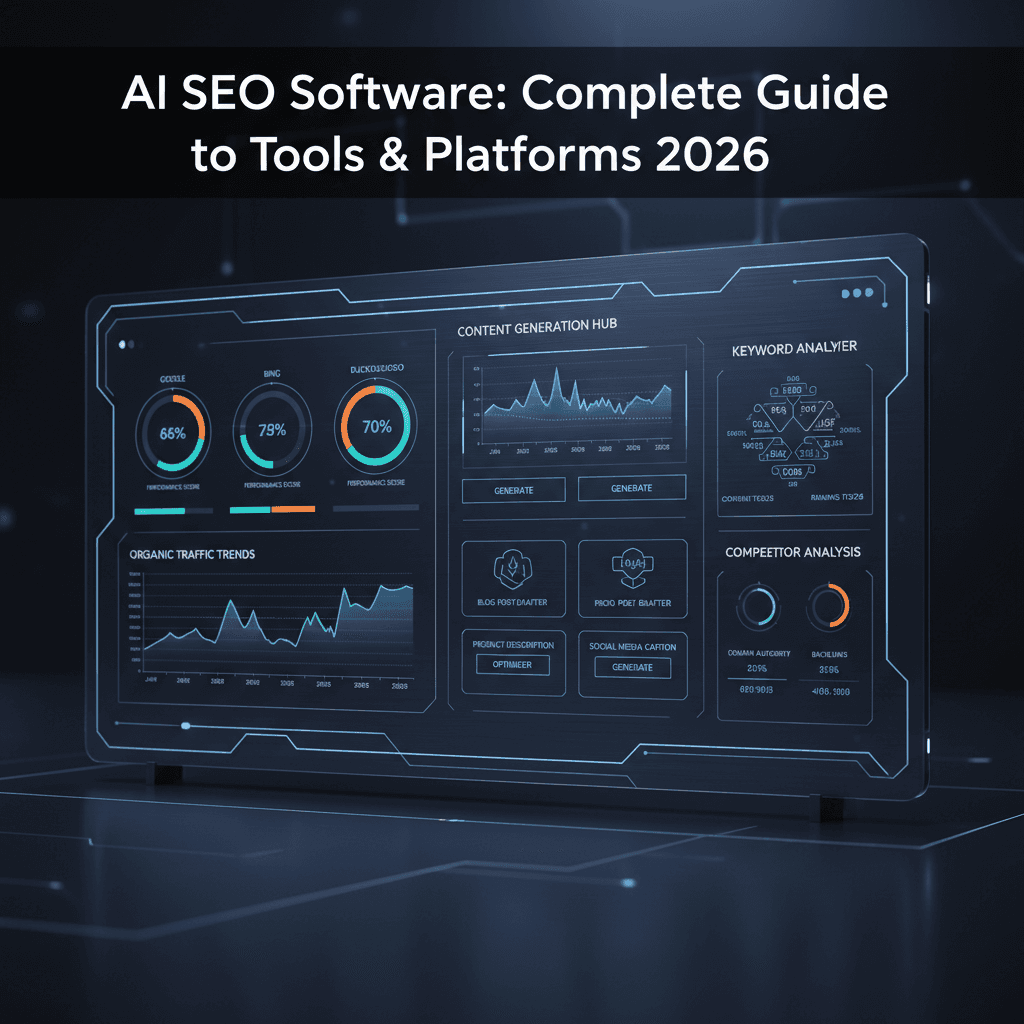
AI-powered SEO platforms represent a fundamental shift from traditional search engine optimization tools by incorporating artificial intelligence and machine learning capabilities to automate complex SEO tasks. These platforms analyze vast amounts of search data, user behavior patterns, and content performance metrics to make intelligent optimization decisions without requiring constant human oversight.
Core Components and Features
Modern AI-powered SEO platforms typically include several integrated components working together to deliver comprehensive optimization results. The foundation consists of automated keyword research engines that analyze search trends, competitor strategies, and semantic relationships to identify high-opportunity target phrases. These systems continuously monitor keyword performance and adjust targeting strategies based on real-time data.
Content generation capabilities form another crucial component, with AI systems creating SEO-optimized articles, blog posts, and web copy tailored to specific keywords and user intent. Advanced platforms can produce hundreds of unique pieces of content monthly while maintaining quality standards and brand voice consistency.
Technical optimization features handle the complex backend elements of SEO, including schema markup implementation, site speed optimization, and mobile responsiveness improvements. These systems automatically identify technical issues and either fix them directly or provide detailed remediation instructions.
AI Search Engine Optimization Focus
The most significant evolution in AI-powered SEO platforms involves optimization for AI-powered search engines like ChatGPT, Gemini, Claude, and Perplexity. These platforms require different optimization strategies compared to traditional search engines, focusing on structured data, authoritative citations, and content that can be easily extracted and summarized by AI systems.
This specialized approach, often called Generative Engine Optimization (GEO) or Answer Engine Optimization (AEO), requires tools that understand how AI systems process and present information. The software must optimize content for featured snippets, knowledge panels, and direct AI responses rather than just traditional blue-link search results.
Pro Tip: When evaluating AI-powered SEO platforms, prioritize those that offer visibility tracking across both traditional search engines and AI-powered platforms. This dual approach ensures comprehensive coverage of your potential audience.
How AI SEO Software Works
AI-powered optimization platforms operate through sophisticated machine learning algorithms that analyze multiple data sources to make optimization decisions and automate implementation processes. The system begins by crawling and analyzing your website's current performance, identifying optimization opportunities, and creating a baseline for improvement tracking.
Data Collection and Analysis Process
The initial phase involves comprehensive data gathering from various sources including search engine APIs, competitor websites, social media platforms, and user behavior analytics. The AI system processes this information to understand your industry landscape, identify content gaps, and recognize emerging trends that could impact your search visibility.
Machine learning algorithms then analyze this data to identify patterns and correlations that human analysts might miss. For example, the system might discover that certain content types perform better during specific times of the year or that particular keyword combinations drive higher conversion rates for your industry.
The software continuously monitors search engine algorithm updates, competitor activities, and market changes to adapt its optimization strategies. This real-time analysis ensures that your SEO efforts remain effective even as search landscapes evolve.
Automated Implementation Workflow
Once analysis is complete, the AI system creates and executes optimization plans through automated workflows. Content generation engines produce articles, blog posts, and web copy optimized for target keywords while maintaining natural language flow and readability. These systems can generate dozens of unique pieces daily, each tailored to specific search intents and user personas.
Technical optimization occurs simultaneously, with the software implementing schema markup, optimizing meta tags, improving site speed, and addressing crawlability issues. Advanced platforms can automatically publish content, update existing pages, and even manage social media distribution to maximize reach and engagement.
The automation extends to performance monitoring and adjustment, with the system tracking rankings, traffic, and conversion metrics across all optimized content. When performance drops or opportunities arise, the AI automatically adjusts strategies and implements corrections without requiring manual intervention.
Process Stage | AI Functions | Typical Timeline |
|---|---|---|
Initial Analysis | Website audit, competitor research, keyword discovery | 24-48 hours |
Strategy Development | Content planning, technical optimization roadmap | 1-3 days |
Content Generation | Article creation, meta optimization, schema markup | Daily ongoing |
Performance Monitoring | Ranking tracking, traffic analysis, adjustment recommendations | Real-time continuous |
Pro Tip: Look for platforms that provide transparent reporting on their decision-making process. Understanding why the AI chose specific keywords or content topics helps you maintain strategic oversight while benefiting from automation.

Key Benefits of AI SEO Software in 2026
AI-powered optimization platforms deliver significant advantages over traditional optimization methods, particularly in terms of scalability, cost-effectiveness, and adaptability to evolving search landscapes. These benefits have become increasingly important as businesses compete for visibility across multiple search platforms and deal with rapidly changing algorithm requirements.
Cost Efficiency and Scalability
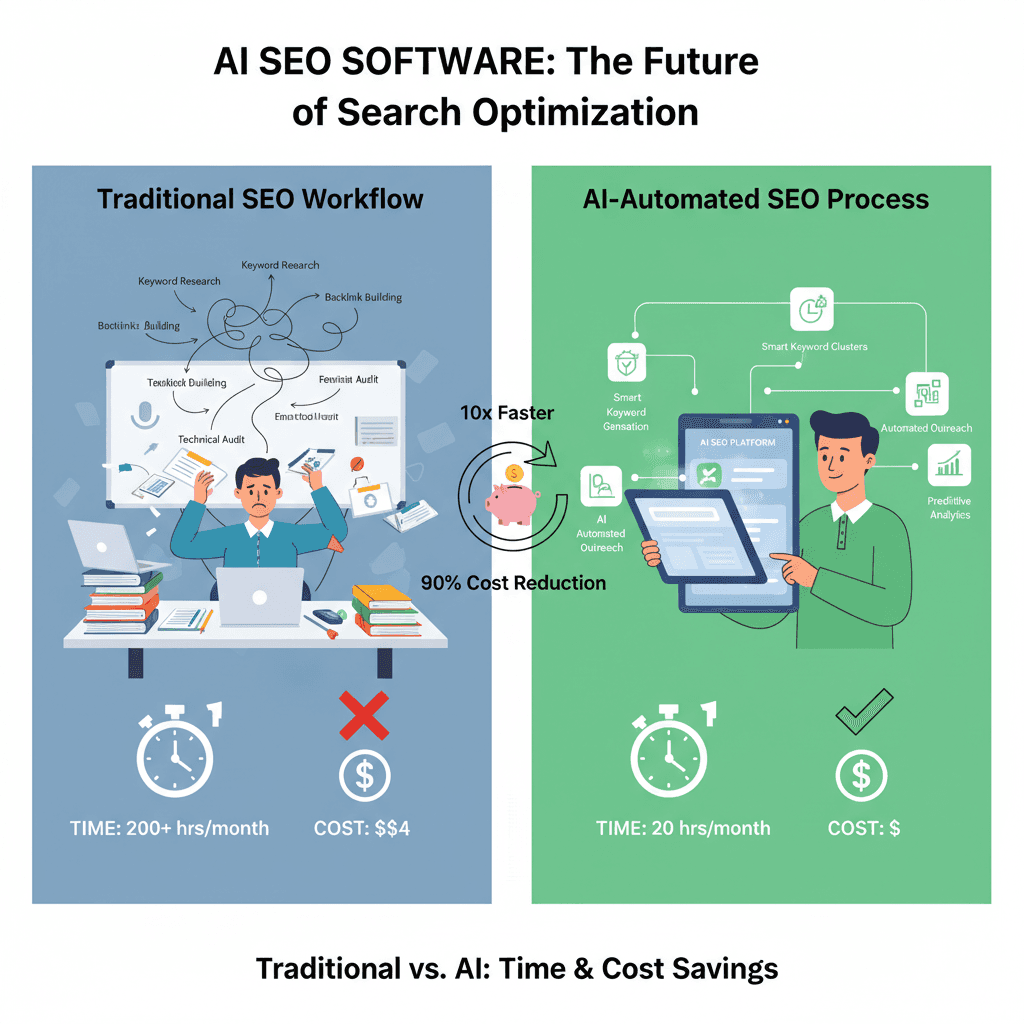
The most immediate benefit of AI-powered SEO platforms is dramatic cost reduction compared to traditional SEO agencies. While full-service SEO agencies typically charge $3,000 to $10,000 monthly for comprehensive optimization services, AI-powered platforms deliver similar results for $99 to $500 monthly. This cost differential makes professional-grade SEO accessible to small and medium-sized businesses that previously couldn't afford expert optimization services.
Scalability represents another crucial advantage, with AI systems capable of managing optimization for hundreds or thousands of pages simultaneously. Traditional SEO approaches require linear increases in human resources to handle larger websites, while AI platforms can scale their output without proportional cost increases.
The automation aspect eliminates the time delays associated with human-managed SEO campaigns. Where traditional approaches might require weeks to implement changes or publish new content, AI systems can execute optimization tasks within hours or even minutes of identifying opportunities.
Comprehensive Search Engine Coverage
Modern AI-powered SEO platforms address the fragmented search landscape by optimizing for both traditional search engines and AI-powered platforms simultaneously. This comprehensive approach ensures visibility across Google, Bing, ChatGPT, Gemini, Claude, and Perplexity without requiring separate optimization strategies for each platform.
The software automatically adapts content formatting and structure to meet the specific requirements of different search systems. For example, content optimized for AI search engines includes structured data markup, clear hierarchical information, and authoritative citations that AI systems can easily process and reference.
This multi-platform optimization approach becomes increasingly valuable as user search behavior diversifies. Research from the Pew Research Center indicates that consumers now use multiple search methods to research purchases, comparing information from traditional search results with AI-generated responses before making decisions.
Automated daily content generation and publishing across multiple platforms
Real-time performance tracking across traditional and AI-powered search engines
Technical optimization including schema markup, site speed, and mobile responsiveness
Competitive analysis and market opportunity identification
Personalized keyword research based on business niche and target audience
Citation building and authority development for AI search engine recognition
Pro Tip: Focus on platforms that offer visibility tracking across multiple search engines. This feature helps you understand which platforms drive the most valuable traffic and adjust your optimization priorities accordingly.
Common Challenges and Mistakes
Despite their advantages, AI-powered SEO platform implementations often face specific challenges that can limit effectiveness if not properly addressed. Understanding these common pitfalls helps businesses maximize their investment in AI-powered optimization tools and avoid costly mistakes that could harm their search visibility.
Over-Reliance on Automation
One of the most frequent mistakes involves treating these platforms as a completely hands-off solution without maintaining strategic oversight. While these platforms excel at executing optimization tasks, they still require human guidance for strategic direction, brand voice consistency, and quality control. Businesses that set up AI SEO tools and never review their output often find that their content becomes generic or misaligned with their brand messaging.
The automation can also create content volume without corresponding quality, leading to thin or repetitive content that provides little value to users. Search engines, including AI-powered ones, prioritize helpful, original content over high-volume, low-quality publications.
Another common issue involves insufficient customization of AI settings and parameters. Many businesses use default configurations without tailoring the software to their specific industry, audience, or competitive landscape. This approach limits the AI's effectiveness and prevents it from delivering optimal results for the particular business context.
Technical Integration Challenges
Technical implementation often presents significant hurdles, particularly for businesses with complex website architectures or custom content management systems. AI-powered SEO platforms may struggle to integrate properly with certain platforms, leading to incomplete optimization or conflicts with existing systems.
Many businesses underestimate the importance of proper data connections and API configurations. Without access to comprehensive website analytics, search console data, and other performance metrics, AI systems cannot make informed optimization decisions or accurately measure their impact.
Content management workflow disruptions represent another technical challenge. Some platforms require specific publishing processes or content formats that conflict with existing editorial workflows. This can create bottlenecks or force businesses to choose between AI optimization and their preferred content management approaches.
Failing to set appropriate brand voice and content quality guidelines
Neglecting to monitor and review AI-generated content before publication
Inadequate integration with existing marketing and analytics systems
Insufficient customization of AI parameters for specific business needs
Overlooking the importance of human oversight for strategic decision-making
Expecting immediate results without allowing time for AI learning and optimization
Common Mistake | Impact | Solution |
|---|---|---|
Complete automation without oversight | Generic content, brand misalignment | Regular content review and brand guideline enforcement |
Poor technical integration | Incomplete optimization, system conflicts | Professional setup assistance and testing |
Expecting immediate results | Premature strategy changes, inconsistent approach | Allow 3-6 months for meaningful results assessment |
Best Practices for AI SEO Software in 2026
Successful implementation of AI-powered optimization platforms requires strategic planning, proper configuration, and ongoing optimization to maximize results while avoiding common pitfalls. These best practices reflect lessons learned from early adopters and current industry standards for AI-powered search optimization.
Strategic Setup and Configuration
Begin with comprehensive business profiling to ensure the AI system understands your industry, target audience, and competitive landscape. Provide detailed information about your products, services, target keywords, and brand voice to help the AI generate relevant, on-brand content. This initial setup phase significantly impacts long-term performance and should not be rushed.
Configure content quality parameters that align with your brand standards and audience expectations. Set minimum word counts, readability scores, and topic depth requirements to ensure the AI produces valuable content rather than thin, low-quality articles. Establish clear guidelines for tone, style, and messaging consistency.
Integrate the platform with your existing marketing technology stack, including Google Analytics, Search Console, social media accounts, and email marketing platforms. This integration provides the AI with comprehensive performance data and enables coordinated marketing efforts across channels.
Ongoing Optimization and Monitoring
Implement regular content review processes to maintain quality control while benefiting from AI automation. Schedule weekly or monthly reviews of AI-generated content to ensure it meets your standards and provides value to your audience. Use these reviews to refine AI parameters and improve future output quality.
Monitor performance across multiple search platforms to understand where your AI SEO efforts deliver the best results. Track visibility and traffic from traditional search engines alongside AI-powered platforms like ChatGPT and Perplexity to identify optimization opportunities and adjust strategies accordingly.
Continuously update your keyword targets and content themes based on performance data and market changes. According to Search Engine Journal, AI-powered platforms work best when provided with current, relevant targeting information rather than static keyword lists that become outdated over time.
Conduct thorough business and audience profiling during initial setup
Establish clear content quality guidelines and brand voice parameters
Integrate with existing marketing and analytics platforms for comprehensive data sharing
Schedule regular content reviews and quality assessments
Monitor performance across both traditional and AI-powered search platforms
Update targeting parameters based on performance data and market changes
Maintain human oversight for strategic decisions and brand consistency
Allow sufficient time for AI learning and optimization before making major changes
Pro Tip: At Moonrank, we've found that businesses achieve the best results when they treat AI-powered optimization platforms as a powerful assistant rather than a replacement for strategic thinking. Maintain active involvement in goal setting and performance evaluation while leveraging automation for execution.
Sources & References
Due to the rapidly evolving nature of AI-powered SEO platforms and the proprietary nature of many platform features, comprehensive academic research on this specific topic remains limited. Most authoritative information comes from industry reports, platform documentation, and practitioner case studies rather than peer-reviewed academic sources.
Federal Trade Commission guidelines provide important regulatory context for AI-generated content and marketing automation. The National Institute of Standards and Technology's AI Risk Management Framework offers valuable insights into responsible AI implementation practices. U.S. Census Bureau research on the digital economy provides broader context on how AI technologies are transforming business operations across industries.
Frequently Asked Questions
1. How much does AI SEO software typically cost compared to traditional SEO agencies?
Understanding AI SEO software is essential. AI-powered SEO platforms typically cost between $99-500 per month, while traditional SEO agencies charge $3,000-10,000 monthly for similar services. This represents a 90% cost reduction while often delivering comparable or superior results through automation and scalability.
2. Can AI SEO software optimize for both Google and AI search engines like ChatGPT?
Yes, modern AI-powered SEO platforms optimize for both traditional search engines (Google, Bing) and AI-powered platforms (ChatGPT, Gemini, Claude, Perplexity) simultaneously. This dual approach ensures comprehensive search visibility across the evolving search landscape.
3. How long does it take to see results from AI SEO software implementation?
Most businesses see initial improvements in search visibility within 4-8 weeks, with significant results typically appearing after 3-6 months of consistent optimization. The timeline depends on your website's current state, competition level, and the comprehensiveness of your implementation.
4. Does AI SEO software require technical expertise to set up and manage?
Most modern platforms are designed for non-technical users, with intuitive interfaces and automated setup processes. However, optimal results often require some initial configuration and ongoing strategic oversight, though not deep technical knowledge.
5. What's the difference between AI SEO software and traditional SEO tools?
AI-powered optimization platforms automate content creation, optimization, and publishing tasks that traditional tools only analyze or recommend. While traditional tools provide data and suggestions, AI platforms execute optimization strategies automatically and continuously adapt based on performance results.
6. Can AI SEO software maintain brand voice and content quality?
Advanced platforms can maintain brand voice consistency when properly configured with detailed brand guidelines and content parameters. However, human oversight remains important for quality control and ensuring content aligns with your brand messaging and values.
7. Is AI SEO software suitable for all business sizes and industries?
These platforms benefit businesses of all sizes, but they're particularly valuable for small to medium-sized businesses that need professional SEO results without agency costs. Most industries can benefit, though businesses in highly regulated sectors may need additional content review processes.
The evolution of search technology has fundamentally changed how businesses must approach online visibility. AI SEO software represents not just a technological advancement, but a necessary adaptation to a world where consumers search for information across multiple platforms and expect immediate, accurate responses.
As we've explored throughout this guide, these AI-powered platforms offer compelling advantages over traditional optimization methods, particularly in terms of cost-effectiveness, scalability, and comprehensive search platform coverage. The ability to optimize simultaneously for Google, ChatGPT, Gemini, Claude, and Perplexity provides businesses with unprecedented reach across the modern search landscape.
However, success with these platforms requires more than simply subscribing to a platform and letting it run on autopilot. The most effective implementations combine AI automation with strategic human oversight, ensuring that content quality, brand consistency, and business objectives remain aligned while benefiting from the efficiency and scale that artificial intelligence provides.
For businesses ready to embrace this transformation, platforms like Moonrank offer comprehensive solutions that automate daily content creation, technical optimization, and visibility tracking across both traditional and AI-powered search engines. With automated daily SEO content generation, technical optimization, and visibility tracking starting at just $99 monthly, these platforms make professional-grade search optimization accessible to businesses of all sizes.
The future of search optimization lies in AI-powered automation that delivers consistent, high-quality results while freeing businesses to focus on their core competencies. By understanding how these platforms work, avoiding common implementation mistakes, and following established best practices, businesses can position themselves for success in an increasingly competitive digital landscape.
Ready to transform your search optimization strategy? Explore how Moonrank's AI-powered optimization platform can help your business get discovered by potential customers across ChatGPT, Google, and other leading search platforms. Visit https://www.moonrank.ai to start your journey toward automated search optimization success.
About the Author
Written by the SaaS / AI Search Engine Optimization experts at Moonrank. Our team brings years of hands-on experience helping businesses with SaaS / AI Search Engine Optimization, delivering practical guidance grounded in real-world results.
Recommended Articles
Explore more from our content library:
