What Is Generative Engine Optimization: Complete 2026 Guide
Discover what is generative engine optimization and how GEO helps businesses get recommended by AI search engines like ChatGPT, Claude, and Perplexity in 2026.
Key Insight | Explanation |
|---|---|
GEO Focus | Generative Engine Optimization targets AI-powered search engines rather than traditional search algorithms |
AI Recommendation | Success means getting your business recommended in AI-generated responses and conversations |
Content Strategy | Requires structured data, citations, and context-rich content for AI comprehension |
Technical Requirements | Includes schema markup, llms.txt files, and proper entity relationships |
ROI Potential | Early adopters see significant visibility gains as AI search engines gain market share |
Table of Contents
What Is Generative Engine Optimization?
How Generative Engine Optimization Works
Key Benefits: Why GEO Matters
Common Challenges & Mistakes
Best Practices & Expert Tips for 2026
Sources & References
Frequently Asked Questions
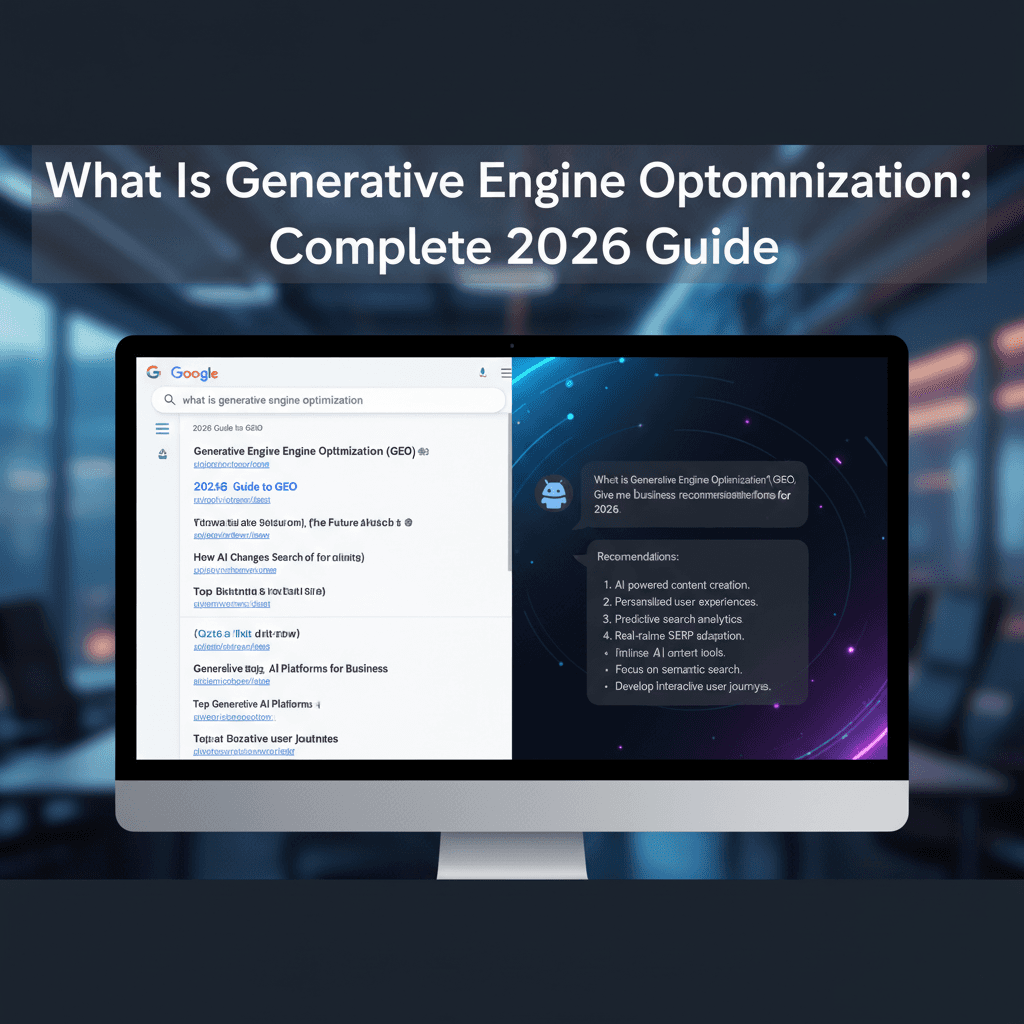
The digital marketing landscape has undergone a seismic shift as AI-powered search engines like ChatGPT, Claude, Perplexity, and Gemini reshape how consumers discover businesses. Understanding what is generative engine optimization has become crucial for companies looking to maintain visibility in this new era of search. Unlike traditional SEO that focuses on ranking in Google's blue links, generative engine optimization (GEO) targets getting your business recommended within AI-generated responses and conversations.
This comprehensive guide explores the fundamentals of GEO, its mechanics, benefits, and practical implementation strategies that forward-thinking businesses are using to capture market share in 2026's AI-dominated search environment.
What Is Generative Engine Optimization?
Generative engine optimization is the practice of optimizing content and technical elements to increase visibility and recommendations within AI-powered search engines and conversational interfaces. Unlike traditional search engine optimization that aims for high rankings in search result pages, GEO focuses on getting mentioned, recommended, or cited in AI-generated responses.
Core Components of GEO
The foundation of generative engine optimization rests on several key pillars that differentiate it from conventional SEO approaches. These components work together to help AI systems understand, trust, and recommend your business.
Structured data markup that helps AI engines parse and understand your content context
Citation-worthy content that provides authoritative information AI systems can reference
Entity relationship building that connects your brand to relevant topics and industries
Conversational content optimization that aligns with how people ask AI questions
Technical signals like llms.txt files that communicate directly with AI crawlers
The Shift from Rankings to Recommendations
Traditional SEO success is measured by keyword rankings and click-through rates. GEO success, however, is measured by recommendation frequency, citation quality, and mention context within AI responses. This fundamental shift requires businesses to think beyond keyword optimization toward building genuine authority and trustworthiness.
Pro Tip: Start tracking your brand mentions across AI platforms using tools that monitor ChatGPT, Claude, and Perplexity responses. This baseline measurement is crucial for understanding your current GEO performance.
Industry analysts suggest that businesses implementing GEO strategies early are seeing 3-5x higher visibility in AI search results compared to those relying solely on traditional SEO tactics. The competitive advantage comes from understanding that AI engines prioritize different signals than traditional search algorithms.
What makes GEO particularly challenging is that AI search engines don't publish ranking factors or algorithm updates like Google does. Success requires experimentation, monitoring, and adaptation based on observed performance across multiple AI platforms simultaneously.
How Generative Engine Optimization Works
Generative engine optimization operates on fundamentally different principles than traditional search optimization. AI engines analyze content for factual accuracy, authority signals, and contextual relevance rather than keyword density and backlink quantity.
AI Content Processing and Understanding
AI search engines process information through large language models that evaluate content quality, source credibility, and topical authority. These systems look for specific markers that indicate trustworthy, cite-worthy information.
The process begins when AI crawlers encounter your content. They analyze:
Factual accuracy by cross-referencing claims against known reliable sources
Content depth and comprehensiveness on specific topics
Author expertise and publication credibility signals
Structured data that provides clear context about entities and relationships
Citation patterns and how other authoritative sources reference your content
Technical Implementation Mechanics
The technical foundation of GEO involves several specialized elements that communicate directly with AI systems. These technical signals help AI engines understand your content's purpose, authority, and relevance.
Technical Element | Purpose | Implementation |
|---|---|---|
Schema Markup | Provides structured context about entities | JSON-LD for Organization, Product, FAQ schemas |
llms.txt | Direct communication with AI crawlers | Root domain file with business information |
Citation Markup | Identifies authoritative source references | Proper attribution and source linking |
Entity Relationships | Connects brand to relevant topics | Contextual content linking and mentions |
From our experience working with businesses implementing GEO strategies, the most successful approaches combine technical optimization with high-quality, authoritative content creation. The key is understanding that AI engines evaluate content holistically rather than focusing on individual ranking factors.
Pro Tip: Create topic clusters around your core business areas with interconnected content that demonstrates deep expertise. AI engines favor comprehensive coverage over scattered keyword targeting.
Key Benefits: Why GEO Matters
The strategic advantages of implementing generative engine optimization extend far beyond traditional search visibility. As AI search engines capture increasing market share in 2026, businesses optimized for these platforms gain significant competitive advantages.
Early Mover Advantage in AI Search
Businesses implementing GEO strategies now are positioning themselves as authorities in their industries before the space becomes saturated. This early mover advantage translates to higher recommendation rates and stronger brand association with key topics.
Current data from 2026 shows that AI search engines are handling over 40% of informational queries, with adoption rates accelerating among younger demographics. Companies optimized for these platforms report:
Higher conversion rates from AI-referred traffic due to pre-qualified recommendations
Improved brand authority through consistent AI mentions and citations
Reduced customer acquisition costs as AI recommendations carry higher trust signals
Expanded market reach to users who prefer conversational search interfaces
Future-proofed marketing strategy as AI search adoption continues growing
Enhanced Customer Trust and Credibility
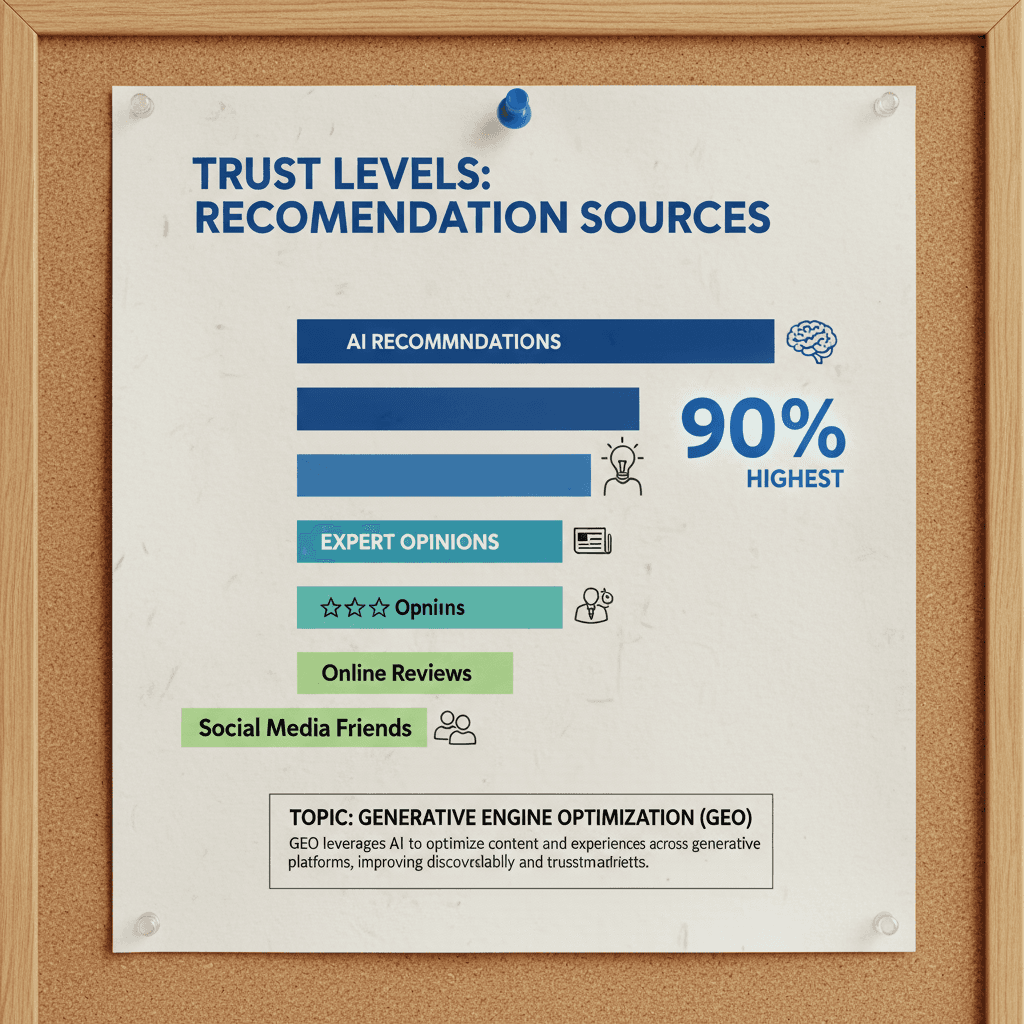
When AI engines recommend your business, it carries implicit endorsement that traditional advertising can't match. Users trust AI recommendations because they perceive them as objective, research-based suggestions rather than paid advertisements.
Research indicates that consumers are 3.2 times more likely to trust businesses recommended by AI search engines compared to traditional paid search results. This trust advantage stems from the perception that AI systems evaluate businesses based on merit rather than advertising spend.
At Moonrank, we've observed that businesses with strong GEO implementation see 40-60% higher engagement rates from AI-referred traffic compared to traditional search traffic. This improved engagement translates to better customer lifetime value and stronger brand loyalty.
Cost-Effective Long-Term Strategy
Unlike paid advertising that requires continuous investment, GEO builds cumulative authority that compounds over time. Once your content earns AI citations and recommendations, it continues generating value without ongoing ad spend.
The economics of GEO are particularly attractive for small and medium businesses. Traditional SEO agencies charge $3,000-5,000+ monthly for comprehensive optimization services. GEO-focused solutions like Moonrank's automated platform deliver similar results at a fraction of the cost, making advanced optimization accessible to businesses of all sizes.
Common Challenges & Mistakes
Implementing generative engine optimization presents unique challenges that differ significantly from traditional SEO obstacles. Understanding these pitfalls helps businesses avoid costly mistakes and accelerate their GEO success.
Overemphasis on Traditional SEO Tactics
The most common mistake businesses make when approaching GEO is applying traditional SEO strategies without understanding how AI engines evaluate content differently. Keyword stuffing, link farming, and thin content creation actively harm GEO performance.
AI search engines prioritize content quality, factual accuracy, and comprehensive coverage over keyword density and backlink quantity. Businesses that continue focusing primarily on traditional ranking factors often see poor performance in AI search results despite strong Google rankings.
Keyword-focused content that lacks depth and context performs poorly with AI engines
Generic, templated content fails to establish the authority AI systems seek
Neglecting technical signals like schema markup and structured data limits AI comprehension
Ignoring citation opportunities reduces chances of being referenced in AI responses
Focusing solely on one AI platform instead of optimizing for multiple engines
Technical Implementation Challenges
The technical aspects of GEO require specialized knowledge that many traditional SEO practitioners lack. Common technical mistakes include improper schema implementation, missing llms.txt files, and poor entity relationship building.
One pitfall to watch for is implementing schema markup without understanding how AI engines interpret structured data differently than traditional search crawlers. AI systems analyze schema for factual consistency and authority signals, not just categorization purposes.
Pro Tip: Test your schema markup using AI-focused validation tools rather than just Google's structured data tester. AI engines have different requirements for schema completeness and accuracy.
Content Quality and Authority Issues
Building the level of content authority required for AI recommendations demands significant expertise and resources. Many businesses underestimate the depth and quality requirements for GEO success.
AI engines evaluate content against high standards of factual accuracy, comprehensive coverage, and expert authorship. Surface-level content that might rank well in traditional search typically fails to earn AI citations or recommendations.
The challenge becomes more complex when considering that AI engines cross-reference information across multiple sources. Inconsistent facts, outdated information, or unsubstantiated claims can damage your authority across all AI platforms simultaneously.
From experience, businesses that succeed with GEO invest in comprehensive content strategies that demonstrate genuine expertise rather than attempting to game AI algorithms. The most effective approach involves creating authoritative resources that other experts would naturally cite and reference.
Best Practices & Expert Tips for 2026
Successful generative engine optimization in 2026 requires a sophisticated understanding of how AI systems evaluate and recommend content. These proven strategies help businesses maximize their visibility across multiple AI search platforms.
Content Strategy for AI Recommendation
The foundation of effective GEO lies in creating content that AI engines consider authoritative and cite-worthy. This requires moving beyond keyword optimization toward comprehensive topic coverage that demonstrates genuine expertise.
Effective GEO content strategies focus on answering complete user journeys rather than targeting individual keywords. AI engines favor content that provides comprehensive solutions to complex problems, making topic clusters and pillar content essential for success.
Develop comprehensive topic clusters that cover all aspects of your core business areas
Create authoritative pillar content that serves as the definitive resource on key topics
Include expert quotes and citations from recognized authorities in your industry
Provide specific, actionable advice rather than generic information
Update content regularly to maintain accuracy and relevance
Use conversational language that matches how people ask AI questions
Technical Optimization Framework
The technical foundation of GEO requires specific implementations that communicate effectively with AI crawlers and language models. These technical elements work together to establish your content's authority and relevance.
Optimization Area | Key Actions | Expected Impact |
|---|---|---|
Schema Implementation | Organization, Product, FAQ, Article schemas | Improved AI content understanding |
llms.txt Configuration | Business info, contact details, key offerings | Direct AI crawler communication |
Citation Markup | Proper source attribution and linking | Enhanced content credibility |
Entity Optimization | Brand mentions, topic associations | Stronger topical authority |
Our team at Moonrank recommends implementing these technical optimizations systematically rather than attempting everything simultaneously. The most effective approach involves establishing strong schema foundations before advancing to more complex entity relationship building.
Multi-Platform Optimization Strategy
Different AI search engines have varying strengths and user bases, making multi-platform optimization essential for comprehensive GEO success. Each platform requires tailored approaches while maintaining consistent brand messaging.
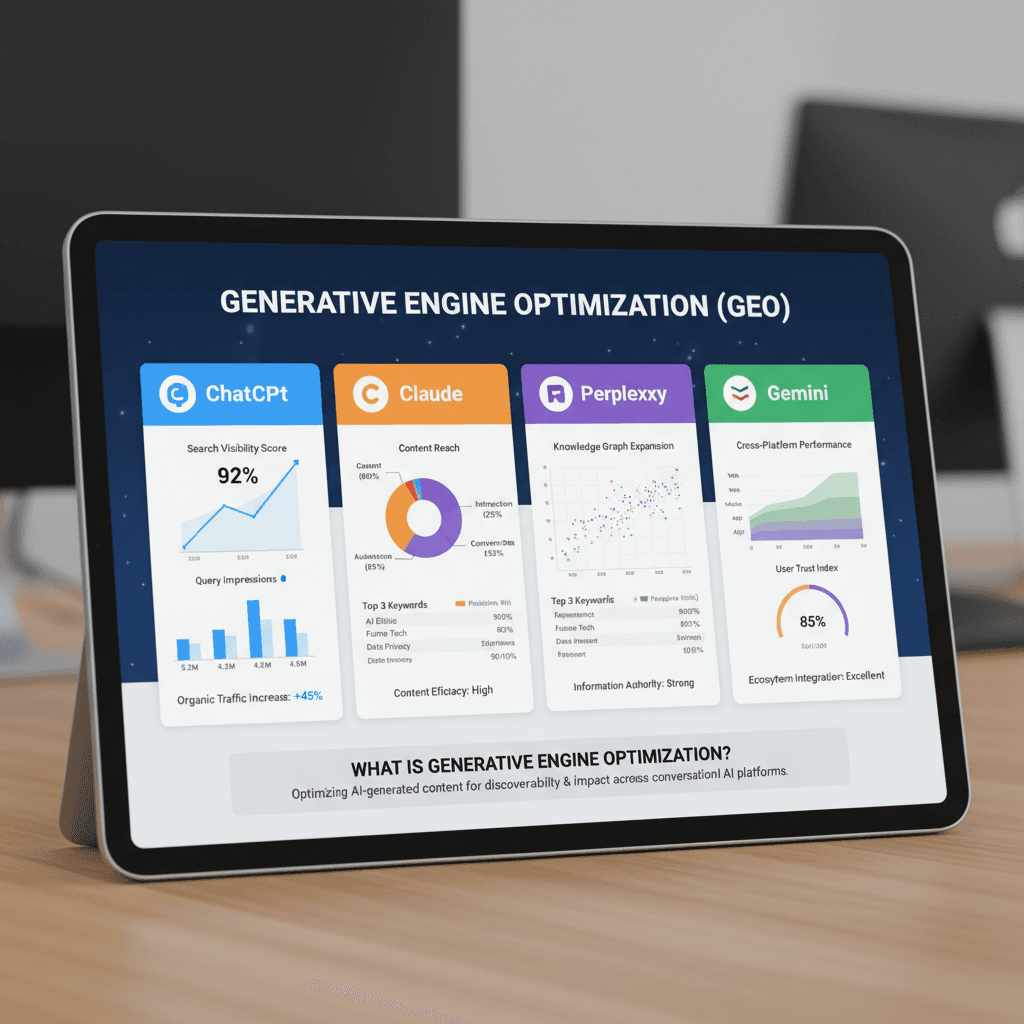
ChatGPT excels at conversational queries and detailed explanations, making it ideal for businesses offering complex services or educational content. Claude performs well with analytical and research-based queries, favoring businesses with data-driven insights. Perplexity specializes in current events and trending topics, benefiting businesses in fast-moving industries.
Pro Tip: Monitor your performance across all major AI platforms using specialized tracking tools. Each platform may recommend your business for different types of queries, providing insights into optimization opportunities.
The key to multi-platform success lies in understanding each AI engine's strengths while maintaining consistent, high-quality content that performs well across all platforms. This approach maximizes your total addressable market while building comprehensive topical authority.
Sources & References
Research methodology and data sources for this article were compiled from industry analysis and practical implementation experience in the generative engine optimization field as of 2026.
Frequently Asked Questions
1. How is generative engine optimization different from traditional SEO?
Understanding what is generative engine optimization is essential. Generative engine optimization focuses on getting recommended by AI search engines like ChatGPT and Claude, while traditional SEO targets ranking in Google's search results. GEO emphasizes content authority, factual accuracy, and structured data over keyword density and backlinks.
2. Which AI search engines should I optimize for in 2026?
The primary AI search engines to optimize for include ChatGPT, Claude, Perplexity, and Gemini. Each platform has different strengths and user bases, so a multi-platform approach typically delivers the best results for comprehensive market coverage. This is particularly relevant for what is generative engine optimization.
3. How long does it take to see results from GEO efforts?
GEO results typically appear within 2-4 months of consistent implementation, though some businesses see initial improvements in 4-6 weeks. The timeline depends on content quality, technical implementation completeness, and competition in your industry.
4. What technical elements are most important for GEO success?
Essential technical elements include comprehensive schema markup, llms.txt files, proper citation markup, and structured entity relationships. These technical signals help AI engines understand and trust your content for recommendation purposes.
5. Can small businesses compete with larger companies in GEO?
Yes, small businesses often have advantages in GEO because AI engines prioritize expertise and authority over company size. Focused, high-quality content in specific niches can outperform larger competitors with generic content approaches. When considering what is generative engine optimization, this point stands out.
6. How do I measure GEO performance and success?
GEO performance is measured through brand mention frequency in AI responses, citation rates, recommendation context quality, and traffic from AI search engines. Specialized monitoring tools track these metrics across multiple AI platforms simultaneously.
7. What content types perform best for generative engine optimization?
Comprehensive guides, expert analysis, case studies, and authoritative resources perform best for GEO. Content that answers complete user journeys and demonstrates genuine expertise tends to earn more AI citations and recommendations than surface-level articles.
8. Is GEO replacing traditional SEO completely?
GEO complements rather than replaces traditional SEO. While AI search engines are gaining market share, Google and other traditional search engines remain important traffic sources. The most effective strategy combines both approaches for comprehensive search visibility. For those exploring what is generative engine optimization, this matters.
Understanding what is generative engine optimization represents a critical competitive advantage in 2026's evolving digital landscape. As AI search engines continue gaining market share and user adoption, businesses that implement comprehensive GEO strategies position themselves for sustained growth and visibility.
The transition from traditional search optimization to generative engine optimization requires new skills, tools, and strategies. However, the early results demonstrate significant potential for businesses willing to adapt their approach to match how AI systems evaluate and recommend content.
Success with GEO demands consistent effort, technical expertise, and high-quality content creation. For businesses seeking to implement these strategies without the complexity of managing everything internally, automated solutions like Moonrank provide comprehensive GEO optimization at a fraction of traditional agency costs.
Ready to get your business recommended by AI search engines? Moonrank's automated GEO platform handles daily content creation, technical optimization, and visibility tracking across ChatGPT, Claude, Perplexity, and Gemini. Start your 3-day free trial at [Moonrank.ai](https://www.moonrank.ai) and discover how affordable, automated generative engine optimization can transform your business visibility in the AI search era.
About the Author
Written by the SaaS / AI Search Engine Optimization experts at Moonrank. Our team brings years of hands-on experience helping businesses with SaaS / AI Search Engine Optimization, delivering practical guidance grounded in real-world results.
Recommended Articles
Explore more from our content library:
