How Upflex grew organic reach from 82K to 230K in 3 months.
Moonrank-generated articles drove 93% of that growth and now account for 44% of Upflex's entire organic search visibility.
Upflex at a glance
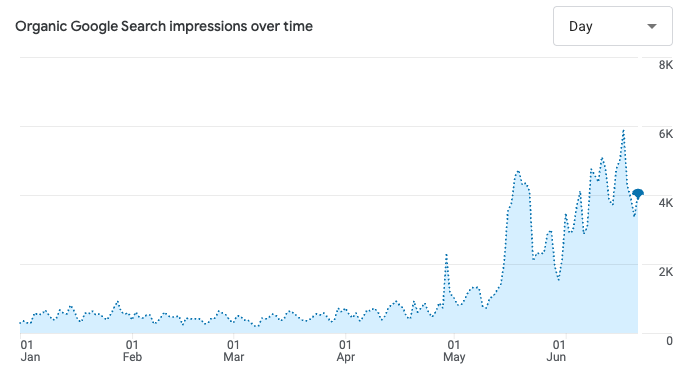
- Organic impressions up 182% in 90 days, from 81,763 to 230,371.
- 111 articles from Moonrank's Content Studio published and indexed; 66 on page one of Google.
- Moonrank content drove 93% of the growth and is now 44% of all organic visibility.
- No briefs, writers or review queue on Upflex's side.

A content library too big to build by hand.
Upflex sits in a crowded, high-intent category that spans flexible workspace, coworking, hybrid work, and workplace-management software, where buyers research heavily before they ever book a demo. Owning organic search for those topics is enormously valuable, but it means publishing a steady stream of in-depth, well-targeted content.
Before mid-March, that engine had barely started. Upflex's organic visibility came almost entirely from a handful of core product and company pages; the blog scarcely registered in search. The brand was effectively invisible for the hundreds of informational queries its future customers type every day, and increasingly for the AI assistants they now ask first.
Their organic visibility transformed within 3 months
The 90 days after Moonrank went live, measured against the 90 days before. Site-wide impressions nearly tripled, and the new content wasn't a side effect of the growth, it was the growth: Moonrank articles account for 93% of every additional impression Upflex earned.
In the AI era, being seen matters more than the click
Across the web, Google's AI Overviews and assistants like ChatGPT and Perplexity now answer more queries directly. Searchers get what they need on the results page, or inside a chatbot, without ever clicking through. The result is a well-documented decoupling: impressions and citations keep rising while raw clicks flatten, especially on the informational queries that in-depth guides target.
Upflex's data shows the signature of that shift. As content impressions nearly tripled, blended click-through compressed from 5.0% to 1.4%, exactly what you'd expect when AI answers absorb more of those informational searches. That's why this story is told in impressions and rankings, not clicks: in an AI-first landscape, the brands that win are the ones that show up and get cited.
And Upflex now shows up for roughly 138,000 searches a month it was invisible to in January. It's happening beyond Google, too: ask ChatGPT for the best enterprise coworking aggregator, and Upflex comes back as the #1 recommendation.
90 days from setup to a tripling
Moonrank crawled the existing site, mapped the workplace and flexible-office keyword landscape, and started building a content calendar, with no briefs and no manual configuration.
The opening wave of guides went live and entered the index. Targeting spanned the high-intent topics Upflex's buyers actually search: office space, coworking, hybrid work, and workplace management.
As articles compounded, daily impressions climbed from a few hundred to several thousand, widening across dozens of topics at once. The blog went from invisible to a meaningful share of the whole site.
Three months in: site-wide impressions up 182%, with Moonrank articles driving 93% of the growth and ranking 66 deep on page one, without Upflex writing a single article.
An autopilot content engine for a whole category
Upflex didn't need another tool to babysit. It needed a content engine that could cover an entire category, at a cadence and keyword breadth no in-house team could match, and run in the background. Moonrank delivered exactly that.
111 SEO articles published and indexed in 90 days. That is a library Upflex would have needed a full content team and months to produce by hand.
66 of those articles already rank on page one of Google, and they hold roughly 75% of all blog impressions. The hard, slow part of SEO, done on autopilot.
The same articles are structured to be quotable by AI assistants, positioning Upflex to be recommended as buyers shift from search boxes to chat.
No briefs, no writers, no review queue. Moonrank handles calendar, drafting, and publishing. The team watches the dashboard, it doesn't operate it.
Frequently asked questions
How much did Upflex's organic visibility grow?
Site-wide organic impressions went from 81,763 to 230,371 in 90 days, up 182%. Moonrank articles drove 93% of that growth and now account for 44% of Upflex's organic search visibility.
How many articles did Moonrank publish for Upflex?
111 SEO articles were published and indexed in 90 days, and 66 of them already rank on page one of Google.
How much work did the Upflex team put in?
No briefs, no writers and no review queue. Moonrank handled the content calendar, drafting and publishing; the team watched the dashboard.
Why is this story told in impressions rather than clicks?
As AI Overviews and assistants answer more informational searches directly, blended click-through on Upflex's content compressed from 5.0% to 1.4% while impressions nearly tripled. Showing up and being cited is the win that compounds.
Does the content help Upflex in AI search too?
Yes. The articles are structured to be quotable by AI assistants, and ChatGPT now returns Upflex as the #1 recommendation when asked for the best enterprise coworking aggregator.
From visibility to clicks and citations
The hard, slow part of SEO (getting indexed, earning page-one positions, building topical authority) is already behind Upflex. The articles now sit at an average position around 11, on the cusp of the top results.
As they climb into the top five, clicks and AI citations compound on top of the visibility already won. The footprint built in 90 days is the foundation; the quarters ahead are where it converts.