12 Essential Schema Markup Types for AI Search Success
Schema markup is structured data code that tells AI search engines — ChatGPT, Gemini, Perplexity, Claude — exactly what your business, products, and...
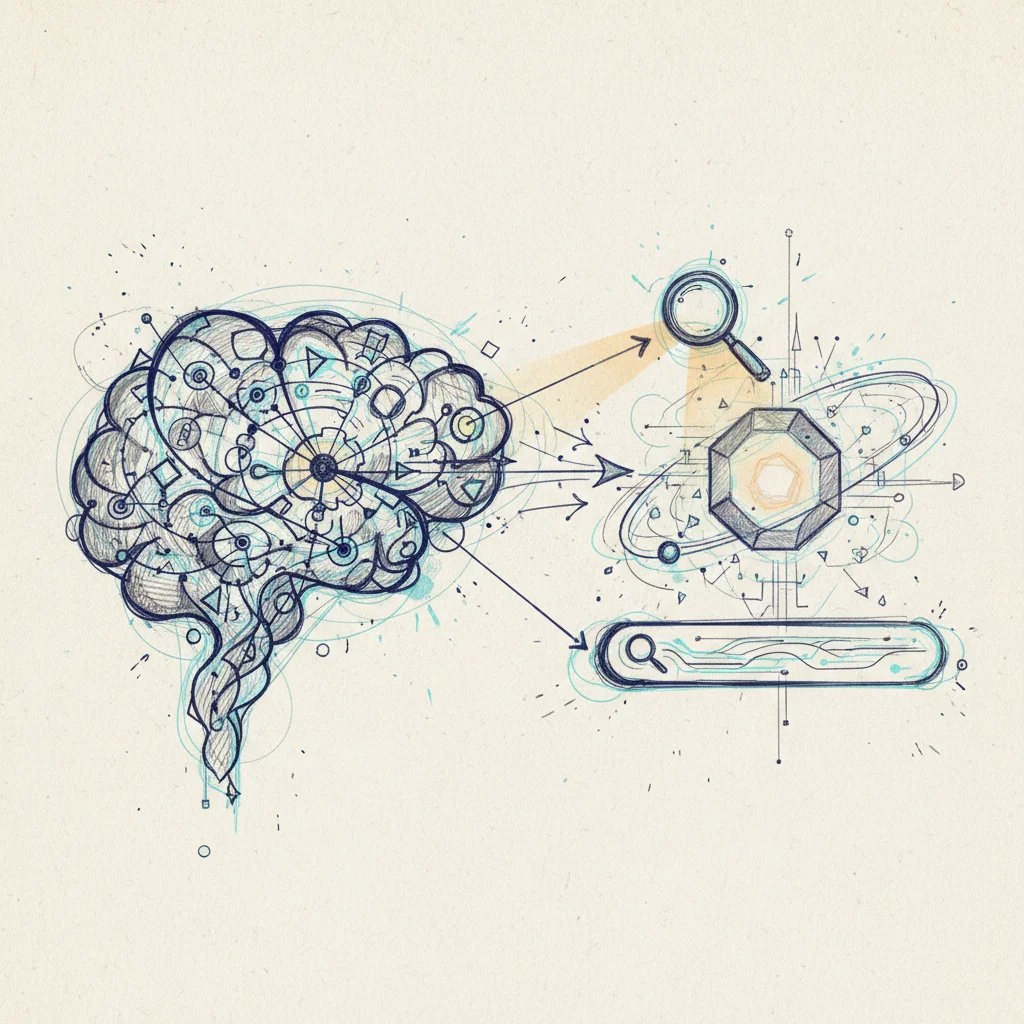
Understanding schema markup AI search is essential. Schema markup is structured data code that tells AI search engines, ChatGPT, Gemini, Perplexity, Claude, exactly what your business, products, and content are, so they can cite you accurately in AI-generated answers. While traditional SEO used schema to win rich snippets, AI search uses it to build entity graphs and verify facts before surfacing a source. Implementing the right schema types today directly improves your chances of being recommended by AI search engines.
1. Schema Markup and AI Search: What It Is and Why It Still Matters: schema markup AI search
Schema markup is structured code, written in JSON-LD, Microdata, or RDFa, that labels your content so machines can parse it without guessing. This is particularly relevant for schema markup AI search.
The Schema.org vocabulary behind it is maintained jointly by Google, Microsoft, Yahoo, and Yandex, giving it cross-platform authority that no amount of well-written plain text can match. That shared standard means a single schema implementation signals trust to every major search and AI platform simultaneously.
How schema markup differs from traditional SEO structured data
The old use case was cosmetic: schema produced rich snippets, star ratings, prices, breadcrumbs, inside blue-link results. The new use case is substantive. AI search engines like Perplexity and Google AI Overviews use structured data to verify entity facts before citing a source [1]. Schema has moved from a formatting tool to a trust signal.
Think of it as a machine-readable contract between your site and AI engines. When your Organization schema states your business name, address, and category explicitly, an AI engine doesn't have to infer those details from surrounding text, and it's far less likely to hallucinate wrong information about your business in a generated answer.
Why schema helps AI understand entities better than plain text
Plain text forces an AI to interpret context. Schema removes that ambiguity by declaring relationships directly: this is a Product, it belongs to this Organization, it has this price. AI engines processing schema markup in AI search contexts can resolve your business as a confirmed entity rather than an uncertain text mention, a distinction that directly affects whether you get cited or ignored.
2. How AI Search Platforms Use Schema Markup to Cite Sources
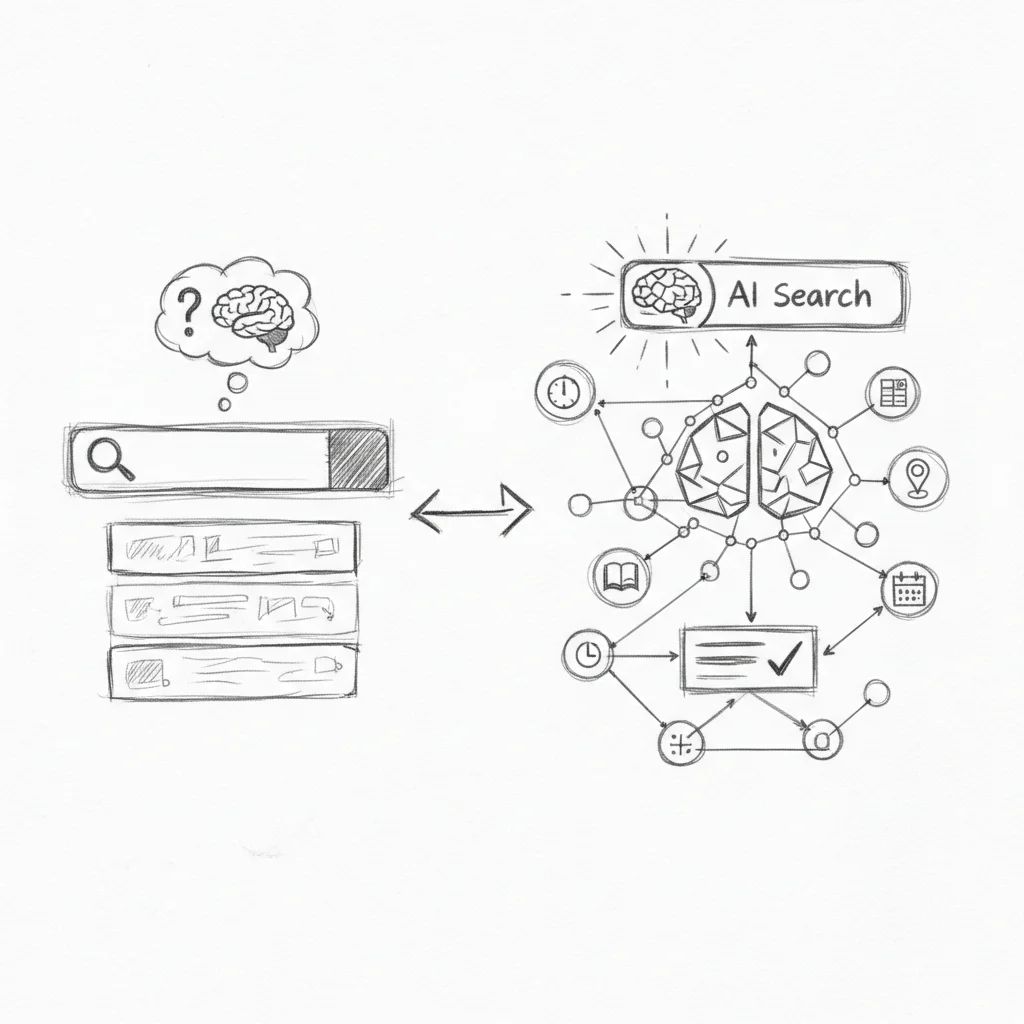
Google AI Overviews, Perplexity, ChatGPT, and Gemini each consume schema differently, but all four use structured data to decide which sources are reliable enough to cite.
How Google uses schema in AI Overviews versus other AI search engines
Google AI Overviews use schema to confirm entity attributes, name, address, product price, review score, before including a source in a generated answer [1]. Google's own Search Central documentation identifies structured data as a factor in how content is understood and surfaced in AI-generated results. Without schema, Google must infer those attributes from unstructured text, which introduces uncertainty and reduces citation likelihood. When considering schema markup AI search, this point stands out.
Perplexity crawls live pages and uses structured data to extract factual claims it can attribute to a specific URL with confidence [2]. Because Perplexity's answers display source links prominently, it has a strong incentive to pull from pages where facts are explicitly labeled rather than buried in prose.
ChatGPT, when using Bing-powered browsing, benefits from schema because Bing's indexer weights structured data heavily in its entity recognition pipeline. A page with valid Organization or Product schema gets resolved as a known entity in Bing's index, which flows directly into ChatGPT's retrieval layer.
Claude's web-retrieval mode prioritizes pages with clear Article or FAQPage schema because it reduces parsing ambiguity for its retrieval-augmented generation layer. This is a meaningful edge that most schema guides don't address.
Can schema markup improve your chances of being cited by AI search?
Pages with valid Organization, Product, or Article schema are more likely to be cited verbatim rather than paraphrased [1]. That distinction matters: a verbatim citation preserves your brand messaging, your pricing, and your positioning exactly as written, paraphrasing introduces drift. Schema gives you more control over how AI engines represent your business in answers you'll never directly see.
3. Why Organic Traffic Is Shifting and What Schema Does About It
AI-generated answers are absorbing clicks that used to reach your site, schema markup repositions your visibility goal from ranking to citation frequency.
AI Overviews now appear on roughly 13% of all U.S. desktop searches [2], and SparkToro data from 2024 puts the broader zero-click search rate above 40% as users get answers without leaving the results page. Click-through rates on organic results below an AI answer block drop sharply, the traditional "page one" placement is worth less than it was 18 months ago. For those exploring schema markup AI search, this matters.
Is schema markup still worth implementing if AI search is fragmenting traffic?
Schema markup shifts your goal from ranking position to citation frequency. Being named inside an AI answer, even without a click, is the new first-page placement. Sites with complete, valid schema are more likely to appear as the attributed source in AI answers even when the user never visits the page [1].
Schema investment also compounds across surfaces in a way most SMB owners don't realize: schema feeds Google's Knowledge Graph, which AI Overviews draw on directly [1]. A single well-implemented Organization or LocalBusiness schema block improves your standing in both traditional search and AI-generated answers at the same time.
Even if click traffic drops, AI citation builds brand authority and drives direct searches for your business name. A potential customer who sees your restaurant cited in a Perplexity answer may never click the link, but they'll search your name directly. Schema is the infrastructure that puts you in that answer in the first place.
4. How Schema Markup Builds Entity Graphs for AI Understanding
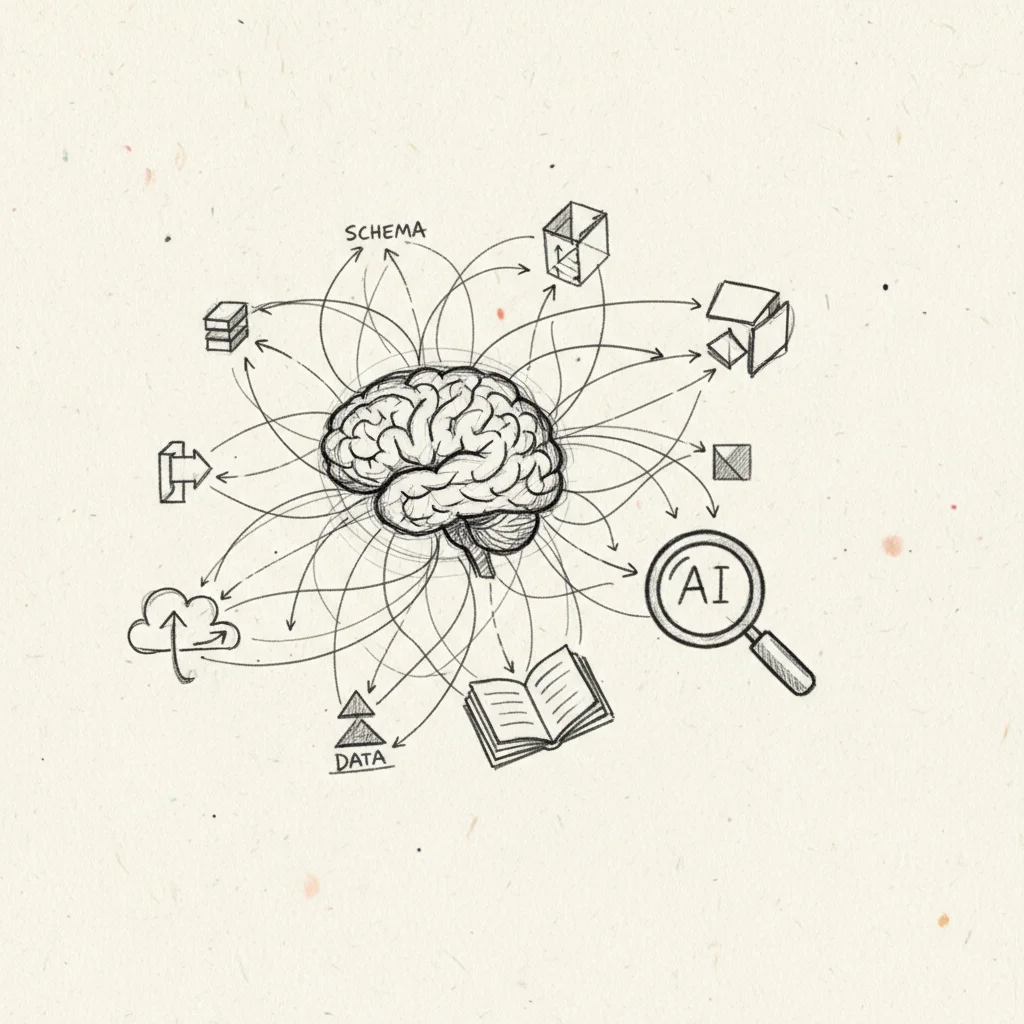
Schema markup is the primary structured signal that populates entity graphs, the maps AI engines use to verify that your business is a real, trustworthy, well-defined thing.
An entity graph maps relationships between real-world objects: your business, its products, its authors, its physical location. AI search engines don't just read text, they resolve entities. A business that exists as a confirmed node in an entity graph, with verified attributes and connected relationships, is treated as authoritative. One that exists only as unstructured text is treated as ambiguous.
What role does schema play in connecting related entities for AI understanding?
Using sameAs properties to link your schema to Wikidata entries, your LinkedIn company page, or your Google Business Profile strengthens entity confidence scores across AI platforms [1]. Each external link acts as a corroborating signal, the more places an entity is consistently described, the more confident an AI engine becomes that it's real and correctly understood. This directly impacts schema markup AI search outcomes.
Nested schema deepens that confidence further. An Article schema that references an Author schema that references an Organization schema creates a chain of verified entities an AI engine can traverse. Each link in that chain reduces ambiguity and increases the likelihood that the AI cites your content rather than a competitor's.
Google's entity salience scoring, which determines how prominently an entity features in AI Overviews, is directly influenced by how completely and consistently schema describes that entity across your site [1]. Partial or inconsistent schema creates gaps in the entity graph that AI engines fill with guesses. For more information, see News.
A practical example: a local restaurant using LocalBusiness schema with linked menu items, review data, and geo-coordinates is treated as a fully resolved entity. Without that schema, the same restaurant is just a name mentioned on a webpage, easy to overlook, easy to misrepresent. Tools like Moonrank handle this technical schema implementation automatically, which matters for SMB owners who aren't comfortable editing JSON-LD by hand.
5. The Schema Types That Matter Most for AI Visibility
Organization, LocalBusiness, Product, Article, FAQPage, HowTo, and Person are the schema types AI search engines weight most heavily, implement these first based on your business type.
Each type maps directly to a common AI answer format. Organization and LocalBusiness resolve who you are and where you operate. Product gives AI engines a structured fact sheet for shopping queries. Article signals authoritative content for informational answers. Person establishes author credibility, which affects how AI engines weight bylined content.
FAQPage schema is especially effective because AI engines like Perplexity and Google AI Overviews are built as question-answer interfaces [2]. Matching that format at the schema level, not just in prose, increases citation probability. A page with FAQPage schema essentially pre-formats its content in the shape AI engines prefer to output. This is particularly relevant for schema markup AI search.
For e-commerce specifically, Product schema with Offer, Review, and AggregateRating nested inside gives AI engines a complete structured fact sheet they can pull directly into shopping-related answers [2]. Price, availability, rating, and review count are all machine-readable without any inference required. Moonrank's technical AI optimization layer implements exactly this kind of nested Product schema for Shopify and e-commerce store owners as part of its $99/month automation.
Which schema types do ChatGPT, Claude, Gemini, and Perplexity actually recognize?
All four AI engines support core Schema.org types, but their preferences diverge at the margins. Gemini shows a stronger preference for VideoObject and HowTo schema due to its multimodal answer format, it surfaces step-by-step and video content more aggressively than the other three. That makes HowTo schema a higher-priority implementation for businesses in categories where instructional content is common.
SpecialAnnouncement and Event schema are underused across the board but highly effective for time-sensitive AI answers. ChatGPT and Gemini frequently surface these for local and topical queries, a restaurant with an Event schema for a weekly special, or a SaaS company with a SpecialAnnouncement for a product launch, has a structured signal that most competitors aren't providing. That gap is worth closing before it becomes standard practice.
6. How Different AI Platforms Interpret Schema Markup Differently
Google, Perplexity, ChatGPT, and Claude each process schema markup through distinct pipelines, what works on one platform may be ignored or misread by another.
Do emerging AI search platforms handle schema markup the same way Google does?
No. Google AI Overviews validate schema against its Rich Results Test before using it, invalid markup is ignored entirely, not partially applied. Pass the test or the structured data contributes nothing to AI Overview eligibility.
Perplexity skips pre-crawl validation. It extracts whatever structured data it can parse at retrieval time, so partial schema still provides some signal, but the output is less reliable than a fully valid implementation. When considering schema markup AI search, this point stands out.
ChatGPT's Bing-backed retrieval weights BreadcrumbList and Article schema for content hierarchy. Sites missing these types may still get cited, but the citation tends to be less precise about which page or section is relevant.
What schema markup conflicts or deprecation risks should you watch for in 2025–2026?
Conflicting schema types on the same page, for example, a page marked as both Article and Product, cause AI engines to default to plain-text extraction, losing the structured advantage entirely. This is an active 2025 risk because many CMS plugins auto-generate overlapping types without warning.
Schema.org deprecated DataFeedElement and several legacy Review types in 2024. Using deprecated types triggers Google Search Console warnings that reduce AI Overview eligibility, audit your schema against the current Schema.org changelog before assuming your implementation is clean.
7. How to Implement Schema Markup for AI Search: A Practical Walkthrough
JSON-LD placed in the page <head> is the fastest path to schema markup AI search engines can reliably parse, here is a step-by-step guide with copy-ready code.
What are practical code examples for schema markup optimized for AI search?
JSON-LD is the recommended format because it sits in the page head and is parsed before the body renders. Start with an Organization block:
{
 "@context": "https://schema.org",
 "@type": "Organization",
 "name": "Your Business Name",
 "url": "https://www.yourdomain.com",
 "description": "One clear sentence describing what your business does.",
 "sameAs": [
 "https://www.linkedin.com/company/your-business",
 "https://www.google.com/maps?cid=YOUR_CID"
 ]
}
For landing pages that answer common questions, add a FAQPage block:
{
 "@context": "https://schema.org",
 "@type": "FAQPage",
 "mainEntity": [
 {
 "@type": "Question",
 "name": "What does your product do?",
 "acceptedAnswer": {
 "@type": "Answer",
 "text": "A direct, complete answer in plain English."
 }
 },
 {
 "@type": "Question",
 "name": "How much does it cost?",
 "acceptedAnswer": {
 "@type": "Answer",
 "text": "Pricing starts at $X per month with a free trial."
 }
 }
 ]
}
On blog posts, add the speakable property inside your Article schema to target voice-based AI answers through Google Assistant and Alexa integrations, a step most implementation guides skip entirely. For those exploring schema markup AI search, this matters.
For SMBs with limited developer time, follow this priority order: Organization first, FAQPage on key landing pages second, Article on blog posts third. This sequence delivers the most AI visibility per hour of effort.
How do you validate schema markup to ensure AI platforms can read it?
Run every implementation through both Google's Rich Results Test and Schema.org's validator, they catch different error types, and passing one does not guarantee passing the other. Both matter for cross-platform AI compatibility.
8. How to Measure Schema Markup's Impact on AI Citations
Tracking schema markup's effect on AI visibility requires three data sources: Google Search Console, manual citation checks, and automated AI monitoring tools.
What metrics and frameworks can track whether schema markup drives AI visibility?
Start in Google Search Console. The Search Appearance filter shows which pages have valid rich results from schema, treat this as a baseline proxy for AI Overview eligibility. Pages with no rich result status are unlikely to surface in AI-generated answers.
Track branded query volume in Search Console month-over-month. AI citations drive direct name searches: when ChatGPT or Perplexity recommends your business, users search your brand name to find you. A rising branded search trend is a reliable leading indicator of growing AI visibility.
Run manual citation checks weekly. Search your target queries in Perplexity and ChatGPT directly, record whether your site appears, and log the results in a spreadsheet. A simple citation frequency count, how many of 10 target queries return your site, gives you a repeatable benchmark. This directly impacts schema markup AI search outcomes.
Set up Google Alerts for your brand name combined with key product terms. AI-generated content that cites your business often surfaces in third-party roundups and news aggregators before it appears in any SEO tool, Alerts catch these early.
For businesses that need automated tracking, tools like Moonrank monitor citation frequency across ChatGPT, Gemini, Perplexity, and Claude continuously, replacing manual spot-checking with a persistent visibility dashboard at $99/month.
9. Schema Markup Mistakes That Hurt Your AI Search Visibility
The most damaging schema errors in AI search are not typos, they are structural mistakes that cause AI engines to distrust or discard your structured data entirely.
How do schema markup errors affect AI search visibility and citations?
Marking up content that is not visible on the page, hidden schema, violates Google's spam policies. A manual action triggered by this mistake removes your site from AI Overview eligibility entirely, not just for the affected page.
Using empty schema fields such as "description": "" is worse than omitting the field. AI engines treat empty structured fields as signals of low content quality, which can suppress citation frequency across all platforms.
Duplicate schema types on the same page, two Organization blocks with conflicting name values, for example, cause AI parsers to discard both and fall back to plain-text extraction. The structured advantage disappears completely. This is particularly relevant for schema markup AI search.
Failing to update schema when page content changes is a common SMB mistake with a specific consequence: an AI engine that cites outdated schema data, a wrong price, closed business hours, will eventually deprioritize that site as an unreliable source. Schema is not a set-and-forget asset.
Not including sameAs links to authoritative external profiles, Google Business Profile, LinkedIn, Wikidata, leaves your entity unverified. Every AI platform uses external profile consistency to calculate entity confidence scores, and a missing sameAs graph lowers those scores across the board.
How to Choose the Right Schema Markup Strategy for AI Search
The right schema strategy depends on three variables: your business type, your available dev resources, and which AI platforms your customers actually use.
Match your schema types to your business model first:
- Local businesses (restaurants, hotels, service providers): prioritize
LocalBusinessandReviewschema, these feed directly into map-based and location-aware AI answers. - E-commerce stores: prioritize
Product,Offer, andAggregateRating, AI engines use these to surface specific products in shopping-intent queries. - Publishers and content sites: prioritize
Article,Author, andFAQPage, editorial credibility signals matter most for informational AI citations.
If you are a solo founder with no developer access, use a CMS plugin, Yoast, RankMath, or Schema Pro, to deploy Organization and FAQPage schema without touching code. These plugins cover the highest-impact types with no technical lift.
If your audience uses Perplexity and ChatGPT more than Google, weight your implementation toward Article and FAQPage schema. Those platforms index Q&A and editorial content most heavily in their retrieval logic [2]. When considering schema markup AI search, this point stands out.
One red flag to avoid: implementing every available schema type at once without auditing whether each type matches the visible page content. Schema that does not match what a user sees on the page triggers spam signals across all AI platforms, and a spam signal on one platform can suppress visibility on others.
Start with three schema types maximum. Validate all of them, measure citation impact for 60 days, then expand. A clean, small schema footprint consistently outperforms a large, broken one, and tools like Moonrank automate the technical optimization layer, including schema deployment and validation, so SMBs can maintain a clean implementation without ongoing developer involvement.
Frequently Asked Questions
Does schema markup directly guarantee AI search citations?
Schema markup does not guarantee citations in AI search results, it improves the odds by making your content easier for AI systems to parse and trust [1]. ChatGPT, Gemini, and Perplexity pull from multiple signals: authority, freshness, entity clarity, and content quality. Schema addresses the entity clarity piece. A well-marked-up page with thin content will still lose to a plainly written, authoritative page. Think of schema as a prerequisite, not a shortcut.
How should you prepare your schema markup for emerging AI search features beyond Google?
Target entity-level schema types, Organization, Product, FAQPage, HowTo, that describe what your business is, not just what a page ranks for [2]. Platforms like Perplexity and Claude rely on structured signals to build entity graphs, so the more precisely your schema defines your brand, location, offerings, and relationships, the more consistently AI engines can surface you. Pair schema with an llms.txt file to give AI crawlers a direct reading guide.
Which schema markup format, JSON-LD, Microdata, or RDFa, works best for AI search?
JSON-LD is the recommended format for AI search because it sits in the <head> as a clean, separate block that AI crawlers can extract without parsing your HTML layout [2]. Google explicitly recommends JSON-LD, and its separation from page content makes it less prone to errors during updates. Microdata and RDFa still work, but they embed into your HTML, which increases maintenance complexity and the risk of markup breaking during site changes.
How often should you update your schema markup as AI search standards evolve?
Review your schema markup at least quarterly, and immediately after any major product, service, or location change [1]. Schema.org releases vocabulary updates regularly, and AI engines like Google's AI Overviews shift which types they actively use. Stale or mismatched schema, for example, a Product type pointing to a discontinued item, can actively confuse AI extraction rather than help it. For those exploring schema markup AI search, this matters.
Conclusion
Schema markup is one of the most direct technical signals you can give AI search engines, but it works only when the underlying content is accurate, current, and entity-rich. Three actions matter most: implement JSON-LD for your core schema types (Organization, Product, FAQPage), review and update your markup every quarter, and pair it with supporting signals like llms.txt and consistent citations so AI engines like ChatGPT, Gemini, and Perplexity can build a reliable picture of your business.
If managing schema updates manually sounds like one more task you don't have time for, Moonrank handles schema markup, structured data, and llms.txt configuration automatically as part of its $99/month AI search optimization platform. Start with a free 3-day trial and see exactly where your business stands in AI search results today.
Sources & References
Recommended Articles
Explore more from our content library: