A Complete Guide to SEO for CNC Machining Shops Online
SEO for CNC machining optimizes machine shop websites so buyers searching by process, material, and tolerance find your capabilities and submit RFQs faster.
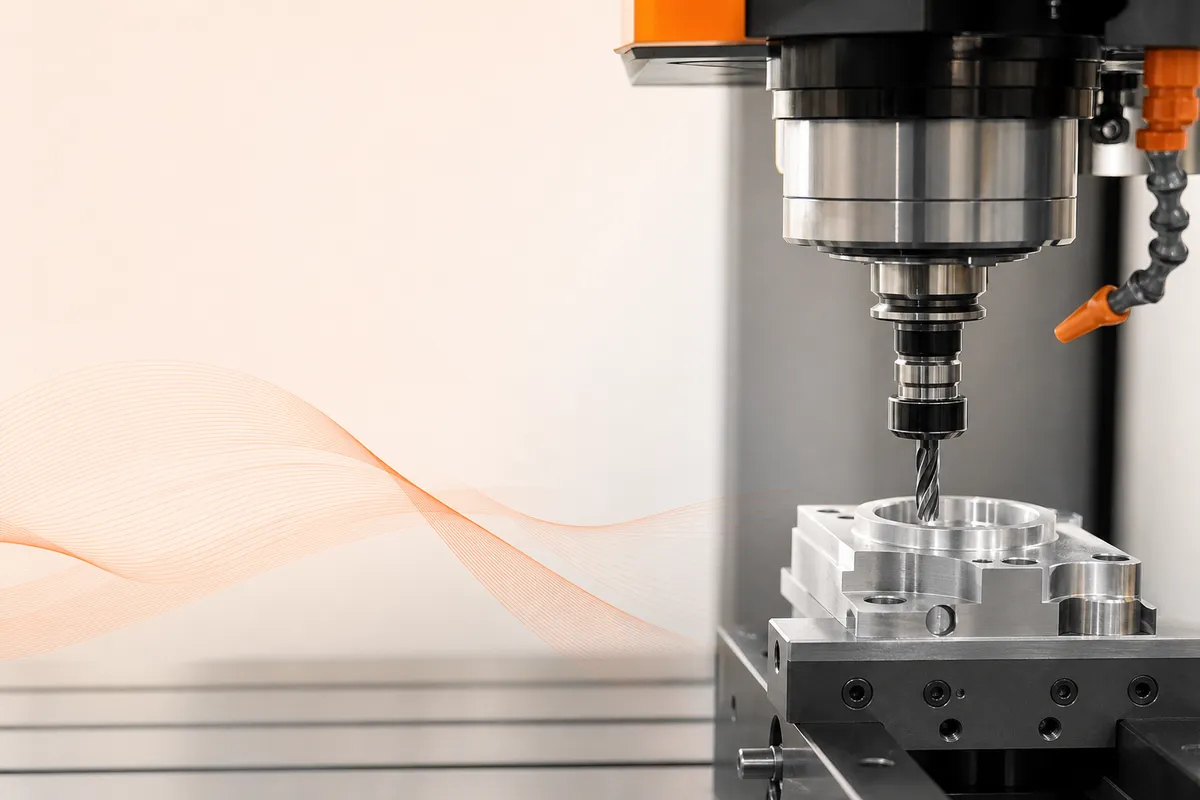
SEO for CNC machining is the process of optimizing a machine shop's website, content, and local listings so buyers searching for capabilities like 5-axis milling, CNC turning, or tight-tolerance parts find and choose that shop over competitors. It differs from generic SEO because CNC buyers search by process, material, and tolerance rather than broad keywords, and purchasing decisions hinge on trust signals like certifications, capability pages, and fast quote turnaround. Done well, it combines capability-specific content, local search optimization, and technical schema markup to turn search traffic into RFQs.
SEO for CNC Machining: How Do Buyers Actually Search Online?
Industrial buyers rarely type "CNC machining", they search by process, material, and tolerance because they already know what part they need made.
A procurement engineer with a part drawing on their screen searches like an engineer, not a browser window-shopping. Understanding that gap is the real foundation of seo for cnc machining, and it's where most machine shop websites get outmaneuvered before they even start.
Capability-Based Searches vs. Traditional Keyword Searches for CNC Services
Generic SEO chases broad terms like "CNC machining" or "machine shop near me", high volume, but low intent, since anyone from a student researching a class project to a competitor could be typing that. Capability-based searches look different: "5-axis CNC milling aluminum tolerance.001," "CNC turning 17-4 stainless RFQ," or "anodized 6061 aluminum machined parts." These phrases signal someone with a real spec sheet, a deadline, and budget authority.
That specificity matters for conversion. A buyer who already knows they need Swiss-style turning on brass, or 5-axis work holding tight positional tolerances, is much further down the purchase path than someone browsing "what is CNC machining." Generic CNC SEO advice tends to optimize for the second group and wonder why traffic never turns into quotes [3].
Building the Keyword Framework That Actually Works for CNC Shops
Instead of guessing at generic industry terms, map out what the shop actually does across four dimensions:
- Materials cut: aluminum, titanium, Delrin, Inconel, and any other alloys the shop regularly runs
- Processes run: 5-axis milling, live-tooling turning, EDM, Swiss machining
- Tolerance bands held: from general machining down to tight-tolerance aerospace or medical work
- Industries served: aerospace, medical, defense, or other regulated sectors
Each combination becomes a page or section, not a blog post stuffed with keywords, but a real capability statement with specs, certifications, and example parts.
Procurement engineers searching from an RFQ or drawing rarely search for a brand name at all, they search for the spec. A shop that has built pages around "17-4 stainless steel CNC turning AS9100" is answering that search directly, long before the buyer ever learns the company's name. Resources like the ThomasNet guide on SEO for CNC machine shops make a similar case: buyers are already searching by spec, so the page structure has to mirror how engineers think, not how a marketing team wants to describe the shop.
Building an SEO Strategy Specifically for CNC Machine Shops
SEO for CNC machining only works when it targets buyers who already know what they need, tolerances, materials, certifications, not shoppers browsing top-of-funnel content.
Why Generic CNC SEO Advice Fails
Most SEO playbooks are written for ecommerce or consumer B2B, where the buyer's journey starts with a vague problem and ends with an add-to-cart click. A CNC buyer's journey is the opposite: an engineer or procurement manager arrives already knowing they need 5-axis milling in 6061 aluminum at ±0.001" tolerance, and they're scanning your site for proof you can do it, not a blog post explaining what CNC machining is.
Generic advice tells shops to publish "awareness stage" content and chase broad keywords. That approach ignores the fact that CNC buyers are further down the funnel the moment they search, they want equipment lists, tolerance ranges, and material capability, not an explainer article [3].
Content Gaps Most CNC Shop Websites Never Fill
Walk through most machine shop websites and you'll find one "Services" page listing turning, milling, and swiss machining in a single paragraph, with no dedicated page for any of them. That's the gap: buyers searching "swiss machining titanium tolerances" or "Inconel milling lead time" find nothing specific to click on, so they land on a competitor, often a broker, instead [3].
Fix this by building capability pages that pair one process or material with the details a buyer actually needs before requesting a quote: tolerance range, typical lead time, machine specs, and the industries the shop already serves (aerospace, medical, defense). A page for "CNC turning in stainless steel" should read like a spec sheet, not a marketing pitch.
Pair those pages with a project gallery or short case studies showing finished parts. Certifications like AS9100 or ISO 9001 matter, but photos of completed work and brief write-ups of past jobs give buyers a concrete reason to trust an unfamiliar shop over a bigger, more visible competitor.

How to Optimize Local Search to Capture CNC Customers Near You
Local search is the fastest-neglected lever in seo for cnc machining, even though most buyers prefer a supplier close enough to cut shipping cost and lead time.
Why Local SEO Is the Biggest Opportunity Most CNC Shops Ignore
Most CNC shops treat their website as a digital brochure, not a lead-generation tool, so nobody owns local optimization as a job. Engineers and procurement buyers searching "CNC machining near me" or "aerospace machining [city]" are already qualified, they want a regional supplier to shorten freight time and simplify quality audits. A shop that ignores this signal cedes ground to competitors who happen to have filled out their Google Business Profile correctly, not because they machine better parts.
Winning here starts with a complete Google Business Profile: accurate categories (CNC machine shop, not just "manufacturer"), defined service areas, real photos of the shop floor and equipment, and answered questions covering tolerances, materials, and certifications. Shops that update this monthly signal activity to both Google and AI search tools scanning for trustworthy, current sources.
How to Identify and Outrank Competing CNC Shops in Your Market
Pull up the three or four shops ranking above you locally and compare their site structure, review count, and capability page depth against your own. Note whether they have separate pages for tolerances, materials, and industries served, or one thin "services" page, thin pages are easy to beat with specifics.
Build location- and industry-specific pages, such as "CNC machining for aerospace in [region]" or "5-axis milling near [city]," to capture geo-qualified intent that generic homepage copy never ranks for. Moonrank's personalized keyword research identifies these regional, capability-specific terms automatically and publishes optimized pages daily, so a shop owner never has to map the competitive gaps manually.
Technical SEO and Schema Markup That Matter for CNC Websites
Good SEO for CNC machining depends on structured data and page performance more than blog volume, search engines and AI assistants need machine-readable proof of what you actually do.
CNC-Specific Schema Markup and Structured Data to Implement
LocalBusiness schema tells Google and AI assistants your shop's name, address, service area, and hours in a format they can parse without guessing. Service schema goes further, spelling out each process, 5-axis milling, Swiss turning, EDM, along with materials handled and tolerances held.
This matters because AI engines like ChatGPT and Perplexity pull from structured data to answer questions like "who does aluminum 5-axis milling near Cleveland." Without schema, a shop's capabilities live only in prose that a language model has to interpret; with it, the facts are labeled explicitly. FAQ schema on capability pages can push specific answers, minimum order quantities, lead times, certifications like AS9100, directly into search results and AI-generated summaries. Product schema on a "capabilities" page can do the same for tolerance ranges and material lists, so a buyer's exact spec question surfaces your page instead of a directory listing.
Optimizing Quote Request Forms and Capability Pages for Search
A quote form with ten fields and no file upload is a common reason engineers abandon an RFQ before finishing it. Keep the form focused on what's actually needed to generate a quote:
- Part name or project description
- Material specification
- Quantity required
- Drag-and-drop CAD file upload
Make sure the form works cleanly on mobile, since procurement engineers often forward RFQs from their phone between meetings.
Capability pages also need clean, descriptive URLs (site.com/services/cnc-milling rather than a query string) and fast load times, since crawlers deprioritize slow, poorly structured pages. Compress images of finished parts, avoid bloated page builders, and keep each capability on its own indexable URL rather than burying it in a PDF.
None of this replaces content or backlinks, it's the plumbing that lets both actually get found. Moonrank's technical audit handles the schema markup, llms.txt configuration, and structured data automatically, so a shop owner doesn't have to learn to edit JSON-LD to compete for these searches.
How Much Revenue Can SEO Generate for a CNC Shop?
A realistic answer: SEO for CNC machining doesn't produce a single big number, it produces a growing stream of RFQs that costs less per quote every quarter you keep publishing.
The mechanism is compounding, not a one-time event. A capability page about five-axis milling tolerances or a local listing for "CNC machining Cleveland OH" keeps surfacing in search results and AI answers months after you publish it, pulling in qualified inquiries while you sleep. A trade show generates leads for three days and then stops; the booth comes down, the conversations end, and next year you pay to do it again. A well-built page never comes down.
SEO also reaches a different buyer than trade shows or cold outreach. Someone searching "ISO 9001 CNC shop with in-house anodizing" already has a spec in hand and a project to place, they're close to issuing an RFQ. Trade show attendees and cold-call prospects are often earlier in the process, still defining requirements or building a shortlist. Both channels matter, but they serve different stages of the same pipeline.
Track this the right way. Ignore raw traffic and rankings as the scorecard, tie organic sessions on specific capability pages to RFQ form submissions, then follow those RFQs through to quote-to-close rate. That's the number that tells you whether SEO is paying for itself, not whether your homepage got more visits.
Treat SEO as a budget-friendly complement to trade shows, not a replacement, one builds the pipeline of active searchers, the other builds relationships and brand presence at industry events. Running both together, without hiring a marketing department, is exactly the gap www.moonrank.ai fills: it publishes optimized capability and local pages automatically and tracks how visible your shop is across Google, ChatGPT, and Perplexity, so you can see the RFQ pipeline build without adding headcount.

Frequently Asked Questions
How long does it take to see SEO results for a CNC machine shop?
Most CNC shops see measurable movement in search visibility within 3 to 6 months, with stronger gains around month 9 to 12. Local search terms and long-tail capability keywords tend to move faster than competitive generic terms like "CNC machining services," since fewer shops actively target them. Consistent publishing and technical fixes compound over time rather than producing overnight jumps.
Do CNC machine shops need a blog to rank in search results?
Yes, but it needs to answer specific buyer questions, not just describe services generically. Content covering certifications, tolerances, materials, and process capabilities helps both traditional search engines and AI tools like ChatGPT understand what a shop actually does, which drives more qualified traffic than generic pages.
How important are customer reviews for CNC shop local SEO?
Reviews matter more than most shop owners assume, especially for local and "near me" searches. Google and AI search engines both use review volume, recency, and content as trust signals when deciding which shops to surface. A steady stream of detailed reviews mentioning specific work performed outweighs a handful of generic five-star ratings.
Is SEO worth it for industrial manufacturers compared to trade shows?
SEO and trade shows serve different stages of the buying process, so the better question is which one reaches buyers when they're ready. Trade shows generate concentrated bursts of contacts tied to event dates, while SEO builds a channel that keeps working year-round without recurring travel or booth costs. Given that most independent machine shops have little to no real SEO investment [3], the shops that show up consistently online capture searches that competitors never see. Most independent shops benefit from running both, not choosing one over the other.
Should CNC shops build separate pages for each certification and industry they serve?
Yes, when the volume of work justifies it. A shop serving both aerospace and medical customers should separate those pages rather than combining them, since the certifications, tolerances, and terminology each buyer cares about differ. A single blended page dilutes relevance for both searches and makes it harder for a buyer scanning quickly to confirm the shop fits their specific requirement.

Conclusion
Winning SEO for CNC machining doesn't mean outranking Xometry on generic terms, it means owning local search, certification-specific keywords, and the process expertise competitors can't replicate [3]. Since most independent shops still have no real SEO presence, consistent technical fixes and regular content publishing create a lasting advantage with little competition. Start by auditing whether your site currently answers the specific questions your buyers ask ChatGPT or Google, tolerances, materials, certifications, lead times. If that sounds like more upkeep than your team has time for, Moonrank runs that process daily on autopilot for a budget-friendly monthly subscription, publishing content and fixing technical AI-readability gaps so your shop shows up in both Google and AI search results. Check it out at moonrank.ai.
Sources & References
- SEO for CNC Companies: How to Win Industrial Searches, HMM Blog · HMM
- SEO For CNC Machine Shops, ThomasNet
Recommended Articles
Explore more from our content library: