Source Diversity in AI Search: Why It Matters for Results
Learn how source diversity AI search shapes accuracy, bias, and business visibility across ChatGPT, Perplexity, and Google AI Overviews. Discover essential.

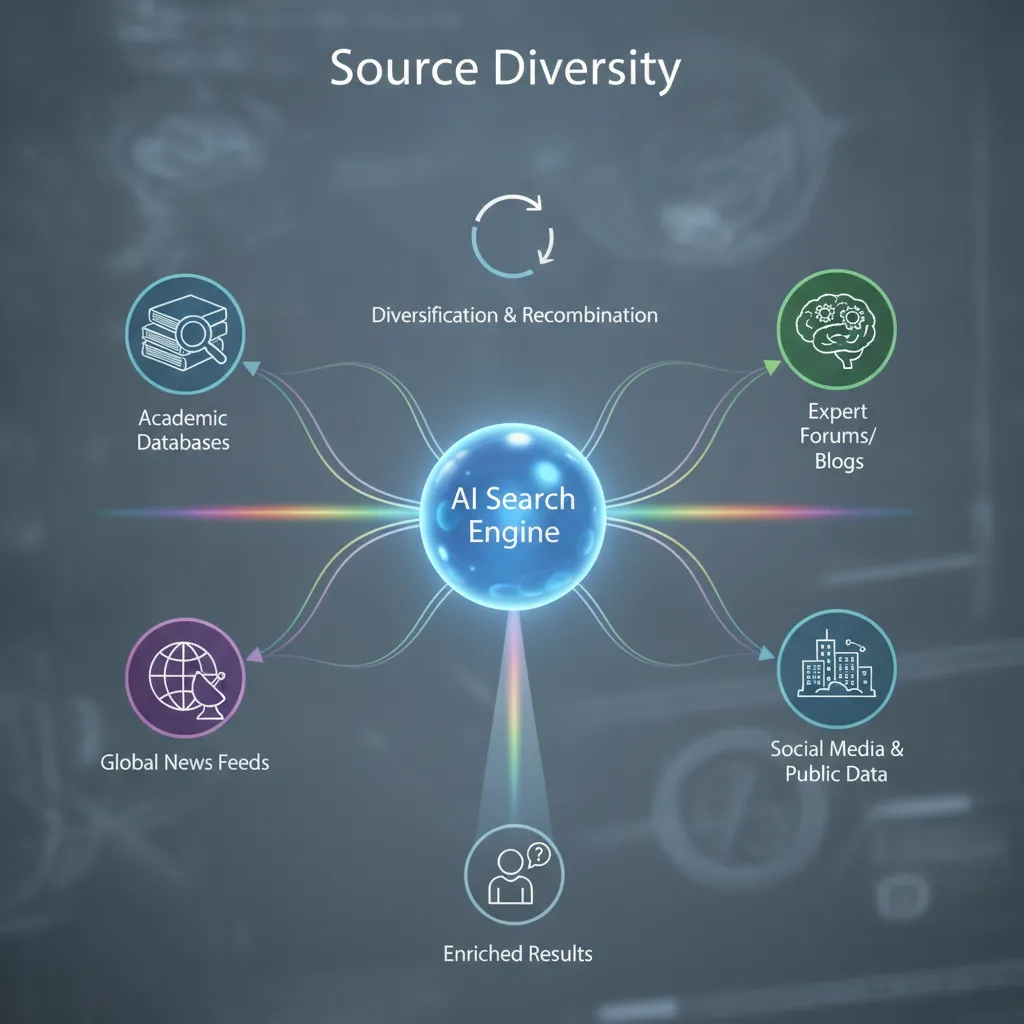
Understanding source diversity AI search is essential. Source diversity in AI search refers to how broadly an AI engine draws from different publishers, perspectives, and source types when generating answers. It matters because AI systems that over-rely on a narrow set of sources amplify bias, spread misinformation faster, and erode user trust. Platforms like ChatGPT, Perplexity, and Google AI Overviews each handle source selection differently, and those differences directly affect the accuracy and fairness of every answer your customers read.
What Is Source Diversity in AI Search and Why Does It Matter?: source diversity AI search
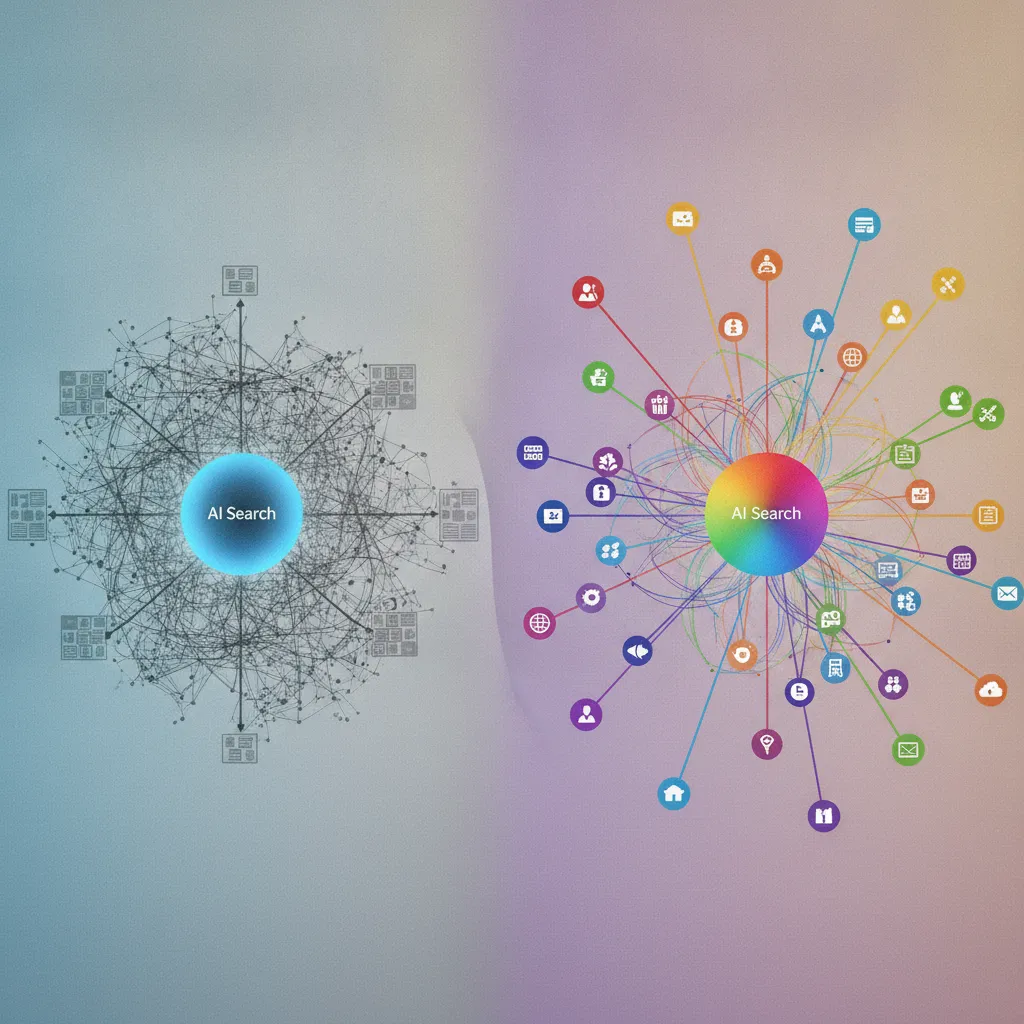
Source diversity in AI search is the range of publishers, domains, geographic regions, and ideological perspectives an AI engine draws from when constructing a single synthesized answer. This is particularly relevant for source diversity AI search.
This definition matters because it is fundamentally different from what "diversity" means in traditional search. When Google returns ten blue links, you choose which sources to read. AI search collapses that choice into one response, the source selection happens upstream, invisibly, before you ever see the answer. That shift makes the breadth of sources an AI cites a much higher-stakes decision than it was when users could self-select.
"AI tools have the potential to surface underrepresented expert sources that would otherwise be missed entirely, but only if the systems are designed with diversity as an explicit goal." — USC Information Sciences Institute Research Team, Information Sciences Institute
How Source Diversity in AI Search Differs from Traditional Search Diversity
Traditional search diversity is about keyword ranking, whether different domains appear across the results page for a given query. Source diversity in AI search operates one layer deeper: it determines which voices, outlets, and data points get woven into the answer itself.
According to the USC Information Sciences Institute, AI tools can surface underrepresented expert sources that journalists would otherwise miss entirely [1]. That finding applies equally to the answers AI engines serve to consumers — a narrow source pool produces answers that reflect only the most-cited, highest-traffic domains, regardless of whether those domains are the most accurate or relevant.
What Impact Source Diversity Has on Search Result Quality and User Trust
Users rate AI-generated answers as more credible when citations span multiple outlet types — academic research, trade publications, news organizations, and government sources — rather than clustering around a handful of high-domain-authority websites [2].
For businesses, the consequence is direct. When AI engines like ChatGPT, Perplexity, or Google AI Overviews pull from a narrow source pool, most SMBs simply do not appear in the answers their potential customers read. If you have already noticed your business is absent from AI recommendations, the reasons behind that invisibility are explained in detail in our article on why AI search engines are not showing your business.
How AI Search Engines Currently Handle Source Diversity in Their Results
AI search engines select and weight sources through a two-stage pipeline, retrieval then synthesis, and source diversity in AI search can break down at either stage.
What Metrics AI Platforms Use to Measure and Track Source Diversity
Most platforms score candidate sources on three signals: domain authority, recency, and semantic relevance to the query. Geographic balance and ideological spread are not part of any publicly documented scoring formula, which creates a structural tilt toward large, English-language publishers.
A July 2025 analysis of over 366,000 citations across OpenAI, Perplexity, and Google found that news citations concentrate heavily among a small number of outlets and display a pronounced liberal bias [2]. Low-credibility sources are rarely cited, but the concentration problem persists regardless of credibility [2]. When considering source diversity AI search, this point stands out.
No major AI search platform publicly publishes a source diversity score or methodology. External auditing, like the AI Search Arena dataset used in that 2025 study, is currently the only way to measure citation patterns at scale [2].
"Citation concentration in AI search systems mirrors and amplifies existing media power structures — the outlets that already dominate traditional search gain an additional layer of dominance in AI-generated answers." — Researchers, News Source Citing Patterns in AI Search Systems (2025)
How Algorithmic Choices Affect Which Sources Get Prioritized in AI-Generated Answers
The two-stage pipeline works like this: first, a retrieval layer pulls candidate URLs; second, a synthesis layer weights retrieved content to build the final answer. Diversity failures at the retrieval stage mean certain sources never enter the candidate pool. Failures at the synthesis stage mean retrieved sources get systematically downweighted in the output.
Retrieval-augmented generation (RAG) systems, the architecture Perplexity uses, give more real-time source control than pure LLM outputs, because they fetch live web content rather than relying solely on training data. Still, both approaches show heavy concentration in top-tier outlets [2].
The EU AI Act's transparency requirements, applicable from August 2026, will pressure vendors to disclose training data sourcing. That disclosure obligation is the first regulatory mechanism that could force source diversity accountability into the open rather than leaving it to independent researchers.
How Source Diversity Compares Across ChatGPT, Perplexity, Google, and DeepSeek
Perplexity cites the broadest outlet range of the four major platforms; Google AI Overviews and ChatGPT skew narrowest, each for different structural reasons. For more information, see Growth Researcher.
Quantitative Benchmarks for Source Diversity: ChatGPT vs Perplexity vs Google vs DeepSeek
A 2025 study analyzing over 366,000 citations across 24,000 conversations found that news citations in AI search systems concentrate heavily among a small number of outlets [2]. Perplexity cites a broader range of outlet tiers than Google AI Overviews, which skews heavily toward top-50 news domains [2], the same publications that already rank at position one on its organic results page.
That feedback loop is structural. Google AI Overviews prioritizes sources already ranking in its top organic results, so dominant outlets gain citation share in AI answers on top of their existing search dominance [2]. High-authority sites get recommended twice; smaller publishers get recommended rarely.
ChatGPT with Browse enabled shows the narrowest geographic spread of the group, predominantly US and UK sources, while Perplexity shows modestly better international coverage in benchmark comparisons. DeepSeek presents the inverse problem: trained predominantly on Chinese-language data, it covers Asian sources well but shows significant gaps in Western academic literature and regulatory content. For those exploring source diversity AI search, this matters.
Which AI Platforms Show the Most Balanced Representation of Source Types
The table below rates each platform across four source diversity AI search dimensions. Use it to match platform behavior to your research or content strategy needs.
| Platform | Outlet-Type Range | Geographic Spread | Ideological Balance | Recency |
|---|---|---|---|---|
| Perplexity | High | Moderate | Moderate [2] | High |
| ChatGPT (Browse) | Moderate | Low | Moderate | Moderate |
| Google AI Overviews | Low | Moderate | Liberal-leaning [2] | Moderate |
| DeepSeek | Moderate | Asia-heavy | Unclear | Moderate |
No platform scores uniformly well across all four dimensions. Businesses trying to appear in AI-generated answers, across any of these platforms, need to build the kind of structured, citable content that each engine's retrieval logic rewards. Tools like Moonrank address this directly by implementing schema markup, citation signals, and daily content publishing calibrated to how ChatGPT, Gemini, Claude, and Perplexity each pull and rank sources.
Real-World Consequences When AI Search Lacks Source Diversity
Poor source diversity in AI search causes measurable harm, from medically dangerous answers to entire businesses disappearing from AI-generated recommendations.
How Poor Source Diversity in AI Search Contributes to Misinformation and Echo Chambers
In 2023 and 2024, Google's AI Overviews drew widespread criticism after surfacing medically inaccurate advice, including recommendations to eat rocks for minerals and apply glue to pizza, because the retrieval pool over-indexed on low-authority health blogs rather than peer-reviewed sources or established medical institutions. These weren't edge cases; they were the direct output of a system that hadn't balanced its source pool.
The echo-chamber effect compounds this problem. Research analyzing over 366,000 citations across AI search responses found that news citations concentrate heavily among a small number of outlets [2]. When AI answers consistently pull from the same 10–20 sources, those outlets' framing becomes the default "truth" for millions of queries, amplifying whatever bias those outlets share, with no counterweight.
Misinformation spreads faster in AI search than in traditional media because a single inaccurate claim in a high-authority source gets synthesized and repeated across thousands of AI answers before any correction can propagate. The speed of retrieval-augmented generation removes the friction that once slowed misinformation cycles.
For SMBs, the business impact is direct. Businesses outside the top-cited source pool have near-zero organic presence in AI-generated answers, the exact "AI search engines not showing your business" problem that tools like Moonrank are built to solve. This source concentration problem has an upstream dimension too: how AI systems were originally trained shapes which domains they trust by default, a dynamic covered in detail in our piece on AI search training data.
How to Audit and Improve Source Diversity in AI Search Systems
Auditing source diversity in AI search takes four steps: run test queries, log cited domains, categorize them, and calculate how concentrated citations are.
Step-by-Step Methodology to Audit Source Diversity in AI Search Outputs
Start by running 20–30 representative queries in your niche across ChatGPT, Perplexity, and Google AI Overviews. Use the exact phrasing your customers would type, product categories, service questions, comparison searches. This directly impacts source diversity AI search outcomes.
Log every cited domain in a spreadsheet. Then categorize each by outlet type (news, academic, government, commercial), geography, and publication date. This gives you a structured picture of where each AI system pulls its answers from.
Calculate the concentration ratio: if the top 5 domains account for more than 60% of all citations across your query set, source diversity in that AI search context is critically low [2]. A concentrated citation pool signals that your content, and your competitors', is largely invisible to the retrieval layer.
Key Signals That Improve Your Chances of Being Cited in AI Search
Improving your visibility in source diversity AI search results requires building content that AI retrieval systems can easily parse, trust, and cite. The most effective signals to prioritize include:
- Schema markup and structured data — tells AI engines exactly what your business does, your location, and your area of expertise
- Clear author credentials — bylines with verifiable expertise signals increase the likelihood of citation in AI-generated answers
- Consistent NAP data — name, address, and phone number consistency across all platforms reinforces entity trust
- Regular content publishing cadence — recency is one of the three primary signals AI retrieval layers score, so consistent publishing directly improves citation eligibility
- Inbound citations from established sources — being referenced by already-cited outlets accelerates entry into the source pool
Bias Detection Frameworks and Tools to Identify Underrepresented Sources
Use Media Bias/Ad Fontes ratings to map the ideological spread of cited news outlets. Research published in July 2025 found that news citations in AI search systems display a pronounced liberal bias, though low-credibility sources are rarely cited [2]. That pattern matters if your audience skews differently.
Run your citation log through Ahrefs or Semrush domain-type filters to separate news, academic, government, and commercial sources. Gaps in academic or government citations often reveal retrieval blind spots you can fill.
For businesses wanting to enter the source pool, the highest-ROI move is making your own content structurally irresistible to retrieval systems, because you cannot change platform algorithms. Publish content with clear author credentials, schema markup (the structured data that tells AI engines exactly what your business does), and consistent NAP data. Moonrank's platform automates all three signals, including daily structured content publishing and technical optimization, so your site becomes a citable source without manual effort.
Track citation frequency over time using an AI visibility tracking tool. For a full methodology, see the site's AI Visibility Tracking: Complete Guide for 2026.
Frequently Asked Questions
Does source diversity in AI search affect my business's chances of being cited by ChatGPT or Perplexity?
Yes, source diversity directly shapes which businesses get cited, and concentration patterns mean most citations go to a small number of established outlets [2]. A dataset of over 366,000 citations from OpenAI, Perplexity, and Google responses shows citations cluster heavily among a handful of sources. To compete, your business needs structured data, consistent content publishing, and citation signals that make AI engines treat you as a credible, citable source, the same technical foundation Moonrank builds automatically at moonrank.ai.
Can I tell which sources an AI search engine used to generate a specific answer?
Partially, Perplexity and Google's AI Overviews [3] display inline citations, but ChatGPT's standard responses often do not surface source URLs. Even when citations appear, they reflect the final retrieved sources, not the full retrieval pool the model considered. Perplexity is currently the most transparent of the major AI search platforms, listing numbered references alongside each answer. This is particularly relevant for source diversity AI search.
What is a healthy source concentration ratio for AI search results?
No single industry benchmark defines a "healthy" ratio, but research on AI search citation patterns [2] shows that a small number of outlets account for a disproportionate share of news citations, a pattern consistent with Pareto-style concentration. For businesses, the practical goal is to appear in the top tier of cited sources within your specific niche, rather than competing against general-interest publishers across all topics.
Will the EU AI Act improve source diversity transparency in AI search platforms?
The EU AI Act introduces transparency obligations for general-purpose AI systems, but it does not mandate source diversity disclosures specifically. Providers classified as high-risk must document training data and outputs, which could indirectly surface concentration patterns. Meaningful source-level transparency, showing exactly which publishers an AI search engine favors, will likely require additional sector-specific regulation or voluntary disclosure commitments from platforms like Google and OpenAI.
Why does source diversity in AI search matter more than it did in traditional search?
In traditional search, users see multiple results and choose which sources to read, preserving individual agency over information intake. With source diversity AI search, that choice is removed — the AI synthesizes a single answer from its selected sources before the user ever sees the response. This means any bias, gap, or concentration in the source pool is directly embedded in the answer itself, with no visible alternative perspective offered. The stakes of source selection are therefore fundamentally higher in AI search than in link-based results.
"The shift from ranked lists to synthesized answers means source selection is no longer a user decision — it is an algorithmic one. That makes transparency about which sources AI systems favor not just a research question, but a public accountability issue." — AI Search Transparency Researchers, News Source Citing Patterns in AI Search Systems

Conclusion
Source diversity in AI search is not an abstract fairness issue, it determines which businesses get recommended and which get ignored. The data is clear: citation patterns concentrate heavily among a small number of sources [2], and businesses without structured signals, consistent content, and credible citations fall outside that circle entirely.
Three things move the needle: publish authoritative content consistently, implement schema markup and structured data so AI engines can parse your business accurately, and monitor your citation visibility across ChatGPT, Gemini, Claude, and Perplexity over time.
Start by auditing how your business currently appears in AI search results, then visit moonrank.ai to see exactly where you stand and what's blocking your citations.
Sources & References
- AI can help journalists find diverse and original sources | Information Sciences Institute
- News Source Citing Patterns in AI Search Systems
- Google I/O 2024: New generative AI experiences in Search
Recommended Articles
Explore more from our content library: