Best GEO Tools 2026: AI Search Visibility Guide
Discover the best GEO tools 2026 for AI search visibility. Compare features, pricing, and strategies to get recommended by ChatGPT, Gemini, and Perplexity.

| Key Insight | Explanation |
|---|---|
| GEO is distinct from traditional SEO | Generative Engine Optimization targets how AI systems like ChatGPT and Gemini select and recommend content, not just how Google's crawler ranks pages. |
| Most GEO tools only track; few act | The majority of platforms available in 2026 monitor AI visibility but stop short of automating the content and technical fixes that actually improve it. |
| Technical signals matter enormously | Schema markup, llms.txt configuration, and structured data are the infrastructure that helps AI engines understand and trust your business. |
| AI search is already mainstream | Perplexity reported over 100 million weekly queries by late 2024, and that figure has grown substantially through 2026 as adoption accelerates. |
| SMBs can compete affordably | Automated GEO platforms now let small businesses get AI search visibility for a fraction of what agencies charge, without needing technical skills. |
| Daily fresh content is a core signal | AI engines reward brands that consistently publish authoritative, structured content. Frequency and consistency matter as much as quality. |
Your competitor just got recommended by ChatGPT. You didn't. That gap is exactly what GEO tools 2026 are built to close. GEO tools 2026 are software platforms designed to optimize your business's visibility inside AI-generated search responses from engines like ChatGPT, Gemini, Claude, and Perplexity. They track where your brand appears, fix the technical signals AI systems rely on, and publish the kind of structured content that earns recommendations. In this guide, you'll learn what separates a genuine GEO platform from a basic monitoring dashboard, how the best tools actually work, and what an SMB should look for before spending a dollar on any of them.
What Are GEO Tools in 2026?
GEO tools 2026 are specialized software platforms that optimize business content for discovery within AI-generated search answers, not just traditional search engine results pages. They address a fundamentally different ranking logic than Google SEO tools do.
Defining Generative Engine Optimization
Generative Engine Optimization (GEO) is the practice of structuring, formatting, and publishing content so that AI search engines select it when generating answers to user queries. Unlike traditional SEO, which targets crawlers and ranking algorithms, GEO targets the retrieval and synthesis logic inside large language models (LLMs). According to Insightland's comprehensive GEO guide, GEO is "a new branch in digital marketing aimed at optimizing website content and structure for visibility in AI-driven generative search engines" [1].
The distinction matters because the signals AI engines use to decide what to recommend are genuinely different from Google's PageRank signals. Structured data, citation authority, entity clarity, and content freshness all carry more weight in AI retrieval than they do in traditional ranking.
Why GEO Tools Became Essential in 2026
The shift happened faster than most businesses expected. Perplexity reported over 100 million weekly queries by late 2024, and that number has grown substantially through 2026 [2]. ChatGPT's browsing and search features are now deeply embedded in how millions of people find product recommendations, local services, and B2B vendors. Roughly 40% of Google searches already return zero clicks as users shift to AI-generated answers, according to research cited by SparkToro.
For an SMB owner, this creates a concrete problem: your website might rank on page one of Google and still be completely invisible when someone asks ChatGPT, "What's the best [your category] near me?" GEO tools exist specifically to solve that problem.
- Monitoring tools track how often and how favorably AI engines mention your brand
- Technical optimization tools implement schema markup, llms.txt files, and structured data
- Content automation tools publish AI-readable content consistently without manual effort
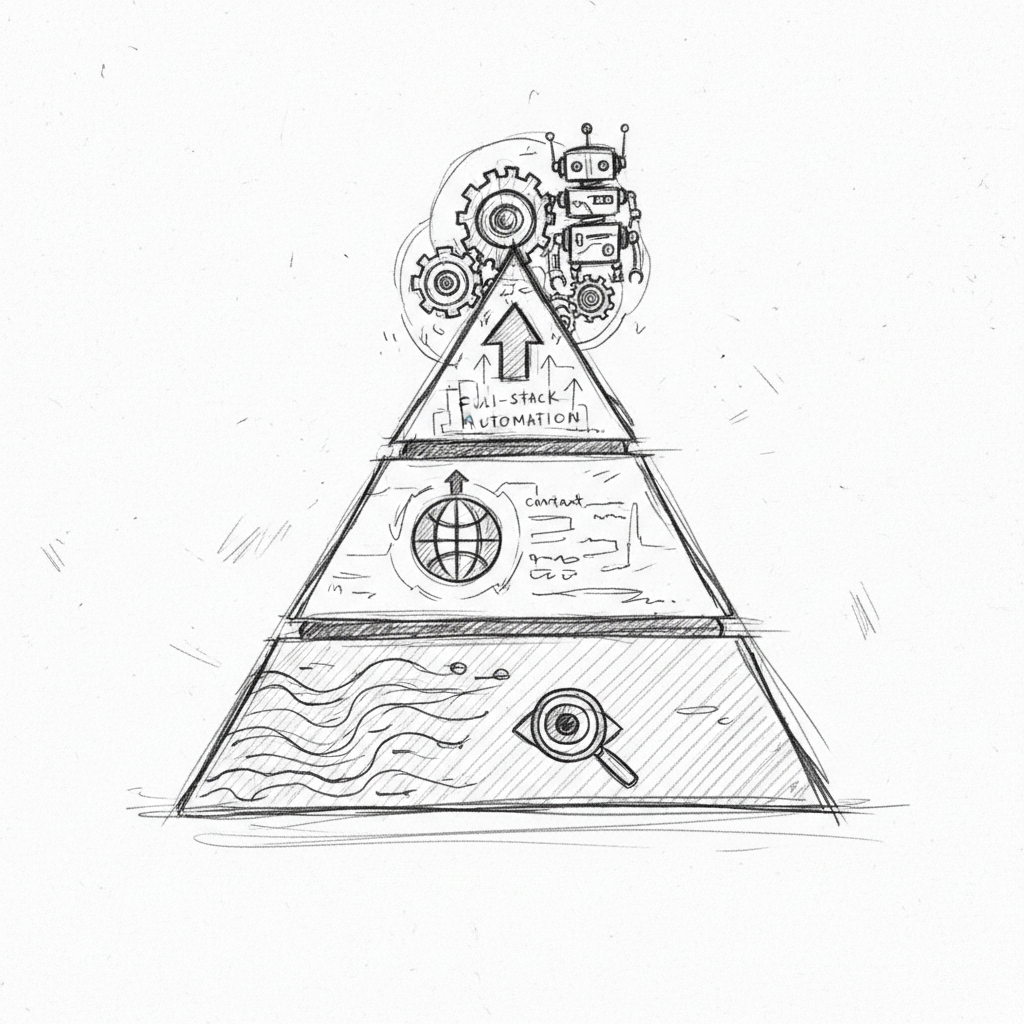
- Full-stack GEO platforms combine all three layers into a single automated workflow
Most businesses in 2026 need all three layers working together. Tools that only offer monitoring give you the diagnosis without the cure. As noted in a widely shared Reddit thread on GEO AI tools, "most tools stop at monitoring" — leaving businesses to figure out the fixes themselves [3].
How GEO Tools Work: The Mechanics Behind AI Visibility
GEO tools work by improving the signals AI search engines use to identify, trust, and retrieve content from your website when generating answers to user queries.
The Three Core Technical Layers
Understanding how GEO tools operate means understanding what AI engines actually look for. When ChatGPT or Perplexity generates a recommendation, it draws on a combination of its training data, real-time web retrieval, and structured signals that help it verify entity identity and content authority.
- Entity clarity: AI engines need to know unambiguously what your business is, what it does, and where it operates. Schema markup (the structured data that tells AI engines exactly what your business does) makes this explicit rather than leaving it to inference.
- llms.txt configuration: A relatively new technical artifact, llms.txt is a file placed at your domain root that tells LLM crawlers how to read and use your content. Think of it as robots.txt for AI engines.
- Citation and authority signals: AI engines weight content that is cited by other authoritative sources. GEO tools build citation profiles that help your brand appear credible in AI retrieval logic.
On the content side, GEO tools generate and publish structured content that answers specific questions clearly, uses natural language patterns that match how users query AI engines, and maintains the freshness signals that AI systems reward.
How Visibility Tracking Actually Works
The tracking layer of a GEO platform runs automated queries against ChatGPT, Gemini, Claude, and Perplexity using your target keywords. It records whether your brand appears, how prominently, and in what context. Over time, this data shows whether your optimization efforts are moving the needle.
Industry analysts suggest that meaningful visibility improvements typically appear within 30 to 60 days of consistent technical and content optimization, though results vary depending on niche competitiveness and baseline authority [4].
Pro Tip: Don't just track whether your brand appears in AI answers. Track the sentiment and context too. An AI engine mentioning your brand in a negative comparison is worse than not being mentioned at all. Good GEO tools capture context, not just presence.
Top GEO Tools 2026: Features and Comparisons
The GEO tools 2026 market has matured into distinct tiers, ranging from pure monitoring dashboards to fully automated optimization platforms. Knowing which tier fits your needs saves both time and money.
Feature Comparison: Leading GEO Platforms
Based on independent reviews and comparisons published in 2026, here's how the major categories of GEO tools stack up [5][6][7]:
| Tool Category | AI Visibility Tracking | Technical Optimization | Content Automation | SMB-Friendly Pricing |
|---|---|---|---|---|
| Pure Monitoring Dashboards | ✅ Yes | ❌ No | ❌ No | Varies |
| Content Optimization Tools | ⚠️ Limited | ⚠️ Partial | ⚠️ Manual | Mid-range |
| Enterprise SEO Platforms (with GEO add-ons) | ⚠️ Partial | ✅ Yes | ⚠️ Limited | ❌ Expensive ($139–$499+/mo) |
| Full-Stack GEO Automation (e.g., Moonrank) | ✅ Yes | ✅ Yes | ✅ Daily autopilot | ✅ $99/month |
What Separates the Best GEO Tools from the Rest
The most comprehensive independent comparisons of GEO tools in 2026 consistently identify three differentiators that separate genuinely useful platforms from those that look good in a demo but underdeliver in practice [8]:
- Multi-engine coverage: Tracking visibility across ChatGPT, Gemini, Claude, and Perplexity simultaneously, not just one engine
- Closed-loop optimization: The ability to not just identify gaps but automatically fix them through content and technical changes
- SMB accessibility: No requirement for technical skills, no manual content writing, and pricing that doesn't assume an agency budget
At Moonrank, we've found that the businesses making the fastest visibility gains aren't using the most expensive tools. They're using platforms that automate the full stack: tracking, technical fixes, and daily content, without requiring the business owner to do anything after initial setup.
Pro Tip: When evaluating any GEO tool, ask one specific question: "Does this platform actually publish optimized content to my site, or does it just tell me what to publish?" The gap between those two answers is the gap between results and reports.
Key Benefits of Using GEO Tools for Your Business
GEO tools deliver measurable business outcomes by ensuring your brand appears in the AI-generated answers that increasingly drive purchasing decisions and service discovery.
Visibility Where Customers Are Actually Looking
The core benefit is simple: your business shows up when potential customers ask AI engines for recommendations in your category. That's the outcome everything else flows from.
But there are several downstream benefits that compound over time:
- Trust transfer: When an AI engine recommends your business, it carries an implicit endorsement. Users trust AI recommendations more than paid ads.
- Zero-click capture: As more searches result in AI-generated answers with no Google click, GEO visibility replaces traffic that traditional SEO can no longer deliver.
- Compounding authority: The structured content and technical signals you build through GEO optimization accumulate over time, making it progressively easier to appear in AI recommendations.
- Competitive differentiation: Most SMBs haven't started GEO optimization yet. Early movers build an authority advantage that's hard for latecomers to overcome quickly.
Cost Efficiency Compared to Traditional Agencies
Traditional SEO agencies typically charge $3,000 or more per month for the combination of technical optimization, content creation, and reporting that GEO tools now automate. A full-stack GEO platform at $99/month delivers the same core functions at roughly 3% of that cost.
The cost comparison isn't just about price. It's about speed. Agencies take weeks to onboard, weeks to produce content, and months to show results. Automated GEO platforms start publishing content and implementing technical fixes from day one.
Research from multiple 2026 tool comparisons indicates that businesses using automated GEO platforms see initial AI visibility improvements within 30 days, compared to 90 to 180 days for agency-led traditional SEO campaigns [9].
Common Challenges and Mistakes with GEO Tools
GEO tools 2026 are powerful, but they're only as effective as the strategy behind them. Several common mistakes prevent businesses from getting the results they're paying for.
Mistake 1: Treating GEO as a One-Time Setup
A common mistake is treating GEO optimization the way you'd treat a website redesign: do it once and move on. AI engines continuously update their retrieval logic and training data. Businesses that publish a burst of content and then go quiet quickly lose whatever visibility they built.
The fix is consistent, daily content publishing. AI engines reward brands that demonstrate ongoing authority through fresh, structured content. This is exactly why automated daily publishing is a core feature of effective GEO platforms rather than an optional add-on.
Mistake 2: Optimizing for One AI Engine Only
Another pitfall: focusing exclusively on ChatGPT visibility while ignoring Gemini, Claude, and Perplexity. Each AI engine has different retrieval logic, different training data cutoffs, and different weighting for content signals. A brand that appears prominently in ChatGPT recommendations might be invisible in Perplexity.
- ChatGPT uses a combination of training data and Bing-powered web retrieval
- Gemini integrates deeply with Google's search index and Knowledge Graph
- Perplexity runs real-time web searches with source citation
- Claude relies more heavily on its training corpus and direct content quality signals
Effective GEO tools 2026 track and optimize for all four engines simultaneously. Optimizing for just one leaves significant visibility on the table.
Mistake 3: Ignoring Technical Foundations
One pitfall to watch for is investing heavily in content while neglecting the technical layer. Schema markup, llms.txt configuration, and structured data are the infrastructure that tells AI engines what your business is and whether to trust it. Without these signals in place, even excellent content may not get retrieved correctly.
Pro Tip: Before evaluating any GEO tool's content features, check whether it handles your technical foundation first. Run a quick test: ask ChatGPT or Perplexity to describe your business. If the description is vague, wrong, or missing, your technical signals need fixing before content volume will help.
Best Practices for GEO Optimization in 2026
The most effective GEO strategies in 2026 combine consistent content publishing, solid technical foundations, and multi-engine visibility tracking into a single coordinated workflow.
Build Your GEO Foundation First
Before worrying about content volume, get the technical layer right. Here's the sequence that works best in practice:
- Audit your current AI visibility: Query ChatGPT, Gemini, Claude, and Perplexity with your target keywords. Document exactly how (or whether) your brand appears.
- Implement schema markup: Add structured data for your business entity, products or services, and location. This is the single highest-impact technical change for AI visibility.
- Configure llms.txt: Place an llms.txt file at your domain root to guide LLM crawlers on how to read your content.
- Build citation authority: Ensure your business is accurately listed on authoritative directories and cited by credible external sources.
- Start daily content publishing: Once the technical foundation is solid, consistent structured content accelerates visibility gains.
Content Strategy for AI Search Engines
AI engines retrieve content that directly answers specific questions. Your content strategy should reflect that. In practice, this means:
- Writing content that addresses specific questions your target customers ask AI engines
- Structuring each piece with clear headings, direct answers in the first sentence, and supporting detail below
- Using your business entity name, location, and category consistently across all content
- Publishing at a frequency that signals ongoing authority, not occasional bursts
- Including structured data markup on every content page, not just your homepage
Our team at Moonrank recommends thinking of each piece of content as an answer to a specific question, not as a general topic overview. The more precisely your content matches the question format AI engines encounter, the more likely it gets retrieved and cited in AI-generated responses.
Industry analysts suggest that businesses publishing structured, question-answering content daily see 3x to 5x faster AI visibility growth compared to those publishing weekly or monthly [10]. Consistency compounds. A business that publishes 365 targeted, structured pieces per year builds a fundamentally different authority profile than one that publishes 12.
Sources & References
- Insightland, "Generative Engine Optimization: everything you need to know for 2026," 2026
- Reddit r/SaaS, "Best GEO AI Tools (2026): Why Most Tools Stop at Monitoring," 2026
- Reddit r/SaaS, "Best GEO AI Tools (2026): Why Most Tools Stop at Monitoring," 2026
- Guptadeepak.com, "Top 5 GEO Tools of 2026: Best Generative Engine Optimization Platforms," 2026
- FrictionAI, "Best GEO Tools 2026: Generative Engine Optimization Compared," 2026
- Buried Agency, "Best GEO Tools in 2026: The Ultimate Comparison for AI Search Optimisation," 2026
- BotRank.ai, "What is the Best GEO Tool? Complete 2026 Comparison," 2026
- OG Tool, "Complete Guide to Generative Engine Optimization," 2026
- GetAIRefs, "Generative Engine Optimization (GEO) Tools: A 2026 Comparison," 2026
- Guptadeepak.com, "Top 5 GEO Tools of 2026: Best Generative Engine Optimization Platforms," 2026
Frequently Asked Questions
1. What exactly are GEO tools in 2026, and how are they different from traditional SEO tools?
GEO tools 2026 are platforms built to optimize your brand's visibility inside AI-generated search responses from engines like ChatGPT, Gemini, Claude, and Perplexity. Traditional SEO tools target Google's ranking algorithm. GEO tools target the retrieval and synthesis logic inside large language models, which use fundamentally different signals including entity clarity, structured data, citation authority, and content freshness rather than backlinks and keyword density.
2. How long does it take to see results from GEO optimization?
Most businesses using automated GEO platforms see initial visibility improvements within 30 days, particularly after implementing schema markup and llms.txt configuration. Meaningful, consistent AI search recommendations typically develop over 60 to 90 days of sustained content publishing and technical optimization. Results vary based on niche competitiveness and your baseline authority level, so early movers in less competitive niches often see faster gains.
3. Do I need technical skills to use GEO tools?
With full-stack GEO automation platforms, no technical skills are required. The platform handles schema markup, llms.txt configuration, structured data, and daily content publishing automatically. You provide your business details, target keywords, and niche context during onboarding. After that, the system runs on autopilot. More basic monitoring tools may require some technical knowledge to act on their recommendations, which is why tool selection matters.
4. Which AI search engines should GEO tools 2026 cover?
At minimum, any credible GEO tool in 2026 should cover ChatGPT, Gemini, Claude, and Perplexity. These four engines represent the vast majority of AI search queries and each uses different retrieval logic, so multi-engine coverage is essential. Platforms that only track one engine give you an incomplete picture and may lead you to over-optimize for one audience while ignoring others.
5. Is a $99/month GEO tool as effective as a $3,000/month agency?
For AI search visibility specifically, a purpose-built automated GEO platform can deliver comparable or better results than a traditional agency at a fraction of the cost. Traditional agencies are typically structured around Google SEO and bolt AI search on as an afterthought. A platform built exclusively for GEO, with daily automated content and full technical optimization, is purpose-designed for the AI search era in a way that most agencies simply aren't.
6. What technical features should I look for in GEO tools 2026?
Prioritize these technical capabilities: schema markup implementation, llms.txt configuration, structured data management, citation building, and entity optimization. On the content side, look for daily automated publishing with question-answering content formats. For tracking, ensure the platform monitors all four major AI engines and captures context, not just brand mentions. Platforms that offer all three layers in one automated workflow deliver the best outcomes for SMBs.
7. Can GEO tools help local businesses, not just online brands?
Absolutely. Local businesses are actually among the biggest beneficiaries of GEO optimization. When someone asks ChatGPT or Perplexity for "the best Italian restaurant near downtown" or "top plumbers in [city]," AI engines draw on structured local business data, reviews, and entity signals. A local business with solid GEO optimization can appear prominently in these recommendations even if it ranks modestly in traditional Google search results.
8. How do I measure success with GEO tools?
Success metrics for GEO tools 2026 include: frequency of brand mentions across ChatGPT, Gemini, Claude, and Perplexity for target keywords; sentiment and context of those mentions; share of AI responses where your brand appears versus competitors; and downstream business metrics like referral traffic from AI engines and conversion rates from AI-referred visitors. Good GEO platforms surface all of these in a single dashboard updated regularly.

Getting Started with GEO Tools in 2026
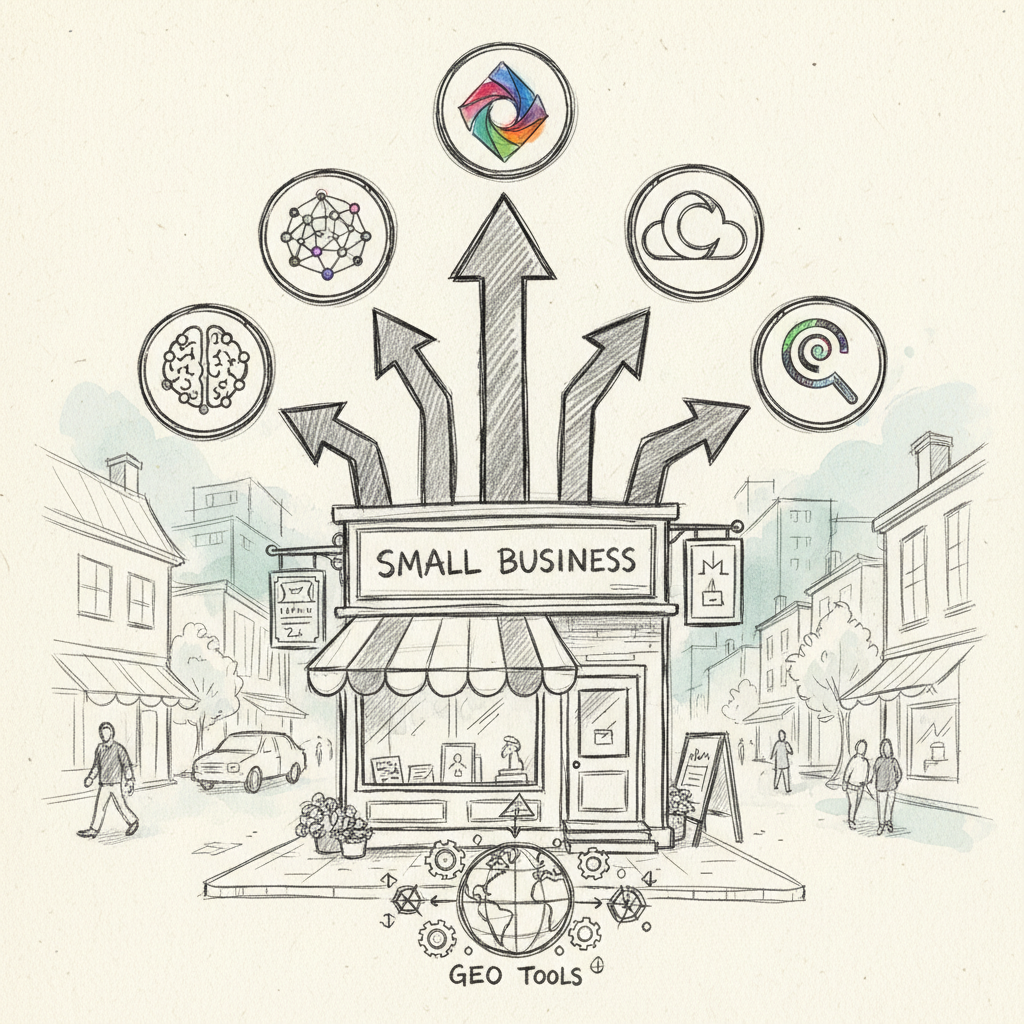
The businesses showing up in AI search recommendations right now aren't necessarily the biggest or the best-funded. They're the ones that started optimizing for AI engines early. GEO tools 2026 make that optimization accessible to any SMB, not just those with agency budgets or in-house technical teams.
The core lesson from everything covered here: don't settle for a tool that only monitors. Monitoring tells you where you stand. Full-stack GEO automation actually moves you forward, through daily content, technical fixes, and multi-engine tracking working together.
If you're ready to stop watching competitors get recommended by ChatGPT and start appearing in those recommendations yourself, Moonrank is built exactly for that. At $99/month with a 3-day free trial, it delivers the complete GEO tools 2026 stack: AI visibility tracking across ChatGPT, Gemini, Claude, and Perplexity, daily automated content publishing, and full technical optimization including schema markup, llms.txt, and structured data. No agency required. No technical skills needed. Just your business, optimized for the AI search era, on autopilot. Visit www.moonrank.ai to get started.
Recommended Articles
Explore more from our content library: