How to Find the Best SEO Tools Under $100 for Your Budget
Budget SEO tools in 2026 range from $0 to around $30 per month for entry-level plans, with mid-tier options like Keysearch at $17/month and SE Ranking at $23.52/month...

Understanding SEO tools budget pricing is essential. Budget SEO tools in 2026 range from $0 to around $30 per month for entry-level plans, with mid-tier options like Keysearch at $17/month and SE Ranking at $23.52/month covering most small-business needs. Premium platforms like Ahrefs ($129/month) and Semrush ($139.95/month) offer deeper data, but budget tools typically deliver 70–80% of that value at a fraction of the cost. The right spend depends on your site size, keyword competition, and whether you need backlink analysis or technical audit depth.
Understand SEO Tools Budget Pricing Before You Spend a Dollar
SEO tools budget pricing in 2026 falls across four distinct tiers, free, sub-$30, mid-range, and premium, and picking the wrong tier wastes money fast.
The free tier includes Google Search Console and Ahrefs Webmaster Tools, which cover basic rank tracking and site health checks at no cost. Sub-$30 plans, Keysearch at $17/month and SE Ranking's Starter plan at $23.52/month [2], handle keyword research and on-page audits for most small sites. Mid-range tools ($50–$99/month) add deeper competitor data and larger crawl limits. Premium platforms like Ahrefs ($129/month), Semrush ($139.95/month), and Moz Pro (up to $449/month) [3] are built for agencies and large-scale content operations.
One more category is emerging in 2026: AI-powered SEO tools priced at the budget tier, designed specifically for visibility in ChatGPT, Perplexity, and Gemini, not just Google. See our AI SEO Tools Small Business guide for a full breakdown of that category.
What factors determine whether you need a $17/month tool or a $129/month tool?
Two variables drive your decision: keyword competition level and site size. If your target keywords have monthly search volumes under 5,000 and you operate in a low-competition niche, a $17/month Keysearch plan gives you everything you need to find and track them. Sites with more than 500 pages, or those targeting high-competition keywords with significant paid-search activity, typically need premium crawl depth and backlink data that only the $129+ tier provides [2].
The agency comparison makes the stakes concrete. A solo founder spending $17/month on Keysearch gets keyword research and rank tracking they control directly. A full-service SEO agency charges $3,000+ per month [3] for strategy, content, and reporting, most of which a capable budget tool replicates for the research layer, though execution still falls on the owner.
What are the hidden costs that make cheap SEO tools more expensive long-term?
Budget tools often advertise a low base price, then charge separately for the features you actually use. SE Ranking applies credit overage fees when you run more on-demand reports than your plan includes [2]. Free Ubersuggest restricts data exports, forcing manual copy-paste work that costs time rather than money. Mangools' budget plans cap API access, which blocks integration with any reporting workflow you build later.
Add those friction costs up over 12 months and a $23/month plan can behave more like a $50/month plan in practice. Check the per-report and export limits before committing to any entry-level subscription.
Choose the Right Budget SEO Tools for Your Core Tasks
Match each SEO task to a specific tool tier, keyword research, rank tracking, backlinks, and technical audits each have a clear budget-friendly option under $30/month.
Which SEO functions get cut at budget price points?
SEO tools budget pricing decisions almost always force a trade-off between feature depth and cost. Knowing exactly what gets cut at each price tier stops you from buying a plan that can't do the job you need.
Keyword research: Keysearch at $17/month gives you 200 searches per day with keyword difficulty scores, enough for most small business research cycles. Free alternatives like Google Keyword Planner and Ahrefs Webmaster Tools cover basic volume data, but neither shows competitor keyword gaps, which is where most content opportunities actually live.
Rank tracking: SERP Robot tracks 100 keywords at no cost. SE Ranking's Starter plan tracks 10 keywords at $23.52/month [2]. The consistent trade-off at budget tiers is tracking frequency, most plans drop from daily to weekly updates, which means you'll miss short-term ranking swings tied to algorithm changes.
Backlink analysis is the steepest sacrifice below $30/month. Mangools' LinkMiner at $29/month gives limited link data compared to Ahrefs' full index. Free Ahrefs Webmaster Tools shows your own backlinks only, you can't analyze a competitor's link profile without upgrading [2].
Technical audits: Screaming Frog's free tier crawls up to 500 URLs, which covers most small business sites without spending a dollar. The paid plan at $259/year adds JavaScript rendering and scheduled crawls, worth it once your site exceeds that URL threshold.
Watch for red flags in suspiciously cheap tools. Any platform promising "unlimited everything" under $10/month typically runs on keyword databases that are 6–12 months stale, or throttles crawl speeds to the point where audits take days rather than minutes [3]. For more information, see Pricing.
Which budget SEO tools have the shortest learning curve for small teams?
For small teams without a dedicated SEO hire, setup time matters as much as price. Keysearch and SE Ranking both offer guided onboarding flows that get a first-time user to actionable data within an hour. Screaming Frog requires more configuration, its crawl settings and filter options can overwhelm a non-technical user on the first run.
If your team needs one tool that covers keyword research and rank tracking without a steep ramp-up, SE Ranking's interface is the most approachable at this price range. For businesses that want automated technical optimization without touching any of these tools manually, Moonrank handles schema markup, structured data, and daily content publishing at $99/month, removing the learning curve entirely.
Compare Budget vs. Premium SEO Tools by ROI
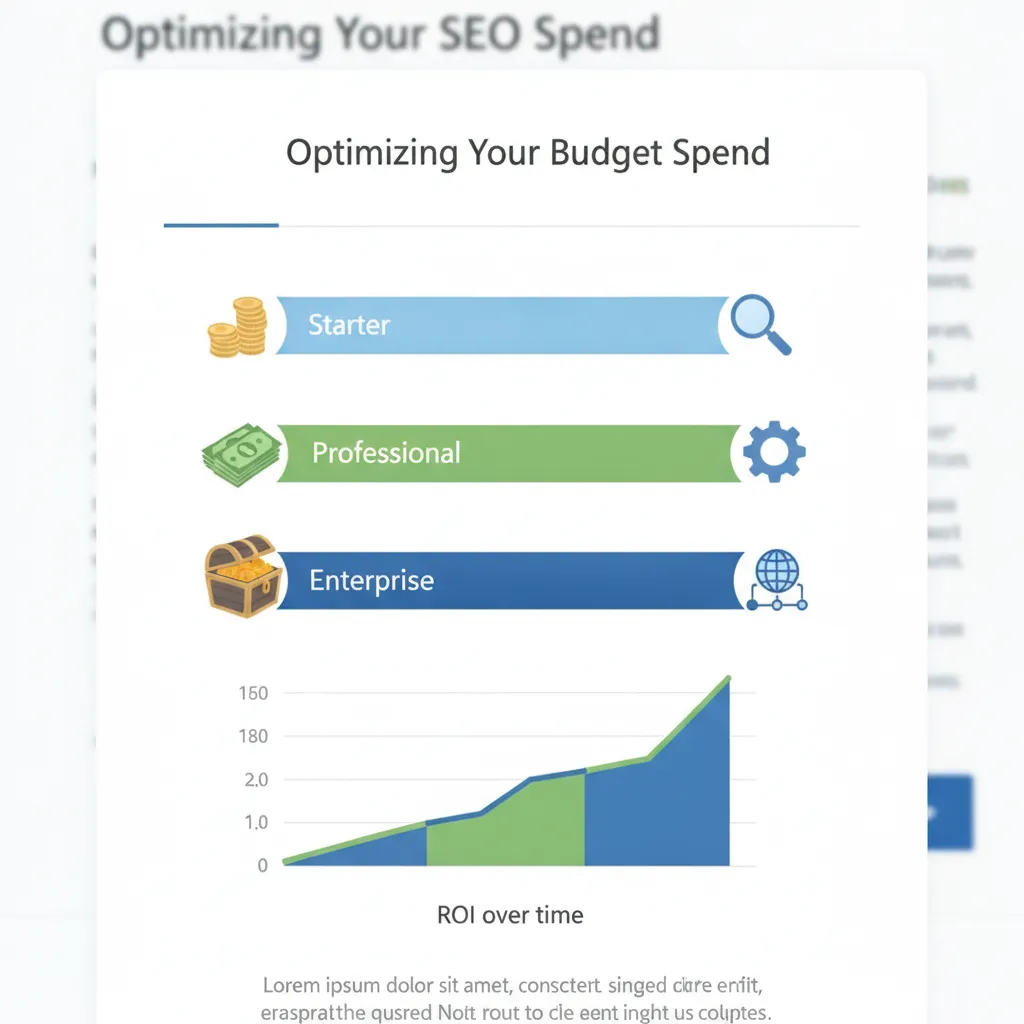
For most SMBs, budget SEO tools deliver 75–80% of premium platform value at 10–15% of the cost, the gap only matters in high-competition niches.
When evaluating SEO tools budget pricing against actual ranking outcomes, the 80/20 rule holds up well. Keysearch at $17/month draws from a database of roughly 1.5 billion keywords. Ahrefs at $129/month indexes around 20 billion [2]. For low-to-medium competition niches, the terrain most SMBs actually compete in, Keysearch surfaces the same actionable targets at a fraction of the price.
Does a $17/month tool deliver 80% of the value of a $129/month tool?
Run the numbers on a real scenario. A small e-commerce store spending $204/year on Keysearch ranks one mid-volume keyword, 1,000 searches/month, converting at 2%. At an average order value of $60, that's $1,200/month in new revenue. The tool pays for itself in under two weeks. The same outcome on Ahrefs costs $1,548/year, the payback period stretches to months before the math turns positive.
Premium tools do justify their cost in one specific situation: competitive backlink analysis against domains with a Domain Rating of 50 or higher. Ahrefs' link index is 3–5x larger than any sub-$30 alternative [2], which matters when you need to reverse-engineer a strong competitor's link profile precisely.
Outside that scenario, a DIY toolkit, Keysearch plus Screaming Frog's free tier plus Google Search Console, costs under $25/month. Entry-level agency retainers start at $500–$1,500/month in 2026 [3]. That's a 20–60x cost difference for work you can do yourself with the right tools.
For ongoing rank tracking decisions that sit alongside your tool stack, see our guide to SEO Monitoring Tools for a breakdown of what to measure once your budget setup is running.
Avoid Common Mistakes When Budgeting for SEO Tools
The most expensive SEO tools budget pricing mistakes aren't overspending, they're wasting money on the wrong structure from day one.
Mistake 1: Stacking free tools instead of one paid plan
Running Google Search Console, Ubersuggest's free tier, Screaming Frog's free version, and Google Analytics gives you 4 separate logins with no unified reporting. The time cost of switching between dashboards and reconciling data manually exceeds the $23/month cost of a plan like SE Ranking's Essential tier within weeks.
Mistake 2: Ignoring switching costs
Migrating rank tracking history, keyword lists, and project settings between platforms takes 8–15 hours for a typical 50-keyword campaign. Before choosing a "cheaper alternative," factor that time cost into the real price of switching.
Mistake 3: Choosing on price without checking data freshness
Some budget tools update keyword volume data quarterly. In fast-moving niches, consumer electronics, AI software, seasonal retail, three-month-old volume figures make keyword decisions unreliable.
Mistake 4: Skipping technical audit capability
A 50-page small business site can carry crawl errors, broken internal links, or missing schema markup, the structured data that tells AI engines like ChatGPT and Gemini what your business does. A free Screaming Frog crawl catches these in under 10 minutes.
Mistake 5: Ignoring annual billing discounts
SE Ranking, Mangools, and Keysearch each offer 20–40% discounts on annual plans. The headline monthly rate is rarely what you actually pay, always calculate the annualized cost before comparing tools.
Build Your Budget SEO Toolkit Step by Step
You can assemble a functional SEO toolkit for under $30/month by stacking free foundations first, then adding one paid tool matched to your niche.
- Set up Google Search Console and Google Analytics 4. Both are free and non-negotiable, even businesses paying agencies $3,000/month use these as their data backbone. Search Console shows which queries drive clicks and flags indexing errors; GA4 tracks what visitors do after they land. Get these running before spending a dollar on anything else.
- Add Ahrefs Webmaster Tools (free). Connect your own domain to see your full backlink profile and run a technical site audit. For sites under 500 pages, this covers the most critical health checks without a paid plan.
- Choose one paid keyword research tool based on your niche. Bloggers and content sites: Keysearch at $17/month. Local businesses that need rank tracking alongside keyword data: SE Ranking Starter at $23.52/month. Pick one, not both.
- Run Screaming Frog's free tier every 90 days. It crawls up to 500 URLs and surfaces broken links, duplicate titles, and missing metadata. Set a recurring calendar reminder now so the audit actually happens.
On SEO tools budget pricing, this sequence keeps your monthly spend at $17–$24 while covering keyword research, technical audits, backlinks, and traffic data.
Upgrade trigger: move to a $99–$129/month tool when you're targeting keywords with DR 50+ competitors [2], managing more than 3 client sites, or tracking daily rankings for more than 50 keywords. Below those thresholds, the free-plus-one-paid stack is sufficient.
Can you realistically do SEO on your own without paid tools?
Yes, for a new or low-competition site, the free stack above handles roughly 80% of what matters. Google Search Console alone tells you which pages rank, which queries almost convert, and which URLs Google hasn't indexed. Ahrefs Webmaster Tools adds backlink data most beginners never fully use anyway.
The gap shows up in keyword research. Without a paid tool, you're guessing at search volume and competition scores. That's where the $17–$24/month investment pays for itself quickly, one well-targeted article that ranks can generate more value than the annual tool cost.
If your goal is AI search visibility, showing up when customers ask ChatGPT or Perplexity for recommendations, traditional keyword tools have a blind spot. A platform like Moonrank ($99/month) handles daily content publishing, technical optimization for AI engines, and AI visibility tracking across ChatGPT, Gemini, Claude, and Perplexity, functions no $17/month keyword tool touches.

Frequently Asked Questions
What is the cheapest SEO tool that actually works in 2026?
Ubersuggest starts at $12/month and covers keyword research, site audits, and basic rank tracking for solo founders and small teams. For businesses that need to appear in AI search engines like ChatGPT, Gemini, and Perplexity, not just Google, Moonrank at $99/month automates daily content publishing and technical optimization end-to-end, making it the lowest-cost option that addresses AI search visibility specifically. Traditional platforms like Ahrefs ($129/month) and Semrush ($139.95/month) [2] cost more and require you to do the work yourself.
Is it worth paying for SEO tools or should I just use free options?
Free tools cover basic diagnostics but leave critical gaps in rank tracking, competitor analysis, and AI search visibility. Google Search Console is free and useful, but it shows you data after traffic moves, not why you're losing it. Paid tools give you the forward-looking signals that let you act before rankings drop. For most small businesses generating over $150K annually, a $50–$99/month tool pays for itself if it surfaces even one ranking or visibility improvement per quarter.
How much do small businesses typically spend on SEO tools per month?
Most small businesses spend between $50 and $200 per month on SEO tools in 2026 [3]. Solo founders often stay under $100 by combining one paid platform with free tools like Google Search Console. Businesses with active content programs or multiple locations tend to spend toward the $150–$200 range. Spending above $200/month on tools alone, without agency support, is uncommon at the SMB level and usually signals overlap between subscriptions that could be consolidated.
What's the real cost difference between DIY SEO tools and hiring an agency in 2026?
DIY SEO tools typically run $50–$200/month; agencies typically charge $1,500–$10,000/month for ongoing work [3]. The gap is 10x to 50x depending on the agency tier. The trade-off is time: tools give you data, but you execute the strategy yourself. Automated platforms like Moonrank sit between the two, $99/month with no manual input required after onboarding, compared to agencies charging $3,000+ per month for similar content and technical optimization output. For most SMBs, that middle tier is where the math works.
Conclusion
Budget SEO tools in 2026 range from $12/month for basic keyword data to $140/month for agency-grade platforms, but price alone doesn't determine value. The right tool matches your actual workflow: a solo founder who won't log in weekly gets nothing from a $139/month Semrush subscription. Three things matter most: pick one tool you'll use consistently, make sure it covers the channels your customers actually search (including ChatGPT and Perplexity, not just Google), and audit your stack every six months to cut subscriptions that duplicate each other.
If AI search visibility is a gap in your current setup, start a free 3-day trial at moonrank.ai to see exactly where your business stands across ChatGPT, Gemini, Claude, and Perplexity, before a competitor fills that space.
Sources & References
- 10 Cheapest SEO Tools in 2026, Honest Reviews | RnkRocket
- SEO Pricing in 2026: What SEO Costs - Arc4
Recommended Articles
Explore more from our content library: