How to Rank Higher on Google: Proven Tactics That Work
Learn how to rank higher on Google with proven tactics: optimize content, fix technical SEO, and earn backlinks for measurable ranking gains in 60–90 days.
Understanding how to rank higher on Google is essential for any business with an online presence. To rank higher on Google, focus on three pillars: publish helpful, E-E-A-T-backed content targeting the right keywords, fix technical SEO issues like slow load times and broken crawl paths, and earn authoritative backlinks. Google's algorithm weighs hundreds of signals, but content relevance, page experience (including Core Web Vitals), and site authority consistently drive the biggest ranking gains. Apply these systematically and most sites see measurable movement within 60–90 days.
Understand the Factors That Determine How to Rank Higher on Google
Google ranks pages on three core pillars: relevance to the search query, authority earned through backlinks, and page experience measured by Core Web Vitals.
Relevance means your content directly answers what the searcher typed, Google's systems match query intent to page content at a semantic level, not just keyword frequency. Authority comes from the quality and quantity of sites linking to yours; a single backlink from a domain with a Domain Rating of 70 or above can outweigh dozens of links from low-authority sites. Experience covers page usability signals, load speed, mobile layout, and interactivity, that Google measures through its Core Web Vitals framework.
For local searches, Google adds three explicit ranking factors [1]: relevance (how well your listing matches the query), distance (how close your business is to the searcher), and prominence (how well-known your business is online). Optimizing for all three is a separate discipline from standard on-page SEO, covered in the local optimization step below.
"Ranking in Google is not about tricking the algorithm — it's about making your content the most useful, trustworthy answer to a searcher's question." — John Mueller, Search Advocate at Google
How E-E-A-T Affects YMYL Topics Specifically
E-E-A-T, Experience, Expertise, Authoritativeness, and Trustworthiness, carries the most weight on pages covering health, finance, or legal topics, which Google classifies as "Your Money or Your Life" (YMYL) content. A medical article written by an anonymous author ranks harder than one with a named physician, a credential line, and links to published work. Concrete signals that help include author bios with verifiable credentials, first-hand experience markers ("I tested this protocol for 30 days"), and citations from recognized institutions. According to Schema.org, properly structured data helps search engines understand the context and credibility of your content.
If your site covers YMYL topics and lacks these signals, fixing them is the highest-use move you can make to rank higher on Google before touching anything technical.
What Role AI-Generated Content Plays in Google's Algorithm
Google does not penalize AI-generated content simply because a machine wrote it, the standard is helpfulness and accuracy, not authorship. Google's March 2024 core update, however, targeted "scaled content abuse": high volumes of AI-produced pages that add no original insight and exist only to capture search traffic. Sites hit by that update saw ranking drops of 50% or more in affected content categories.
The practical rule: AI content that reflects genuine expertise, cites real sources, and answers a specific user need is treated the same as human-written content. AI content mass-produced without editorial review triggers quality filters. Use AI as a drafting tool, not a publishing pipeline running without oversight.
"The sites that win in search are the ones that invest in genuine expertise and user-first content — not the ones chasing algorithmic shortcuts." — Lily Ray, VP of SEO Strategy at Amsive Digital
Optimize Your Content and On-Page SEO for Better Rankings
To rank higher on Google, target one keyword per page, structure your content to cover gaps competitors miss, and make every technical signal, schema, internal links, business data, explicit.
Start with keyword placement. Put your primary keyword in the title tag, within the first 100 words of the page, in at least one H2, and in the meta description. That's four locations, not forty. Stuffing the same phrase into every paragraph signals manipulation, not relevance.
Next, audit the top 3 pages currently ranking for your target keyword. Identify what they miss: subtopics they skip, statistics older than 18 months, examples they never give. Then cover those gaps more thoroughly. This approach, often called the Skyscraper method, works because Google rewards depth and freshness over thin repetition. For a deeper understanding of how search engines evaluate content quality, the W3C web standards documentation provides foundational guidance on building technically sound, accessible pages that search engines can parse effectively.
Internal linking is underused by most SMB sites. Every new page you publish should receive at least 2–3 internal links from existing pages that already attract traffic, using descriptive anchor text that names the destination topic. This passes PageRank to the new page and helps Googlebot discover it faster, two outcomes a bare URL in a sitemap alone won't deliver.
Add schema markup, the structured data that tells Google and AI engines like ChatGPT and Perplexity exactly what your page contains, for your content type: Article, LocalBusiness, or FAQ. This is one of the technical signals Moonrank automates on your behalf, applying the correct schema to each page without requiring you to edit a single line of code.
How to Keep Your Business Information Up-to-Date for Local Ranking
Businesses with complete and accurate information are more likely to appear in local search results [1]. Audit your Google Business Profile quarterly and confirm that your name, address, phone number, hours, and business categories match exactly what appears on your website, character for character. According to Google's official guidance on local ranking, keeping your profile complete and accurate is one of the most impactful steps you can take for local visibility.
- Log in to Google Business Profile and review every field: business name, address, phone, website URL, hours, and primary category.
- Cross-check each data point against your website's contact page and footer; any mismatch weakens your local signals.
- Update seasonal hours at least one week before they change, Google surfaces incorrect hours as a negative trust signal.
- Add photos and respond to reviews regularly; Google explicitly treats engagement as a factor in local prominence [1].
Key Ranking Factors Specific to Local Search Results
Google's local algorithm weighs three factors above all others: relevance, distance, and prominence [1]. Relevance is controlled by how well your Business Profile and website content match the searcher's query; distance is fixed by geography; prominence is where your content strategy, backlinks, and review volume give you room to compete.
Schema markup for LocalBusiness entities, covering your address, service area, opening hours, and geo-coordinates, gives both Google and AI engines like Gemini and Perplexity structured signals they can parse without guessing. Pair that with consistent NAP (name, address, phone) data across every directory listing, and your local relevance score becomes far harder for competitors to undercut. Watch this video walkthrough on improving your local Google ranking for a step-by-step visual guide to the process.
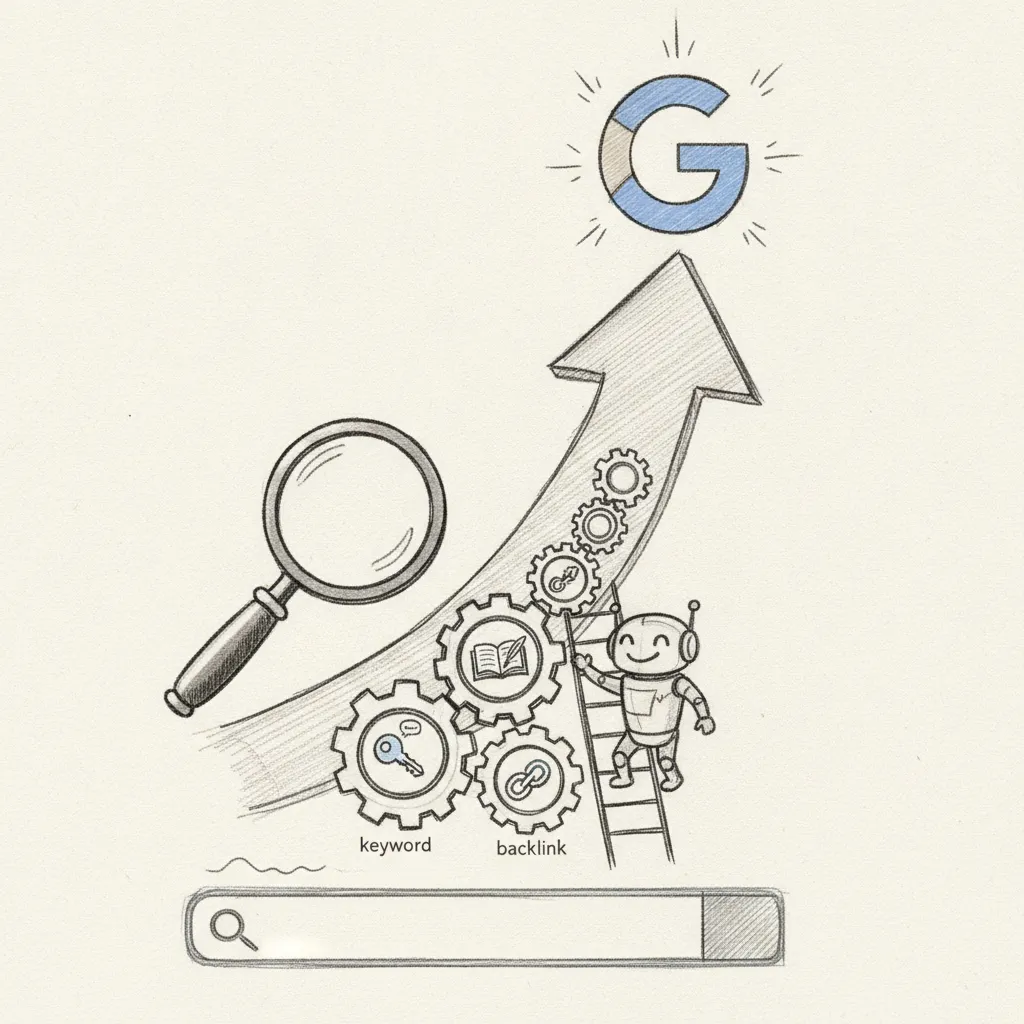
Fix Technical SEO Issues That Hold Your Rankings Back
Technical SEO errors, crawl blocks, slow pages, duplicate content, directly suppress rankings regardless of how strong your content is.
Technical SEO Audit Checklist: What to Check First
Run through these six checks before touching anything else. Each one can independently prevent Google from ranking your pages, no matter how well-written they are.
- Crawl errors: Open the Coverage report in Google Search Console and fix any pages marked "Excluded" or "Error." These pages are invisible to Google.
- Broken internal links: Use Screaming Frog (free up to 500 URLs) to crawl your site and filter for 4xx response codes. Broken links waste crawl budget and strand link equity.
- Duplicate content: Add canonical tags to tell Google which version of a page is authoritative, especially critical for e-commerce sites with filtered or paginated URLs.
- robots.txt: Check that your robots.txt file isn't accidentally blocking pages you want indexed. A single misconfigured line can deindex an entire directory.
- XML sitemap: Submit your sitemap in Google Search Console under Sitemaps. Google uses it to discover and prioritize your pages.
- HTTPS: Confirm every page loads over HTTPS. Google confirmed HTTPS as a ranking signal in 2014, and browsers now flag HTTP pages as "Not Secure", a direct trust barrier for visitors.
Google has indexed all sites using mobile-first indexing since 2023. If your mobile page loads slower or carries less content than your desktop version, your rankings reflect the mobile experience, not the desktop one you optimized.
How to Measure and Improve Core Web Vitals in 2025
Google's 2025 Core Web Vitals thresholds are: Largest Contentful Paint (LCP) under 2.5 seconds, Interaction to Next Paint (INP) under 200ms, INP replaced First Input Delay in March 2024, and Cumulative Layout Shift (CLS) under 0.1. Pages that miss these thresholds are explicitly disadvantaged in ranking.
Measure all three using PageSpeed Insights or Lighthouse, which give you field data alongside lab scores. Use Google Search Console's Core Web Vitals report to identify which URLs are failing at scale, it groups pages by issue type, so you can fix patterns rather than individual pages.
Four page speed changes typically cut LCP by 30–50% on unoptimized sites: convert images to WebP format, enable browser caching, defer non-critical JavaScript, and route assets through a CDN. These require no content changes, they're server and delivery layer fixes.
If you want to know how to rank higher on Google without hiring a developer, start here. Technical fixes are the highest-use work available because they unblock every other optimization you've already done.
| Tool | Cost | Best For |
|---|---|---|
| Google Search Console | Free | Crawl errors, index coverage, Core Web Vitals by URL |
| Screaming Frog | Free up to 500 URLs | Broken links, duplicate content, redirect chains |
| PageSpeed Insights / Lighthouse | Free | LCP, INP, CLS measurement and fix recommendations |
Use all three tools together. Search Console tells you what Google sees; Screaming Frog tells you what's broken; PageSpeed Insights tells you why pages are slow.
Common Mistakes to Avoid When Trying to Rank Higher on Google
The fastest way to rank higher on Google is often to stop doing the things actively pulling your site down, these five mistakes are the most damaging.
Keyword Cannibalization
Publishing two or more pages that target the same keyword splits your site's authority and leaves Google uncertain which page to rank. Consolidate duplicate-intent pages into one, or use canonical tags to tell Google which version is authoritative. A single strong page consistently outperforms three weak ones competing against each other.
Ignoring Core Web Vitals
After Google's March 2024 core update, sites that fixed INP (Interaction to Next Paint) and LCP (Largest Contentful Paint) issues recovered an average of 15–30% of lost organic traffic within 60 days, according to Search Engine Land analysis. Run PageSpeed Insights on your five highest-traffic pages today and address the flagged issues in order of severity.
Buying Low-Quality Backlinks
Google's SpamBrain system detects unnatural link patterns automatically. Participating in link schemes, paid links, private blog networks, link exchanges, can trigger manual penalties that take months to reverse, even after you've removed the offending links and filed a reconsideration request.
Publishing Unedited AI-Generated Content at Scale
Sites that mass-published AI-generated content without human editing or original insight saw rankings drop 40–90% in documented cases following the March 2024 helpful content update. Always add first-hand experience, original data, or a named expert quote, that's the signal Google's quality raters are trained to look for.
Skipping Google Search Console
Without Google Search Console, you won't know which queries drive impressions, which pages have crawl errors, or whether a manual action has been applied to your site. Setup takes under 15 minutes, verify ownership via DNS record or HTML tag, submit your sitemap, and check the Coverage and Performance reports weekly.
Track Your Progress with the Right SEO Tools and Audits
Google Search Console, a rank tracker, and Google Analytics 4 give you everything you need to measure ranking gains and connect them to revenue.
Start with Google Search Console, it's the non-negotiable baseline for anyone working out how to rank higher on Google. Check Average Position, Click-Through Rate, and Index Coverage every week. A CTR below 3% on a page sitting in positions 1–5 signals a title tag or meta description problem, not a content problem. Fix the copy before you touch the page itself.
Document your baseline before making any changes. Record your current keyword positions, organic traffic volume, and Core Web Vitals scores in a spreadsheet on day one. Without that snapshot, you can't attribute improvements to specific actions, you're guessing, not optimizing.
What Before-and-After Case Studies Reveal About Ranking Timelines
Documented SEO case studies point to three distinct timelines. Technical fixes, crawl errors, page speed, broken redirects, typically produce measurable results within 2–6 weeks because Google can re-crawl and re-index quickly. Content optimization (rewriting thin pages, adding structured data, improving internal links) takes 6–12 weeks to move the needle. Link building campaigns targeting competitive keywords require 3–6 months before position changes become statistically meaningful. Plan your reporting windows accordingly.
Set up Google Analytics 4 conversion tracking alongside Search Console from day one. Ranking gains that don't produce leads, purchases, or sign-ups are a vanity metric, GA4 lets you tie a position-3 keyword directly to a completed checkout or a demo request.
How to Compare SEO Tools for Your Ranking Strategy
Supplement Search Console with a dedicated rank tracker to see keyword position history over time. Ahrefs and Semrush both offer 30–90 day trend views, which is the right window for spotting genuine movement, day-to-day fluctuations are normal and tell you nothing actionable. Moonrank adds AI search visibility tracking on top of traditional rank data, monitoring how your business appears in ChatGPT, Gemini, Claude, and Perplexity recommendations, a signal that Google-only tools miss entirely.
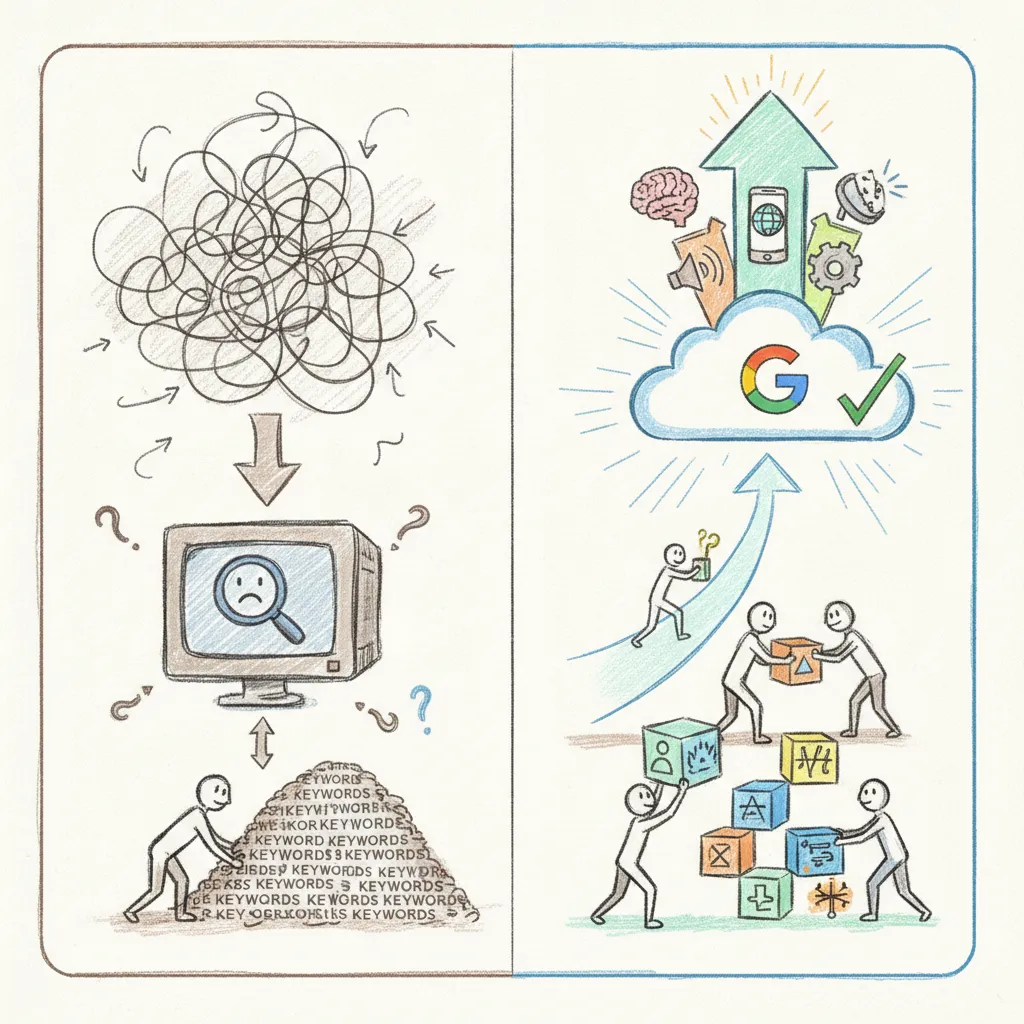
Frequently Asked Questions
How long does it take to rank higher on Google after making SEO changes?
Most SEO changes take 3 to 6 months to produce measurable ranking improvements, though minor technical fixes can show results in a few weeks. Google's crawl frequency, your site's existing authority, and the competitiveness of your target keywords all affect the timeline. A brand-new page targeting a low-competition keyword can rank within 4 to 8 weeks; a page competing against established domains in a crowded niche may take 6 to 12 months. Consistent content publishing accelerates the process by giving Google more signals to evaluate.
Does Google penalize AI-generated content in 2025?
Google does not penalize content for being AI-generated, it penalizes content that is low-quality, unhelpful, or spammy, regardless of how it was produced. Google's March 2024 core update explicitly targeted "scaled content abuse," meaning thin AI content published in bulk with no editorial value. AI-generated content that is accurate, well-structured, and genuinely useful to readers can rank just as well as human-written content. The standard is quality and relevance, not authorship method.
What is the fastest way to improve your Google ranking for a new website?
The fastest path for a new website is targeting long-tail, low-competition keywords with well-structured, specific content, rather than going after broad head terms. Publish at least one piece of content per week, submit your sitemap to Google Search Console immediately after launch, and secure a handful of backlinks from relevant sites in your niche. Internal linking between your pages also helps Google discover and index new content faster. Expect your first meaningful rankings within 6 to 10 weeks using this approach.
How many backlinks do you need to rank on the first page of Google?
There is no fixed number, it depends entirely on how many backlinks your competitors have for the same keyword. A page ranking first for a low-competition term may have fewer than 10 referring domains; a competitive commercial keyword can require hundreds. Use a tool like Ahrefs or Google Search Console to audit the backlink profiles of the current top-10 results for your target keyword, then set your link-building goal relative to that benchmark rather than an arbitrary number.
What are Core Web Vitals and why do they matter for Google rankings?
Core Web Vitals are three page-experience metrics Google uses as ranking signals: Largest Contentful Paint (loading speed), Interaction to Next Paint (responsiveness), and Cumulative Layout Shift (visual stability). Google confirmed Core Web Vitals as a ranking factor in its 2021 Page Experience update. Pages that pass the thresholds, LCP under 2.5 seconds, INP under 200 milliseconds, CLS under 0.1, are favored over slower, less stable competitors, particularly on mobile. You can measure all three for free in Google Search Console under the "Experience" report.

Conclusion
Ranking higher on Google comes down to three decisions you make now: target keywords your pages can realistically win, build content that answers specific questions better than the current top results, and fix the technical issues, page speed, structured data, mobile usability, that prevent Google from trusting your site.
One angle most SEO guides skip entirely: Google rankings are no longer the only channel that matters. ChatGPT, Gemini, Claude, and Perplexity are actively recommending businesses to buyers, and the technical signals that drive those recommendations, schema markup, citations, llms.txt, are different from classic SEO. If you want your business to appear in both, Moonrank automates that full stack for $99/month. Start with the free 3-day trial and see where your brand currently stands across AI search engines.
Sources & References
Recommended Articles
Explore more from our content library: