Build Smarter Citations With AI-Powered Tools
Discover how AI-powered citation building works, why it matters for SEO and AI search visibility, and the best practices to get your brand recommended in 2026.
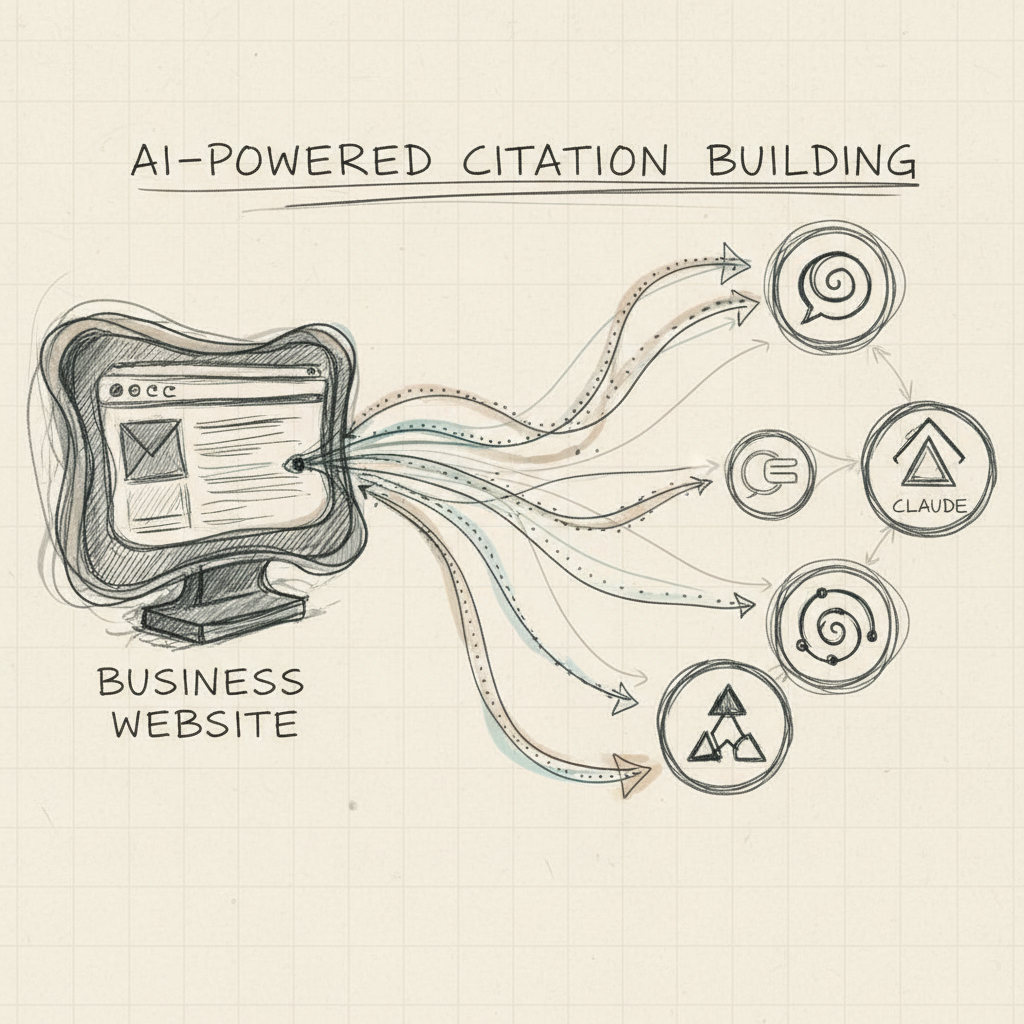
| Key Insight | Explanation |
|---|---|
| AI citation building is distinct from academic citation | In SEO and AI search contexts, "citation building" means getting your brand referenced and verified across authoritative sources so AI engines trust and recommend you. |
| AI engines use citations as trust signals | ChatGPT, Gemini, Claude, and Perplexity all rely on how often and how consistently your business is mentioned across credible sources when deciding what to recommend. |
| Automated tools now handle citation building at scale | Platforms like Moonrank automate technical citation signals including schema markup, structured data, and llms.txt configuration without requiring manual work from the business owner. |
| Traditional SEO citations don't fully transfer to AI search | Google-optimized backlinks and directory listings help, but AI engines require additional structured signals that most SMBs haven't implemented yet as of 2026. |
| Hallucinated citations are a real risk | AI tools can generate plausible-sounding but fabricated references. Verification tools and human review remain essential for any citation-dependent workflow. |
| Cost gap between agencies and automation is massive | Traditional SEO agencies charge $3,000+ per month for citation work. Automated AI-native platforms deliver comparable or better AI search results at $99/month. |
Your business could have a great website, solid reviews, and years of experience. But if ChatGPT doesn't know you exist, you're invisible to a growing share of customers. That's where AI-powered citation building comes in. It's the process of systematically creating, verifying, and distributing structured references about your business so that AI search engines like ChatGPT, Gemini, Claude, and Perplexity have the signals they need to recommend you confidently. This guide covers exactly how it works, why it matters more in 2026 than ever before, and what you can do to get ahead of competitors who are still relying on outdated SEO tactics alone.
What Is AI-Powered Citation Building?
AI-powered citation building is the practice of using automated tools and structured data to create consistent, verifiable references about a business across the web so that AI search engines can confidently surface and recommend that business in their responses.
The Two Meanings You Need to Know
The phrase "citation building" means different things in different contexts, and that distinction matters a lot here. In academic writing, a citation is a reference to a source document, formatted in APA, MLA, or Chicago style [1]. Tools like QuillBot and Citation Machine have automated this process for students and researchers for years.
In SEO and AI search optimization, "citation" refers to something different: any mention of your business name, address, phone number, or brand across directories, websites, structured data, and content. These mentions act as trust signals. The more consistently and authoritatively your business is cited, the more confident an AI engine becomes when deciding whether to recommend you.
AI-powered citation building, as covered in this article, focuses on the SEO and AI search definition. It uses automation to handle three things at once:
- Creating structured data (schema markup) that tells AI engines what your business does
- Distributing consistent brand mentions across authoritative online sources
- Configuring technical files like llms.txt, which signal directly to large language model (LLM) crawlers how to interpret your content
Why It Matters More Now Than Ever
As of 2026, AI search is no longer a niche channel. Perplexity reported over 100 million weekly queries by late 2024, and that number has grown significantly since. Research from SparkToro indicates roughly 40% of Google searches already result in zero clicks as users shift to AI-generated answers. The brands getting recommended in those answers aren't there by accident. They've built the citation infrastructure that AI engines require.
Most SMBs haven't done this yet. That gap is your opportunity.
How AI-Powered Citation Building Works
AI-powered citation building works by combining structured data implementation, automated content signals, and technical configuration to give AI search engines consistent, verifiable information about a business.
The Core Mechanics
Think of it as building a dossier that AI engines can trust. When someone asks ChatGPT "best Italian restaurant in Austin," the model doesn't just search the web in real time. It draws on patterns from its training data and, in retrieval-augmented generation (RAG) mode, pulls from indexed sources. Your citations determine whether your business appears in either pool.
The process works in four sequential steps:
- Audit existing citations. Identify where your business is currently mentioned, what information is consistent, and what's missing or contradictory across directories, review platforms, and structured data.
- Implement schema markup. Schema markup is structured data added to your website's HTML that tells AI crawlers exactly what your business is, what it offers, where it's located, and how to contact you. This is the foundation of technical AI-powered citation building [2].
- Configure llms.txt. This file, placed at your website's root, provides explicit instructions to LLM crawlers about how to parse and use your content. It's the equivalent of a robots.txt file but designed specifically for AI systems.
- Publish consistent, citation-rich content. Regularly published content that references your brand, location, services, and credentials gives AI engines fresh signals to update their understanding of your business. MIT researchers developing "ContextCite" have shown that source attribution in AI systems is directly tied to how consistently and clearly a source presents verifiable information [3].
How AI Engines Use These Signals
Platforms like Scite and Semantic Scholar have demonstrated in academic contexts that AI systems assign higher credibility to sources that are cited frequently by other authoritative sources [4]. The same principle applies in commercial AI search. ChatGPT, Gemini, Claude, and Perplexity all weight their recommendations toward businesses that appear consistently across trusted sources, have structured data that confirms their identity, and publish content that reinforces their expertise.
At Moonrank, we've found that businesses with complete schema markup and active citation profiles start appearing in AI search recommendations significantly faster than those relying on content alone. Technical signals and content signals work together, not independently.
Key Benefits of AI-Powered Citation Building in 2026
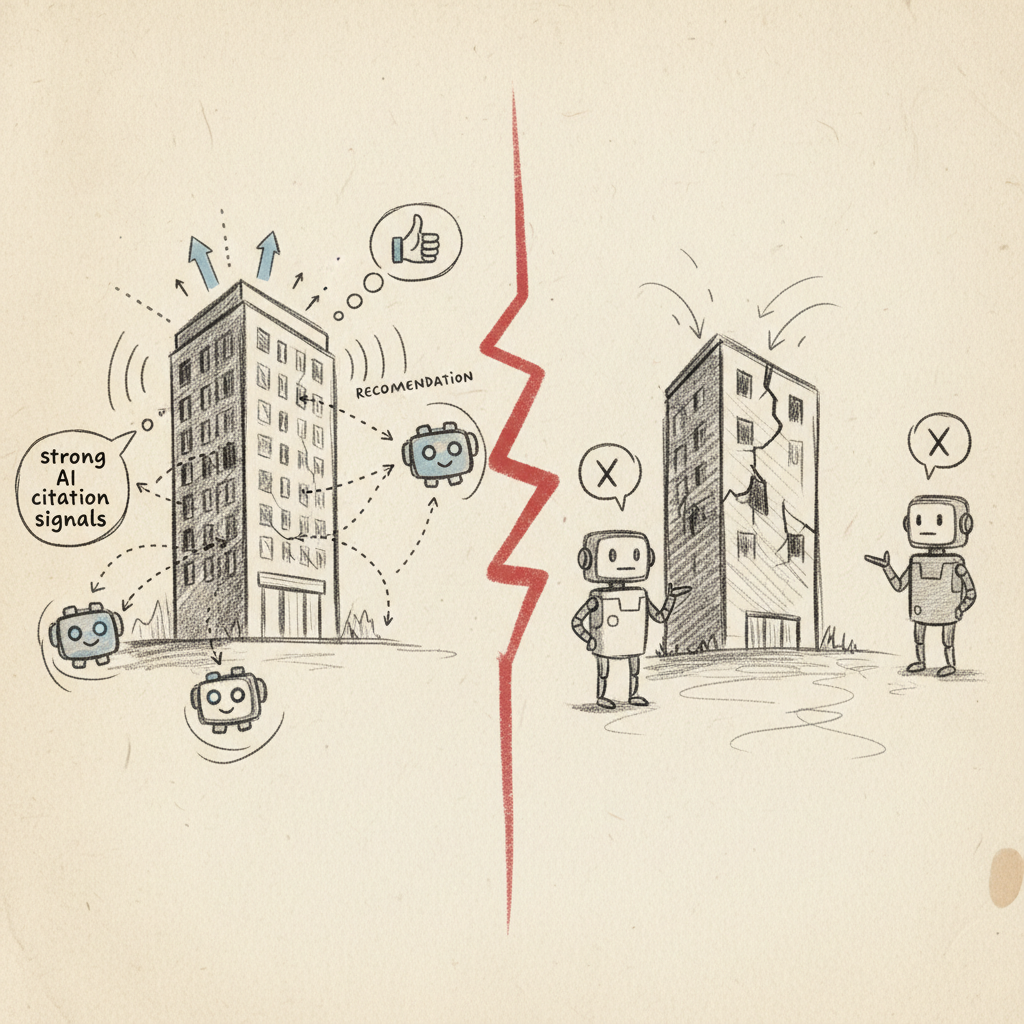
AI-powered citation building delivers measurable advantages for SMBs trying to appear in AI search recommendations, from increased brand trust to lower customer acquisition costs compared to traditional agency models.
Practical Advantages for SMB Owners
The benefits aren't theoretical. Here's what consistent AI-powered citation building actually produces:
- Increased AI recommendation frequency. Businesses with complete citation profiles appear in ChatGPT, Gemini, Claude, and Perplexity responses more often, particularly for location-based and category-based queries.
- Higher trust scores from AI engines. Consistent NAP (Name, Address, Phone) data across directories and structured data reduces ambiguity for AI systems, which increases the confidence of their recommendations.
- Compounding content authority. Each new piece of published content that references your brand and services adds to your citation footprint. Unlike paid ads, this effect compounds over time.
- Reduced dependency on Google rankings alone. Diversifying your visibility across AI search channels protects your business from algorithm changes that could tank traditional organic traffic overnight.
- Lower cost per customer acquisition. Automated citation building at $99/month through platforms like Moonrank replaces agency retainers that typically run $3,000 or more per month for comparable work.
The Competitive Advantage Window
A real-world scenario illustrates this well. An independent hotel owner in Denver noticed a competitor being recommended by Perplexity for "boutique hotels in Denver" despite having fewer Google reviews. The competitor had implemented schema markup, maintained consistent citations across 40+ directories, and published weekly content about local attractions. The hotel owner had none of that infrastructure. The gap wasn't in product quality. It was in citation signals.
Industry analysts at SparkToro suggest this kind of visibility gap will widen through 2026 and 2027 as AI search adoption accelerates. Businesses that build citation infrastructure now will benefit from compounding authority. Those that wait will find the gap increasingly expensive to close.
| Citation Signal Type | What It Does | AI Engine Impact |
|---|---|---|
| Schema Markup | Structured HTML data defining business identity | High — directly parsed by AI crawlers |
| llms.txt Configuration | Instructions for LLM crawlers on content use | High — explicit AI-native signal |
| Directory Listings (NAP) | Consistent name, address, phone across platforms | Medium — cross-reference trust signal |
| Published Content | Regular brand-referenced articles and pages | Medium-High — freshness and authority signal |
| Third-Party Brand Mentions | Reviews, press, and editorial references | Medium — corroborating authority signal |
Common Challenges and Mistakes
The most common mistakes in AI-powered citation building involve inconsistent data, over-reliance on academic-style citation tools, and ignoring the technical infrastructure that AI search engines actually use to evaluate credibility.
Pitfalls That Undermine Citation Authority
A common mistake is treating AI-powered citation building as a one-time task. Citations decay. Businesses move, phone numbers change, and directory listings go stale. AI engines that encounter conflicting information across sources reduce their confidence in a business, which directly hurts recommendation frequency.
Other frequent errors include:
- Confusing academic citation tools with SEO citation building. Tools like CitationGenerator.ai or Evernote's citation generator are designed for formatting academic references in APA or MLA style. They don't build the kind of brand citation signals that AI search engines use [5].
- Skipping schema markup. Many SMBs publish content regularly but never implement schema markup on their site. Without it, AI crawlers have to guess what your business does. That's a significant disadvantage.
- Relying on hallucinated citations. AI writing tools can generate plausible-sounding but entirely fabricated references. MIT's ContextCite research specifically addresses this problem, noting that source attribution in AI systems requires explicit, verifiable signals to be trustworthy [3]. Using unverified AI-generated citations in your content can actively damage your credibility with both human readers and AI engines.
- Ignoring llms.txt. Most SMBs have never heard of this file. That's understandable. But as of 2026, it's a meaningful signal for LLM crawlers, and leaving it unconfigured means you're missing a direct communication channel with the systems you're trying to influence.
The Hallucination Risk in Citation Workflows
One pitfall to watch for specifically: AI-generated content that includes citations to sources that don't exist. This is called citation hallucination, and it's more common than most people realize. Research tools like Scite were built partly to address this problem in academic contexts by verifying whether citations actually support the claims they're attached to [4]. In a business content context, the same principle applies. Publish a citation to a non-existent study, and you've introduced a credibility risk that AI engines may eventually detect.
Pro Tip: Before publishing any content that includes citations, run each source URL through a verification check. If the URL doesn't resolve to a real, publicly accessible page, remove the citation. One fabricated reference can undermine the credibility of an entire content strategy.
Best Practices for 2026
Effective AI-powered citation building in 2026 requires a combination of technical implementation, consistent content publishing, and ongoing monitoring across the AI search engines where your customers are increasingly spending their time.
A Practical Framework for SMBs
Our team at Moonrank recommends thinking about citation building in three layers: technical foundation, content signals, and distribution consistency. Address all three, and you build the kind of compounding authority that AI engines reward.
Layer 1: Technical Foundation
- Implement LocalBusiness schema markup (or the relevant schema type for your business category) on your homepage and key service pages.
- Add FAQ schema to content pages so AI engines can extract structured Q&A pairs directly.
- Configure your llms.txt file with accurate business description, primary services, and content permissions for AI crawlers.
- Audit your structured data using Google's Rich Results Test to confirm it's valid and complete.
Layer 2: Content Signals
- Publish content consistently. Daily is ideal. Weekly is the minimum. AI engines weight freshness alongside authority.
- Include verifiable citations in your content, drawn only from real, accessible sources. The APA Style guidelines for citing generative AI offer a useful framework for distinguishing verifiable from unverifiable sources [6].
- Reference specific entities: your city, your industry, named products, and named services. This gives AI engines cross-reference points to verify your business context.
Layer 3: Distribution Consistency
- Audit your NAP data across Google Business Profile, Yelp, industry directories, and social platforms. Fix any inconsistencies.
- Pursue editorial mentions in local news, industry publications, and niche directories. These third-party brand mentions function as high-authority citations.
- Track your AI search visibility across ChatGPT, Gemini, Claude, and Perplexity monthly. Visibility that isn't measured can't be improved.
Pro Tip: Don't try to build citations everywhere at once. Prioritize the platforms your target customers actually use. For most SMBs, that means Google Business Profile, Yelp, and one or two industry-specific directories first, then expand from there as your technical foundation is solid.
Tools Worth Using in 2026
For academic and research citation needs, tools like Sourcely, Consensus, and Samwell.ai provide solid AI-assisted citation generation with varying degrees of source verification [7]. For business SEO citation building, the requirements are different. You need schema implementation, content automation, and AI visibility tracking combined in a single workflow, not just citation formatting.
The University of Connecticut Library's guide on citing generative AI is worth bookmarking as a reference for content teams navigating the line between AI-assisted and AI-generated citations [8].
Pro Tip: If you're using an AI writing tool to produce content, always verify every citation it generates before publishing. AI tools, including large language models, can produce convincing but entirely fabricated references. A single hallucinated citation in a published article is enough to damage your credibility with both readers and AI search engines.
Sources & References
- APA Style, "Citing generative AI in APA Style: Part 1 — Reference formats"
- Citation Machine, "Free ARTIFICIAL-INTELLIGENCE Citation Generator and Format"
- MIT News, "Citation tool offers a new approach to trustworthy AI-generated content", 2024
- Scite, "AI for Research"
- Evernote, "AI-Powered Citation Generator"
- APA Style, "Citing generative AI in APA Style: Part 1 — Reference formats"
- Samwell.ai, "Best 8 AI Citation Generators for Students in 2025"
- University of Connecticut Libraries, "Citation Styles and Management Tools Guide: Citing Generative AI"
Frequently Asked Questions
1. Is ChatGPT a good citation generator?
ChatGPT is not a reliable citation generator for academic or research purposes. It frequently produces citations that look accurate but reference papers, authors, or publication details that don't exist. This phenomenon, known as citation hallucination, is well-documented. For verified academic citations, purpose-built tools like QuillBot, Scite, or Semantic Scholar are far more reliable because they pull from indexed, verifiable source databases rather than generating text probabilistically. For AI-powered citation building in an SEO context, ChatGPT is also insufficient on its own since it doesn't implement schema markup, manage directory listings, or configure technical files like llms.txt.
2. Can you tell if citations are AI generated?
Yes, in many cases you can detect AI-generated or hallucinated citations through a combination of manual verification and specialized tools. The most reliable method is simply checking whether the cited source exists at the stated URL or DOI. Tools like Scite go further by verifying not just that a source exists but whether it actually supports the claim it's attached to. MIT's ContextCite research introduced a method for tracking exactly which source passages an AI system drew on when generating a response, making attribution more transparent and verifiable [3]. For business content, the practical rule is simple: if you can't access the source directly, don't publish the citation.
3. What's the difference between AI-powered citation building for SEO and academic citation generation?
They're entirely different processes with different goals. Academic citation generation formats references to existing sources in styles like APA, MLA, or Chicago, helping writers credit their sources correctly. this strategy for SEO means creating and distributing structured signals about your business (schema markup, directory listings, llms.txt configuration, consistent NAP data) so that AI search engines like ChatGPT, Gemini, Claude, and Perplexity have the verified information they need to recommend you. One is about crediting sources. The other is about becoming a trusted source.
4. How long does it take for AI-powered citation building to show results?
Results vary depending on your starting point, industry competitiveness, and how comprehensively you implement citation signals. In practice, businesses that implement schema markup, configure llms.txt, and publish consistent content start seeing measurable improvements in AI search visibility within 30 to 60 days. The compounding nature of citation authority means results continue improving over time, which is why starting early matters. One limitation is that AI engine update cycles vary, and some recommendations won't reflect new citation signals immediately.
5. Do I need technical skills to implement AI-powered citation building?
Not if you use the right tools. Schema markup, llms.txt configuration, and structured data implementation do require technical knowledge to implement manually. That's a barrier for most SMB owners. Platforms like Moonrank handle all of this automatically, including daily content publishing, technical AI audit and optimization, and visibility tracking across ChatGPT, Claude, Perplexity, and Gemini. The entire system runs on autopilot after a brief onboarding, so you don't need to touch a line of code or write a single article yourself.
6. Which AI search engines use citation signals most heavily?
Perplexity is the most explicit about its citation use, displaying source links alongside every response and weighting its recommendations toward sources with clear, verifiable structured data. ChatGPT's browsing and retrieval modes also rely on source authority. Gemini and Claude use similar retrieval-augmented generation (RAG) approaches that weight structured, consistently cited sources over ambiguous or inconsistent ones. As of 2026, all four major AI search engines benefit from the same core citation signals: schema markup, consistent NAP data, llms.txt configuration, and regularly published, entity-rich content.
Conclusion
this approach isn't a future consideration. It's a present-tense competitive requirement. As ChatGPT, Gemini, Claude, and Perplexity handle more of the queries that used to go to Google, the businesses that show up in those AI responses will have built the citation infrastructure that makes them trustworthy and recommendable. The businesses that haven't will keep losing customers to competitors who did the work earlier.
The good news is that you don't have to do this manually. The technical complexity of schema markup, llms.txt configuration, structured data, and daily content publishing is real, but it doesn't have to land on your desk. Moonrank handles all of it automatically, tracking your visibility across AI search engines and publishing fresh citation signals every day, for $99 a month. That's a fraction of what agencies charge for slower, less targeted work.
If you're ready to stop being invisible to AI search engines and start getting recommended, visit www.moonrank.ai and start your free 3-day trial today.
Recommended Articles
Explore more from our content library: