GEO vs SEO: Complete Guide to AI Search Optimization
Discover the key differences between GEO and SEO. Learn how AI search optimization differs from traditional SEO and why businesses need both strategies in.....

| Key Insight | Explanation |
|---|---|
| GEO vs SEO Target Different Systems | SEO optimizes for Google's crawlers and ranking algorithms, while GEO optimizes for AI systems like ChatGPT, Gemini, and Perplexity |
| Content Strategy Differs Fundamentally | SEO content aims to rank in search results; GEO content aims to be cited in AI-generated responses |
| Success Metrics Are Completely Different | SEO measures clicks and rankings; GEO tracks mention rates and position within AI responses |
| Technical Requirements Overlap But Diverge | Both need structured data, but GEO requires specific AI-readable formats like llms.txt and enhanced schema markup |
| Businesses Need Both Strategies in 2026 | Google still drives significant traffic while AI search engines handle 40% of queries with zero clicks to websites |
What Is GEO vs SEO?
GEO vs SEO represents two distinct approaches to digital visibility, each targeting different search ecosystems and user behaviors. The fundamental difference lies in how content is discovered, processed, and presented to users.Traditional SEO: The Google Era
Search Engine Optimization (SEO) is the practice of optimizing websites and content to rank higher in traditional search engine results pages (SERPs). SEO targets crawlers and algorithms used by Google, Bing, and Yahoo to index and rank web pages based on relevance, authority, and technical factors. SEO success is measured through:- Keyword rankings in search results
- Organic click-through rates
- Website traffic from search engines
- Backlink profiles and domain authority
- Page load speeds and technical performance
Generative Engine Optimization: The AI Era
Generative Engine Optimization (GEO) is the practice of optimizing content to be discovered, understood, and cited by AI-powered search engines and large language models (LLMs). Unlike traditional SEO, GEO focuses on making information easily extractable and trustworthy for AI systems that generate direct answers rather than providing links to external sources [1]. GEO targets platforms like:- ChatGPT and GPT-based search interfaces
- Google's Gemini and Bard
- Anthropic's Claude
- Perplexity AI
- Microsoft Copilot
Pro Tip: Think of SEO as optimizing for discovery, while GEO optimizes for citation. SEO gets users to click through to your site; GEO gets AI to recommend your brand directly in conversation.
How GEO and SEO Work
Understanding how GEO and SEO function reveals why businesses need fundamentally different strategies for each approach. The mechanics behind traditional search optimization and AI-powered content discovery operate on distinct principles and technologies.How Traditional SEO Works
Traditional SEO operates through a well-established crawl-index-rank process. Search engines deploy crawlers (like Googlebot) to discover and analyze web pages, storing this information in massive indexes. When users submit queries, ranking algorithms evaluate indexed pages against hundreds of factors to determine the most relevant results. The SEO optimization process involves:- Keyword research to identify search terms users type into Google
- On-page optimization including title tags, meta descriptions, and header structure
- Content creation targeting specific keywords and search intent
- Technical optimization for site speed, mobile-friendliness, and crawlability
- Link building to establish domain authority and page credibility
How Generative Engine Optimization Works
GEO operates through a fundamentally different process focused on content understanding rather than page ranking. AI systems analyze vast amounts of text data to build knowledge representations, then generate responses by synthesizing information from multiple sources [3]. The GEO optimization process centers on:- Creating factually accurate, well-structured content that AI can easily parse
- Implementing enhanced structured data markup (JSON-LD, schema.org)
- Building authoritative citations and references within content
- Optimizing for conversational queries and natural language patterns
- Establishing topical authority through comprehensive content coverage
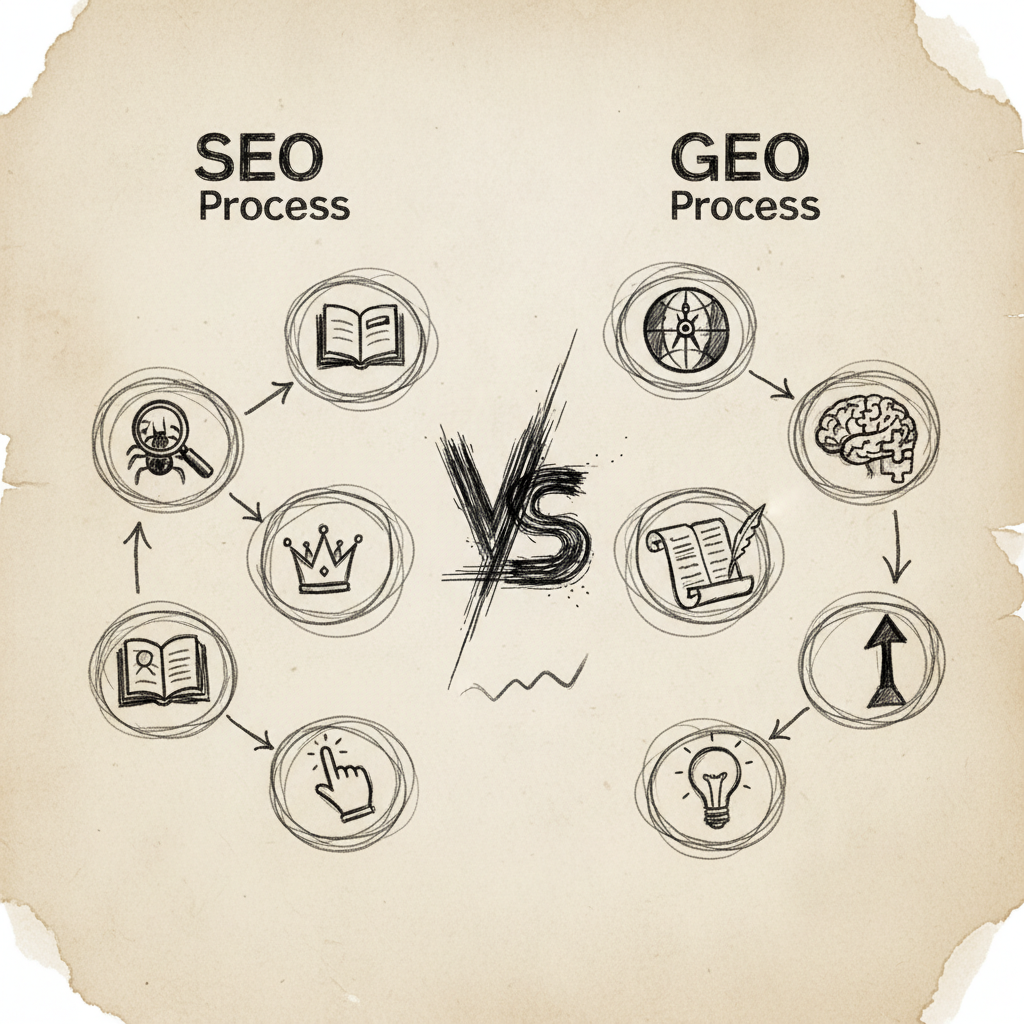
Pro Tip: AI engines don't just crawl your content — they understand it. Focus on creating comprehensive, factually accurate content that directly answers questions rather than optimizing for specific keywords.
Key Benefits: Why Both Matter
The strategic value of understanding GEO vs SEO extends beyond simple visibility — it determines how your business connects with customers across the entire digital ecosystem. Each approach offers distinct advantages that complement rather than compete with each other.Strategic Advantages of SEO
Traditional SEO remains a cornerstone of digital marketing because it drives direct website traffic and enables detailed user behavior tracking. When users click through from Google search results, businesses gain valuable data about customer journeys, conversion paths, and engagement patterns. Key SEO benefits include:- Measurable website traffic with detailed analytics
- Direct control over user experience after click-through
- Established optimization frameworks and best practices
- Integration with existing marketing and sales funnels
- Long-term compound growth through domain authority building
Strategic Advantages of GEO
GEO offers a fundamentally different value proposition focused on brand authority and recommendation-based discovery. When AI systems cite your business in responses, it functions as a third-party endorsement that can be more persuasive than traditional advertising [7]. Key GEO benefits include:- Brand recommendations in conversational AI interactions
- Increased trust through AI-validated information
- Capture of voice search and conversational queries
- Future-proofing against declining click-through rates
- Authority building in AI knowledge bases
| Strategy | Primary Benefit | Measurement | Timeline |
|---|---|---|---|
| SEO | Direct website traffic | Clicks, conversions, revenue | 3-6 months |
| GEO | AI recommendations | Mention rates, citation quality | 1-3 months |
Common Challenges & Mistakes
The biggest mistake businesses make with GEO vs SEO is treating them as competing strategies rather than complementary approaches. This either-or mentality leads to significant missed opportunities and suboptimal resource allocation.Strategic Implementation Mistakes
Many businesses approach GEO vs SEO with outdated assumptions about search behavior and user preferences. The most common strategic errors include focusing exclusively on one approach while ignoring the other, or attempting to apply traditional SEO tactics to AI optimization. Critical mistakes to avoid:- Assuming AI search will completely replace traditional search
- Using keyword-stuffed content for GEO optimization
- Ignoring structured data requirements for AI readability
- Measuring GEO success using traditional SEO metrics
- Failing to optimize for conversational query patterns
Technical Implementation Challenges
The technical requirements for GEO vs SEO overlap in some areas but diverge significantly in others. Businesses often struggle with implementing the specific technical optimizations required for AI discoverability. Key technical challenges include:- Implementing llms.txt files for AI crawler guidance
- Creating comprehensive schema markup beyond basic SEO requirements
- Building citation networks that AI systems can verify
- Optimizing content structure for AI comprehension
- Tracking performance across multiple AI platforms
Pro Tip: Don't abandon your SEO foundation when implementing GEO. Instead, layer GEO optimizations on top of solid SEO fundamentals. The technical infrastructure you've built for search engines provides a strong foundation for AI optimization.Many businesses also underestimate the content volume required for effective GEO. While a single well-optimized page might rank well in Google, AI systems typically require comprehensive coverage of a topic across multiple content pieces to establish topical authority. This means businesses need to significantly increase their content production to compete effectively in AI search results. Resource allocation presents another challenge. Traditional SEO teams may lack the expertise to implement GEO strategies effectively, while bringing in new specialists can strain budgets. The solution often involves partnering with platforms that specialize in AI search optimization, like Blog content strategies, or investing in automated solutions that handle the technical complexity.

Best Practices for 2026
Successful GEO vs SEO strategy in 2026 requires an integrated approach that leverages the strengths of both methodologies while addressing their unique requirements. The most effective businesses treat these as complementary rather than competing strategies.Building an Integrated Strategy Framework
The foundation of effective GEO vs SEO optimization starts with understanding your audience's search behavior across different platforms. Users who search on Google often have different intent than those asking questions to ChatGPT or Perplexity. Essential framework components:- Audit existing content for both SEO performance and AI citability
- Identify keyword opportunities that work for both traditional and AI search
- Develop content templates that satisfy both SEO and GEO requirements
- Implement tracking systems for traditional rankings and AI mentions
- Create feedback loops to optimize based on performance data from both channels
Technical Optimization Checklist
The technical foundation for GEO vs SEO success requires implementing optimizations that serve both traditional crawlers and AI systems. This includes enhanced structured data, improved content organization, and AI-specific technical signals. Priority technical optimizations:- Implement comprehensive schema markup using JSON-LD format
- Create and maintain llms.txt files for AI crawler guidance
- Optimize internal linking structure for both user navigation and AI comprehension
- Build authoritative citation networks within content
- Ensure fast loading speeds and mobile optimization for all platforms
Pro Tip: Create "answer-first" content that immediately addresses user questions, then provides supporting detail. This structure works well for both featured snippets in Google and direct citations in AI responses.Measurement and optimization require tracking performance across multiple platforms. Traditional SEO metrics like rankings and organic traffic remain important, but GEO success requires monitoring mention rates, citation quality, and position within AI responses. Tools that track AI search visibility are becoming essential for comprehensive performance measurement. At Moonrank, we've found that businesses implementing integrated GEO vs SEO strategies see the best results when they automate the technical complexity while maintaining strategic oversight. The daily content requirements and technical optimizations needed for effective AI search visibility often exceed what small teams can manage manually, making automation platforms increasingly valuable for sustained success.
Sources & References
- Andreessen Horowitz, "How Generative Engine Optimization (GEO) Rewrites the Rules of Search", 2024
- Neil Patel, "GEO vs SEO: Understanding the Differences", 2024
- Semrush, "GEO vs. SEO: A Comparative Guide for Digital Marketers", 2024
- Evertune AI, "GEO vs SEO: 3 Critical Differences Every Marketer Should Know", 2024
- California Management Review, "Will GEO Overtake SEO?", 2025
- SEO.com, "GEO vs. SEO: Key Differences and Importance in Digital Marketing", 2024
- XFunnel AI, "SEO vs. GEO: How They're Different & What You Need to Know", 2024
- Digital Marketing Institute, "Search Everywhere Optimization: What Is SEO, GEO, and AEO?", 2024
- Zeo, "SEO vs GEO: A Comprehensive Comparison Guide", 2024
- Project Assistant, "GEO vs SEO: What's the Difference and Why You Need Both", 2024
- HFTP, "What is GEO vs SEO and why it matters now", 2024
Frequently Asked Questions
1. What does GEO mean like SEO?
Understanding this approach is essential. Understanding this approach is essential. Generative Engine Optimization (GEO) is the practice of optimizing content to be discovered, understood, and cited by AI-powered search engines like ChatGPT, Gemini, and Perplexity. Unlike SEO which targets traditional search engine crawlers, GEO focuses on making content easily extractable and trustworthy for AI systems that generate direct answers rather than providing links to external websites.
2. Is SEO dead or evolving in 2026?
SEO is definitely evolving, not dead. While AI search engines handle an increasing share of queries, Google still processes billions of searches daily and drives significant website traffic. The key is understanding that SEO now works alongside GEO as part of a comprehensive search strategy. Businesses that adapt their SEO practices to include AI optimization will maintain their competitive advantage.
3. What is the difference between GEO and SEO Neil Patel?
The core difference is intent and outcome: SEO aims to rank high in search results and drive clicks to your website, while GEO aims to get your content cited and your brand recommended within AI-generated responses. SEO focuses on discoverability through search engines, while GEO focuses on trustworthiness and citability by AI systems. Both strategies can work together to maximize digital visibility across all search platforms.
4. Can you do both GEO and SEO simultaneously?
Yes, and you should. The most successful digital marketing strategies in 2026 integrate both approaches. Many optimization techniques benefit both SEO and GEO, such as creating high-quality content, implementing structured data, and building topical authority. The key is understanding which specific tactics serve each strategy and ensuring your content satisfies both traditional search algorithms and AI comprehension requirements.
5. How do you measure GEO success compared to SEO?
GEO success is measured through mention rates, citation quality, and position within AI responses rather than traditional metrics like keyword rankings and click-through rates. Tools that track AI search visibility monitor how often your brand appears in AI recommendations, the context of those mentions, and your competitive position within AI-generated answers. This requires different analytics approaches than traditional SEO measurement.
6. What technical requirements are different between GEO and SEO?
While both strategies benefit from structured data and fast loading speeds, GEO requires specific technical optimizations like llms.txt files for AI crawler guidance, enhanced schema markup beyond basic SEO requirements, and content structure optimized for AI comprehension. GEO also emphasizes factual accuracy and authoritative citations more heavily than traditional SEO technical factors.
7. Which strategy should small businesses prioritize first?
Small businesses should build a strong SEO foundation first, then layer GEO optimizations on top. SEO provides measurable traffic and established optimization frameworks, while GEO offers future-proofing and brand authority building. The most cost-effective approach is using platforms that automate both strategies simultaneously, allowing small businesses to compete effectively without requiring extensive technical expertise or large marketing teams.
The evolution from traditional SEO to include GEO represents the most significant shift in search marketing since Google's inception. Understanding GEO vs SEO isn't just about keeping up with trends — it's about ensuring your business remains visible as search behavior fundamentally changes. The data is clear: AI search engines are capturing an increasing share of user queries, with many users preferring direct AI recommendations over traditional search results. However, Google still drives massive traffic volumes, and the technical foundations of good SEO remain valuable for AI optimization.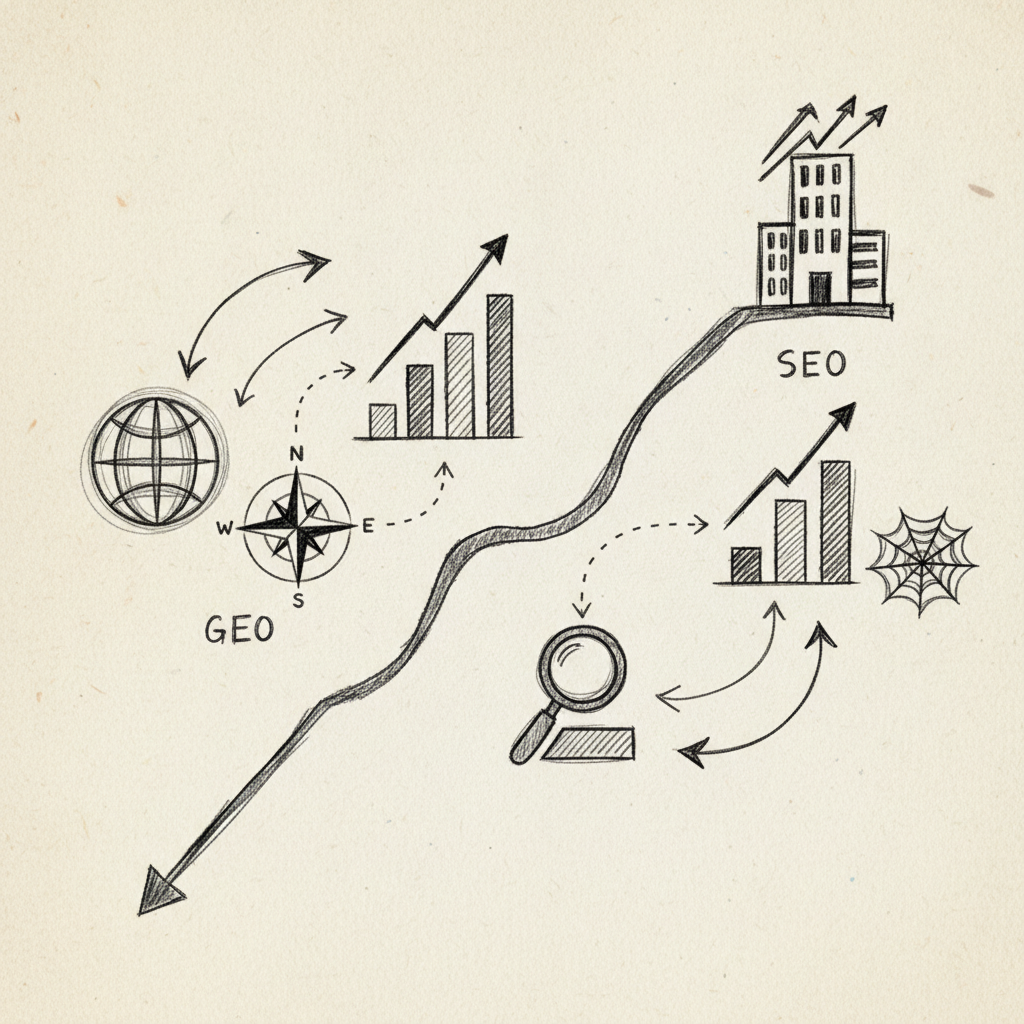
Recommended Articles
Explore more from our content library: