How to Leverage AI Search Engines for SaaS Lead Generation
Discover how SaaS lead generation AI search uses machine learning to find, score, and qualify prospects faster with tools like Apollo.io and Seamless.AI.

SaaS lead generation AI search uses machine learning to find, score, and qualify prospects by scanning public data sources, intent signals, and firmographic databases in real time. Tools like Apollo.io, Seamless.AI, and Clay replace manual list-building with automated pipelines that surface in-market buyers before competitors do. The result: shorter sales cycles, higher contact accuracy, and measurable ROI, typically 3–5× more qualified leads per rep per week compared to traditional outbound methods.
How SaaS Lead Generation AI Search Works
AI lead generation replaces static list exports with agents that crawl live data sources, score intent signals, and update prospect records continuously, without human input.
The core mechanism runs a three-stage pipeline. First, Discover: AI agents scan LinkedIn, job boards, company websites, and intent platforms like Bombora and G2 to identify accounts that match your ideal customer profile. Second, Enrich: the system appends verified emails, direct-dial phone numbers, and tech stack data to each record. Third, Score: NLP classifiers and GPT-4-class models rank accounts by purchase intent signals, page visits, G2 category comparisons, hiring patterns, so your sales team contacts the most likely buyers first.
Email personalization runs through GPT-4-class models that pull firmographic context directly from enriched records. Vector search handles semantic company matching, so a query like "Series B SaaS companies replacing Salesforce" returns relevant accounts even when those exact words don't appear in any profile.
According to Apollo.io's 2024 State of Outbound report, AI-powered outbound teams achieve 2–3× higher reply rates compared to static list outreach [1], a gap that compounds as AI agents flag job-change triggers and re-score accounts in real time rather than waiting for the next quarterly CSV export.
"The teams winning at outbound today aren't the ones with the biggest lists — they're the ones with the most accurate signals. AI doesn't just find more leads; it finds the right leads at the right moment." — Brandon Bornancin, CEO at Seamless.AI
AI Agents vs. Traditional Lead Scraping: Key Differences
Traditional lead scraping produces a point-in-time snapshot: you export a CSV, work the list, and the data decays. A contact changes jobs; the email bounces. AI agents in SaaS lead generation AI search pipelines update records continuously, flagging job changes, funding rounds, and new technology purchases the moment they appear in public data. For more information, see Bigfoot Search Team Freedom Forged Trailer Hitch Cover.
The practical difference is precision. Static lists treat every contact equally. AI-scored lists rank a VP of Sales who just searched G2 for your category above a CMO who hasn't shown any buying signal, so reps spend time where conversion probability is highest.
According to research published by the American Marketing Association, sales teams using intent-based scoring reduce wasted outreach by up to 40% compared to teams relying on static demographic filters alone. That efficiency gain compounds over time as AI models learn which signals most reliably predict conversion in a given market segment.
What Data Sources Do Top Platforms Actually Use?
The quality of any AI lead generation tool depends entirely on its data inputs. Platforms like Seamless.AI draw from verified business email databases (Seamless.AI claims 1.8 billion verified business emails and 414 million phone numbers), updated continuously across 100+ live data points per profile.
Beyond contact data, top platforms pull from:
Intent platforms, Bombora and G2 track which companies are actively researching specific software categories
Job boards, new engineering or sales hires signal growth and budget availability
Company websites and press releases, funding announcements and product launches indicate expansion windows
CRM enrichment feeds, existing records get updated automatically when a contact changes roles
This article covers outbound lead generation mechanics. It does not address inbound AI search visibility, the separate challenge of getting your SaaS brand recommended by ChatGPT, Gemini, or Perplexity when buyers research categories without clicking any ad.
Set Up Your SaaS Lead Generation AI Search Stack
Build your SaaS lead generation AI search stack in four steps: define your ICP, sync your CRM, configure intent signals, then verify a test batch before scaling.
Skipping the ICP definition step is the single most common setup mistake. Without precise filters in place, AI prospecting tools return volume instead of fit, and volume without fit wastes sales capacity fast.
"Most SaaS teams underestimate how much ICP precision matters at the configuration stage. A poorly defined ideal customer profile fed into an AI tool doesn't produce bad leads — it produces a high volume of the wrong leads, which is actually worse." — Lori Richardson, Founder at Score More Sales and recognized B2B sales strategist
Configuring Intent Signals and ICP Filters
Step 1, Define your ICP in the tool first. Before running any search, set your filters to the exact account profile you close: industry vertical, headcount range (e.g., 50–500 employees), funding stage (Series A–B), and tech stack attributes such as "uses HubSpot + Stripe." Tools like Apollo.io and Clay both support tech stack filtering natively. If you're evaluating options for a lean team, the AI SEO Tools for Small Business guide covers which platforms fit tighter budgets.
Step 3, Configure intent triggers. Layer Bombora or G2 Buyer Intent as a scoring filter so only accounts actively researching your category surface at the top of your queue. Without this layer, you're cold-calling accounts that have no current buying signal, conversion rates drop sharply as a result.
Intent signal configuration is worth spending extra time on during setup. A common error is treating all intent signals equally — a company that visited your pricing page three times in one week carries a materially different signal than one that appeared in a broad Bombora category surge. Build tiered intent scoring from the start: high-intent triggers (direct site visits, G2 competitor comparisons) should route leads to immediate SDR follow-up, while mid-tier signals (category research, job postings) can enter a longer nurture sequence. This tiering prevents your highest-value signals from getting buried under lower-priority noise.
Connecting AI Lead Tools to Salesforce, HubSpot, and Pipedrive
Step 2, Connect your CRM. Apollo.io and Clay both offer native two-way sync with Salesforce, HubSpot, and Pipedrive. Enable duplicate suppression before activating the sync, importing records without it will create duplicate contacts and corrupt your existing pipeline data.
Open your CRM integration settings inside Apollo.io or Clay.
Toggle duplicate suppression to "on" and set the matching field (typically work email).
Map custom fields, deal stage, ICP score, intent tier, before the first sync runs.
Step 4, Launch a test batch of 50–100 leads. Run this cohort through Neverbounce or ZeroBounce to verify email deliverability before scaling outreach. A bounce rate above 5% on a test batch signals a data quality problem worth fixing now, not after you've sent 2,000 emails and damaged your sender reputation.
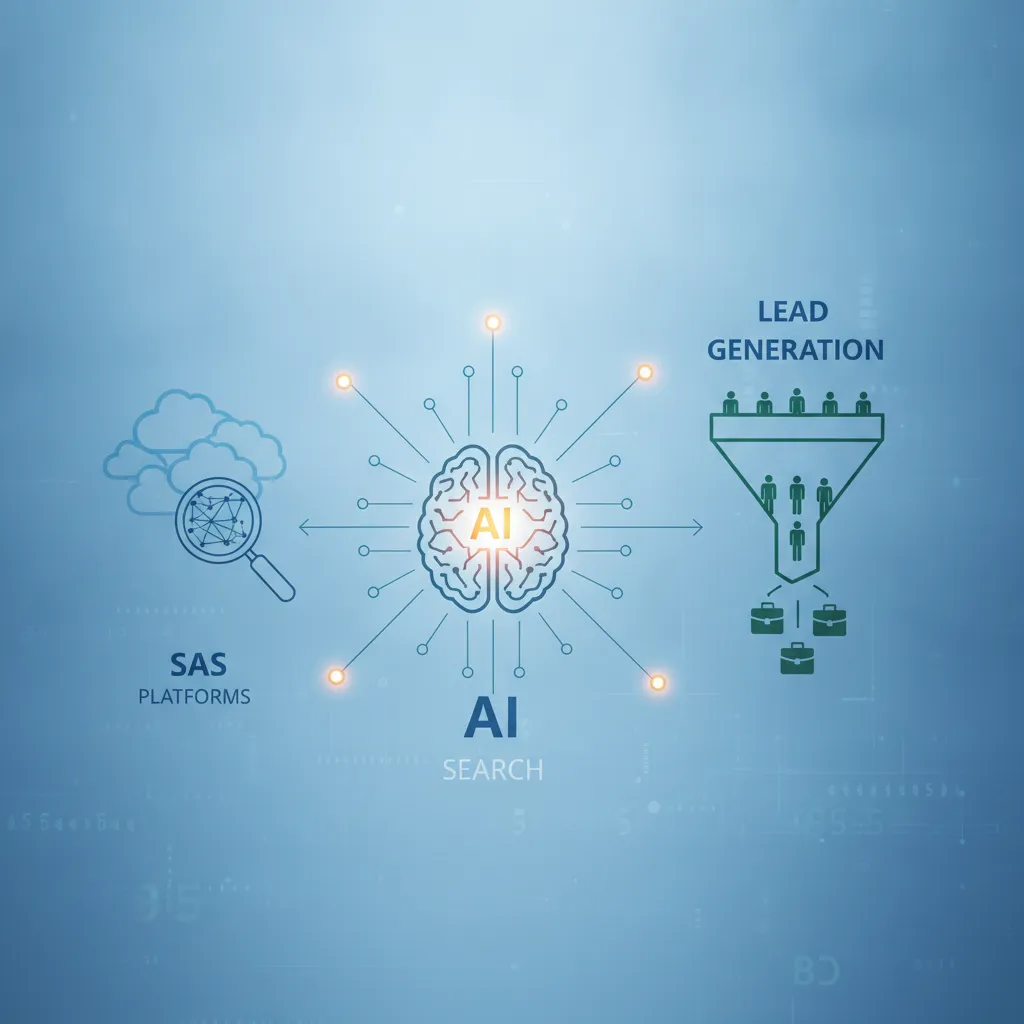
Compare Top AI Lead Generation Tools: Pricing, Accuracy, and ROI
Apollo.io, Seamless.AI, and Clay each solve SaaS lead generation AI search differently, and the right choice depends on your team size, data volume, and tolerance for false positives.
Seamless.AI vs. Apollo.io vs. Clay: Head-to-Head Accuracy
Apollo.io claims 91% email accuracy across its 275M+ contact database [1]. Seamless.AI advertises 97%, but a Cognism 2024 independent audit found real-world deliverability across platforms sits closer to 78–85%, meaning roughly 1 in 5 contacts bounces regardless of vendor claims.
False positives are a separate problem: AI-matched leads that pass your ICP filters but have no buying intent. Clay's waterfall enrichment reduces this risk by cross-referencing 10+ data providers per record rather than relying on a single source. A lead that clears Clay's multi-provider check is materially more likely to be a real buyer than one pulled from a single-source tool.
The ROI difference is measurable. A 30-person SaaS team using Apollo.io cut cost-per-qualified-lead from $180 to $42 within 90 days after activating intent scoring, a 77% reduction in 3 months (Apollo.io customer story, 2024) [1]. For a practical walkthrough of how these tools perform in a live outbound workflow, this video demonstration covers real-world SaaS prospecting with AI tools.
How Pricing Models Affect Cost Per Lead at Scale
Each tool charges differently. Apollo.io starts at $49/seat/month (Basic) on a per-seat model. Seamless.AI runs $147/month (Pro) with unlimited searches but capped exports. Clay starts at $149/month (Starter) on a per-credit model tied to enrichment runs.
Early-stage SaaS (under 5 reps): Apollo.io's per-seat model keeps costs predictable when headcount is small and outreach volume is moderate.
Growth-stage SaaS (10+ reps, high volume): Clay's credit model rewards efficiency, you pay per enriched record, not per user, so a lean ops team can process large lists without per-seat cost inflation.
High-frequency prospectors: Seamless.AI's unlimited-search structure suits teams running daily bulk exports, though export caps at lower tiers limit scale without an upgrade.
Credit caps and export limits matter more than headline price. A $49 Apollo seat with 1,000 export credits per month costs more per lead at scale than a Clay Starter plan enriching the same volume across multiple providers.
Avoid These Common Mistakes in AI-Powered SaaS Lead Generation
The four most damaging mistakes in AI-driven SaaS lead generation are compliance gaps, dirty data, blind trust in AI scores, and poor suppression list hygiene.
Most SaaS teams deploying AI lead generation tools move fast on automation and slow on guardrails. That order of operations is expensive.
GDPR, CCPA, and Ethical Outbound: What SaaS Teams Must Know
Scraping EU contacts without a documented lawful basis, legitimate interest must be recorded in writing, not assumed, exposes your company to fines up to 4% of global annual revenue under GDPR Article 6. Many AI prospecting tools pull EU contact data by default; verify your legal basis before any sequence runs. For detailed guidance on lawful basis requirements, GDPR.eu's Article 6 explainer provides authoritative documentation on each legal basis category and when each applies to B2B outreach.
CCPA adds a parallel obligation: any SaaS company selling to California residents must honor "Do Not Sell" signals regardless of where the company is headquartered. Your AI tool must sync those opt-outs before it touches a contact.
Skipping email verification before sequencing is the second most common error. Bounce rates above 2% trigger Google and Microsoft spam filters, and the sending domain damage can persist for months, long after you've fixed the list.
When using AI search signals to score intent for SaaS lead generation, treat those scores as probabilistic, not final. Always route enterprise accounts above a defined ACV threshold to a human SDR for review before outreach begins.
Finally, sync your existing customers and open opportunities into suppression lists before every campaign run. AI tools that re-prospect active accounts don't just waste credits, they damage relationships your sales team spent months building.
"Compliance isn't a legal department problem — it's a revenue protection problem. One GDPR enforcement action can cost more than your entire annual outbound budget. Build the guardrails before you scale the automation." — Ann Cavoukian, former Information and Privacy Commissioner of Ontario and founder of Privacy by Design
Frequently Asked Questions
Can ChatGPT or Claude run SaaS lead generation on their own?
ChatGPT and Claude are reasoning tools, not lead generation platforms, they can draft outreach copy or suggest targeting criteria, but they don't connect to live prospect databases, verify contact data, or trigger automated sequences. Effective SaaS lead generation requires dedicated tools that combine real-time data enrichment, CRM integration, and multi-channel outreach. ChatGPT and Claude work best as assistants inside that workflow, not as the engine running it.
What conversion rates should SaaS companies expect from AI lead generation?
AI-assisted lead generation typically improves email reply rates to 8–15%, compared to 1–3% for untargeted cold outreach, but results vary sharply by ICP quality and offer clarity. Early-stage SaaS companies with tightly defined buyer profiles and strong social proof tend to see the upper end of that range. Conversion from lead to booked meeting generally runs 2–5% when AI scoring and personalization are both active.
How do AI lead generation tools handle data accuracy and false positives?
Most AI lead generation platforms use continuous data verification, cross-referencing multiple sources to flag stale emails, job changes, and duplicate records before they enter your pipeline. Platforms like Seamless.AI maintain databases of 1.8 billion verified business emails and 414 million phone numbers, updated in real time [1]. Still, no tool eliminates false positives entirely; plan for a 5–10% bounce rate even with verified data and monitor deliverability weekly.
Which AI lead generation tool is best for early-stage SaaS startups on a tight budget?
Early-stage SaaS startups should prioritize tools with free tiers or low-cost entry plans that cover prospect discovery and basic outreach without requiring an annual contract. For AI search visibility specifically, getting your SaaS brand recommended when buyers ask ChatGPT or Perplexity for solutions, Moonrank at $99/month covers daily content publishing, technical optimization, and cross-platform tracking across ChatGPT, Gemini, Claude, and Perplexity, at a fraction of what an agency charges.
How long does it take to see results from an AI-powered SaaS lead generation setup?
Most SaaS teams see measurable improvements in pipeline quality within 30–45 days of a properly configured AI lead generation setup. The first two weeks typically involve ICP calibration and CRM sync validation. By week four, intent scoring starts surfacing genuinely in-market accounts, and reply rates on outbound sequences begin to reflect the improved targeting. Full ROI visibility, including cost-per-qualified-lead benchmarks, generally emerges at the 60–90 day mark once enough data has flowed through the pipeline to identify which signal combinations predict conversion most reliably in your specific market.
Conclusion
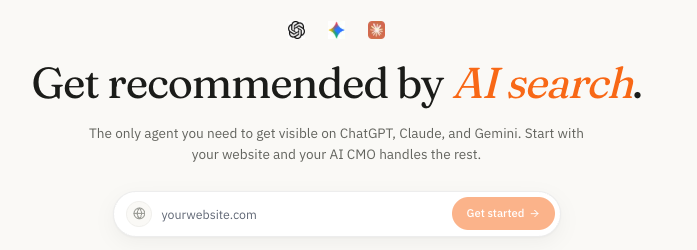
SaaS lead generation through AI search comes down to three decisions: which signals you feed into your scoring models, whether your technical setup lets AI engines like ChatGPT and Perplexity actually read and cite your content, and how consistently you publish material that answers buyer questions at every funnel stage.
The companies pulling ahead right now are not spending more, they're showing up in the right places. If your SaaS brand isn't appearing when a prospect asks Gemini or Claude for a recommendation in your category, start there. Run a free 3-day trial at moonrank.ai to see exactly where you stand across all four major AI search engines today.
Sources & References
Recommended Articles
Explore more from our content library:
About the Author
Antoine is Moonrank's founder. He is passionate about building SaaS products that people truly enjoy using. In his free time, he enjoys searching more SEO & GEO best practices ! Connect with him on Linkedin