Affordable AI Search Optimization: Best Platforms 2026
Discover the best affordable AI search optimization platform options for SMBs in 2026. Compare features, pricing, and find out how to get recommended by ChatGPT
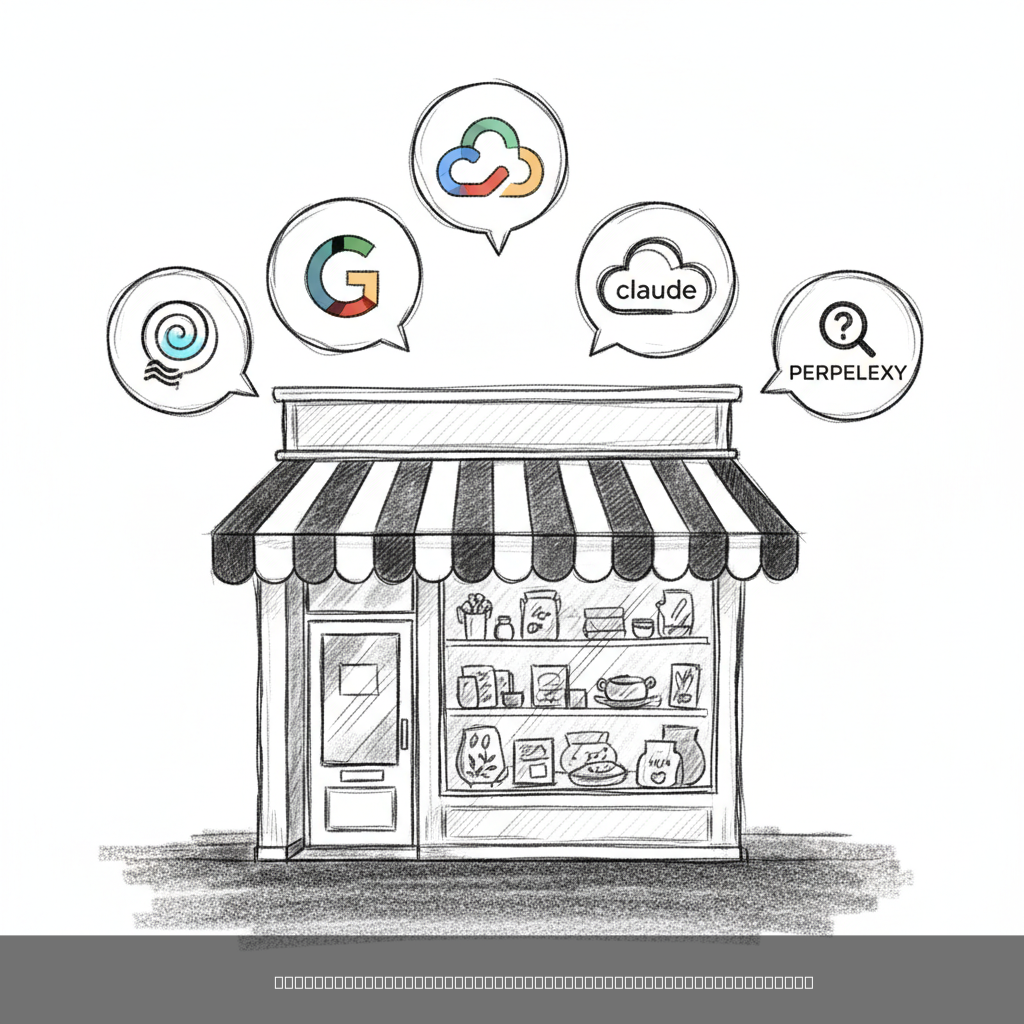
| Key Insight | Explanation |
|---|---|
| AI search is a distinct channel | ChatGPT, Gemini, Claude, and Perplexity use different ranking signals than Google — traditional SEO alone won't get your business recommended by these engines. |
| SMBs can compete affordably | Purpose-built AI search optimization platforms now start at $99/month, compared to $3,000+ per month for traditional SEO agencies. |
| Technical signals matter most | Schema markup, llms.txt configuration, structured data, and citation building are the core technical levers that help AI engines understand and recommend your brand. |
| Daily content drives AI trust | AI search engines favor brands that publish consistent, well-structured content — automated daily publishing directly improves your recommendation frequency. |
| Visibility tracking is essential | You can't improve what you don't measure. Monitoring how ChatGPT, Claude, Perplexity, and Gemini mention your brand is the foundation of any effective GEO strategy. |
| Automation replaces manual effort | The best platforms handle content generation, technical optimization, and tracking on autopilot — requiring zero ongoing manual input from business owners. |
Your competitor just got recommended by ChatGPT. You didn't. That gap is the problem an affordable AI search optimization platform is built to close. As of 2026, AI-powered search engines — ChatGPT, Gemini, Claude, and Perplexity — have become primary discovery channels for millions of consumers, yet most small businesses are still pouring money into traditional SEO that these engines largely ignore. This article explains exactly what AI search optimization platforms do, how they work, what they cost, and how to choose the right one for your business without overspending.
What Is an Affordable AI Search Optimization Platform?
An affordable AI search optimization platform is a software tool that helps businesses appear in recommendations generated by AI-powered search engines, at a price point accessible to small and medium-sized businesses. It automates technical optimization, content publishing, and visibility tracking. It replaces the need for expensive agency retainers or in-house SEO teams.
Defining the Category: GEO and AEO
This type of platform operates within two related disciplines. Generative Engine Optimization (GEO) refers to the practice of structuring your web presence so that large language models (LLMs) — the AI systems behind ChatGPT, Gemini, Claude, and Perplexity — can accurately parse, trust, and cite your brand. Answer Engine Optimization (AEO) is the parallel discipline of ensuring your content directly answers the questions users ask AI engines.
Traditional SEO targets Google's crawlers using backlinks, keyword density, and page speed signals. AI search engines use fundamentally different signals: structured data, citation patterns, entity recognition, and content authority. According to industry analysts at NoGood, businesses that optimize specifically for AI retrieval see meaningfully higher recommendation rates than those relying on Google SEO alone [1].
Who Needs One?
The primary audience is SMB owners — restaurant operators, Shopify store owners, solo founders, and B2B SaaS companies — who:
- Don't have a dedicated marketing team or SEO budget above $500/month
- Have noticed competitors appearing in ChatGPT or Perplexity results while they don't
- Lack the technical skills to implement schema markup or llms.txt files manually
- Need an automated, low-maintenance solution that runs without daily input
The affordable AI search optimization platform category specifically addresses the gap between "do nothing" and "hire a $3,000+/month agency." As Sight AI's research on affordable SEO content tools notes, budget-conscious businesses can now access professional-grade optimization without enterprise-level spend [2].
How AI Search Optimization Works in 2026
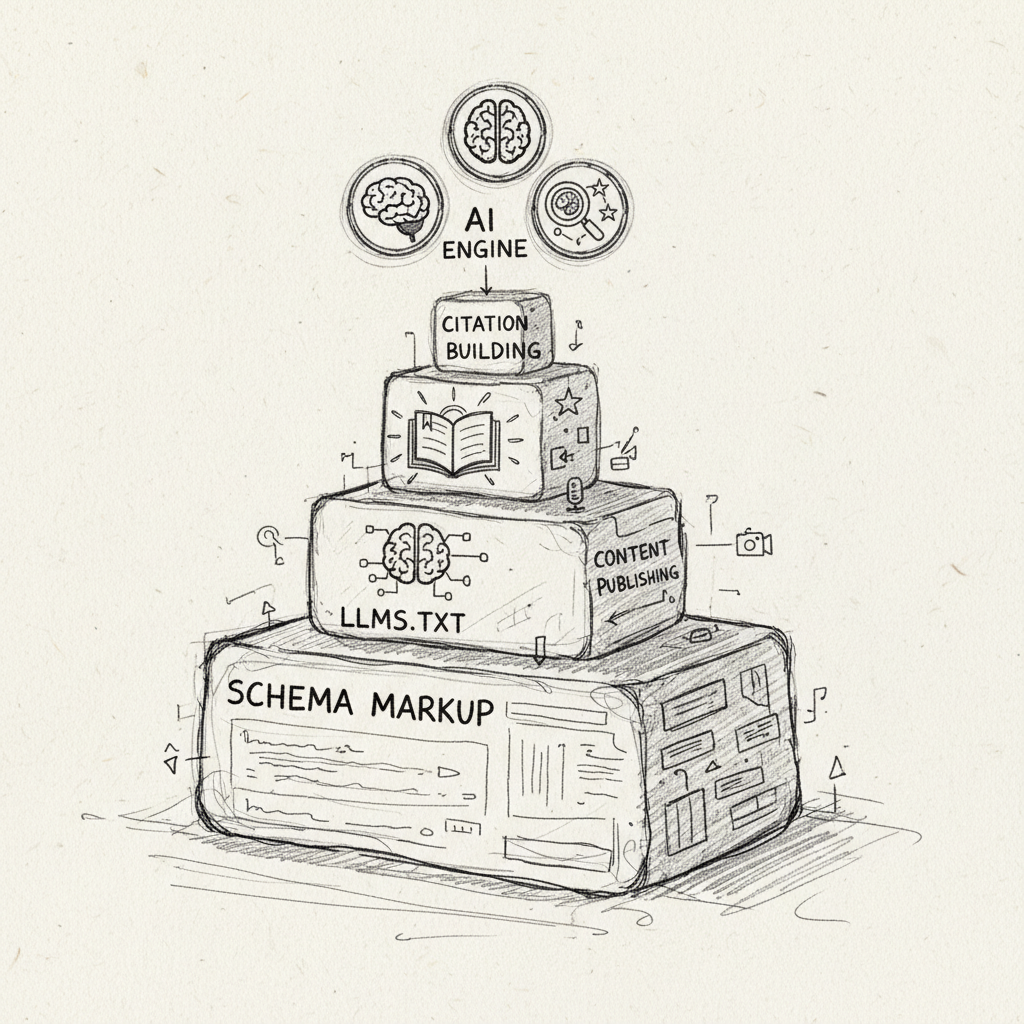
AI search optimization works by making your business's content and technical signals legible to the retrieval systems inside LLMs, so those systems select your brand when generating recommendations. The process involves four core layers: technical infrastructure, content signals, citation authority, and visibility tracking.
The Four Technical Layers
Understanding each layer helps you evaluate any platform you're considering:
- Schema markup and structured data: Schema markup is the structured code that tells AI engines exactly what your business does, where it's located, what it sells, and who it serves. Without it, AI systems have to guess — and guessing often means recommending a competitor instead.
- llms.txt configuration: llms.txt is an emerging technical file (similar in concept to robots.txt) that communicates directly with LLM crawlers, signaling which content is authoritative and how it should be interpreted. As of 2026, this is still an underused signal that early adopters are exploiting effectively.
- Daily content publishing: AI search engines favor brands with consistent, well-structured content output. Platforms that automate daily SEO content generation give your brand a continuous stream of fresh signals. Research from FeedTheBot's analysis of AI SEO content optimization tools confirms that content freshness directly correlates with AI recommendation frequency [3].
- Citation and entity building: When authoritative sources mention your brand consistently, AI engines treat your business as a verified entity. Citation building — getting your brand name, address, and offerings referenced across trusted web properties — is a core GEO signal.
How Tracking Closes the Loop
Optimization without measurement is guesswork. Effective platforms monitor how your brand appears across ChatGPT, Claude, Perplexity, and Gemini on a regular basis, surfacing which queries trigger recommendations and which don't. According to Zapier's 2026 roundup of AI visibility tools, tracking AI mentions across multiple engines simultaneously is now considered a baseline requirement for any serious GEO strategy [4].
For businesses interested in expanding their reach beyond domestic markets, understanding how AI search interacts with international audiences is equally important. A thorough International SEO Complete Guide to Global Search Optimization provides useful context for how search optimization principles scale across regions and languages.
Key Benefits for SMBs: Why This Matters
The core benefit of an affordable AI search optimization platform is straightforward: your business gets recommended by AI engines that your customers are actively using, without requiring a large budget or technical expertise. The downstream effects on revenue, brand trust, and competitive positioning are significant.
Cost Efficiency Compared to Agencies
Traditional SEO agencies typically charge between $3,000 and $10,000 per month for comparable services. An affordable AI search optimization platform delivers automated content, technical optimization, and visibility tracking for a fraction of that cost. At Moonrank, we've found that SMB owners who switch from agency retainers to an automated platform often start appearing in AI search recommendations within their first 30 days — at less than 4% of their previous monthly spend.
The cost comparison is stark:
| Solution Type | Monthly Cost | AI Search Focus | Automation Level | Technical GEO Included |
|---|---|---|---|---|
| Traditional SEO Agency | $3,000–$10,000+ | Rarely | Low (manual) | Sometimes |
| Enterprise GEO Platform | $199–$500+ | Yes | Moderate | Partial |
| Affordable AI Search Platform (e.g., Moonrank) | $99 | Yes (core focus) | Full autopilot | Yes |
| DIY (manual content + free tools) | $0–$50 | Rarely | None | No |
Practical Advantages Beyond Cost
- Zero manual input required: After initial onboarding, the platform handles content generation, publishing, and technical updates automatically.
- Multi-engine coverage: A single platform tracks and optimizes for ChatGPT, Gemini, Claude, and Perplexity simultaneously, rather than requiring separate tools for each.
- Niche-specific keyword targeting: Personalized keyword research means your content addresses the exact queries your potential customers are asking AI engines — not generic industry terms.
- Competitive intelligence: Understanding how competitors appear in AI recommendations surfaces positioning opportunities you'd otherwise miss.
- Compounding returns: Daily content and citation building create compounding authority over time, making your brand progressively harder to displace from AI recommendations.
Industry analysts at Riff Analytics note that businesses actively optimizing for AI search visibility are building a durable competitive moat as AI-driven discovery continues to grow [5].
Common Challenges and Mistakes to Avoid
The most common mistake businesses make with AI search optimization is treating it as an extension of traditional SEO rather than a distinct discipline with its own technical requirements and success metrics. This misunderstanding leads to wasted budget and missed opportunities.
Pitfalls That Undermine AI Search Visibility
- Relying solely on Google-focused content: Content written purely for Google's PageRank algorithm often lacks the structured, entity-rich formatting that LLMs prefer. AI engines want clear, factual, well-organized content — not keyword-stuffed paragraphs.
- Ignoring technical signals: Many SMBs skip schema markup and structured data because implementation feels complex. This is a critical error. Without these signals, AI engines can't reliably identify what your business does or where you operate.
- Inconsistent publishing: Sporadic content output signals low authority to AI retrieval systems. A one-time content push delivers far less value than consistent daily publishing over weeks and months.
- Measuring only Google rankings: If your only performance metric is Google position, you'll miss the growing share of customers who never visit a search results page — they get their answers directly from ChatGPT or Perplexity.
- Choosing tools built for a different era: Several popular SEO platforms have added "AI features" as an afterthought. These tools are fundamentally built around Google's ranking logic. An affordable AI search optimization platform purpose-built for GEO/AEO will outperform a retrofitted traditional tool every time.
A Real-World Scenario
In practice, we frequently see this pattern: a Shopify store owner invests in a traditional SEO plugin, sees modest Google traffic improvements, then discovers their main competitor is being recommended by Perplexity for queries like "best [product category] online store." The competitor isn't ranking higher on Google — they've simply optimized for AI retrieval signals the store owner isn't even tracking yet.
One limitation to acknowledge: results from AI search optimization vary based on niche competitiveness, existing domain authority, and content quality. Businesses in highly competitive categories may see slower initial gains. That said, GEO performance monitoring research from Drupal 4U indicates that consistent technical optimization combined with regular content publishing produces measurable visibility improvements within 30 to 60 days for most SMB categories [6].
Best Practices for 2026: Expert Tips
Effective AI search optimization in 2026 requires a structured approach that combines technical foundation-setting, content consistency, and ongoing measurement. The businesses gaining the most ground are those treating GEO as a system, not a one-time project.
Building Your GEO Foundation
- Audit your current AI visibility first. Before optimizing anything, run your business through ChatGPT, Gemini, Claude, and Perplexity with queries your customers would realistically use. Document what appears and what doesn't. This baseline shapes everything that follows.
- Implement schema markup immediately. At minimum, add Organization, LocalBusiness, and Product schema to your site. This structured data is the single highest-leverage technical action for improving AI recommendation rates.
- Configure your llms.txt file. This emerging standard helps LLM crawlers understand your site's content hierarchy. Most SMBs haven't done this yet — which means early adopters gain a real advantage.
- Publish structured content daily. Each piece of content should answer a specific question your target customer might ask an AI engine. Use clear headings, factual statements, and entity-rich language (specific brand names, locations, product names).
- Build citations on authoritative sources. Get your business name, location, and offerings mentioned consistently across industry directories, local publications, and relevant websites. AI engines cross-reference these signals when deciding who to recommend.
- Track multi-engine visibility weekly. Monitor your appearance across all four major AI engines — not just one. Visibility patterns differ between ChatGPT and Perplexity, for example, and each requires slightly different optimization emphasis.
Pro Tip: Start your AI visibility audit by searching for your product or service category in ChatGPT, Gemini, Claude, and Perplexity using the exact phrasing your customers would use — not industry jargon. The gap between what appears and what you'd want to appear is your optimization roadmap.
Automation as a Competitive Advantage
Our team at Moonrank recommends treating automation not as a convenience but as a strategic necessity. A busy restaurant owner or solo founder simply can't publish daily SEO content manually while running their business. Platforms that handle this automatically ensure your optimization never stalls due to time constraints.
Pro Tip: When evaluating any affordable AI search optimization platform, ask specifically whether AI visibility tracking covers all four major engines (ChatGPT, Gemini, Claude, Perplexity) or just one or two. Single-engine tracking misses a significant portion of your potential AI search audience.
According to Nick Lafferty's 2026 analysis of AI visibility optimization platforms, the platforms delivering the strongest results combine automated content publishing with dedicated GEO tracking — rather than relying on manual content creation or Google-first metrics [7].
Platform Comparison: What to Look For in 2026
Not all AI search optimization tools are built the same way. Some are traditional SEO platforms with AI features bolted on. Others focus narrowly on content generation without addressing the technical signals AI engines actually use to make recommendations.
Core Features That Separate Effective Platforms
When evaluating an affordable AI search optimization platform, prioritize these capabilities:
- Native AI engine tracking: Does the platform monitor ChatGPT, Gemini, Claude, and Perplexity specifically? Generic "AI tracking" that covers only one engine is insufficient.
- Automated daily content publishing: Manual content tools require ongoing effort. True autopilot platforms generate and publish content to your site daily without requiring your input.
- Technical GEO optimization included: Schema markup, llms.txt, structured data, and citation building should be part of the package — not add-ons that require technical expertise.
- Niche-specific keyword research: Generic keyword lists don't serve SMBs well. The platform should tailor its keyword strategy to your specific business category and competitive context.
- Transparent pricing with a free trial: Reputable platforms offer a clear monthly price and a trial period so you can verify results before committing.
Pro Tip: Be cautious of platforms that promise "domination" of AI search results or guarantee specific ranking positions. AI engine recommendations are probabilistic and context-dependent. Credible platforms promise improved visibility and measurable tracking — not guaranteed placement.
Pros and Cons: Affordable Platforms vs. DIY vs. Agencies
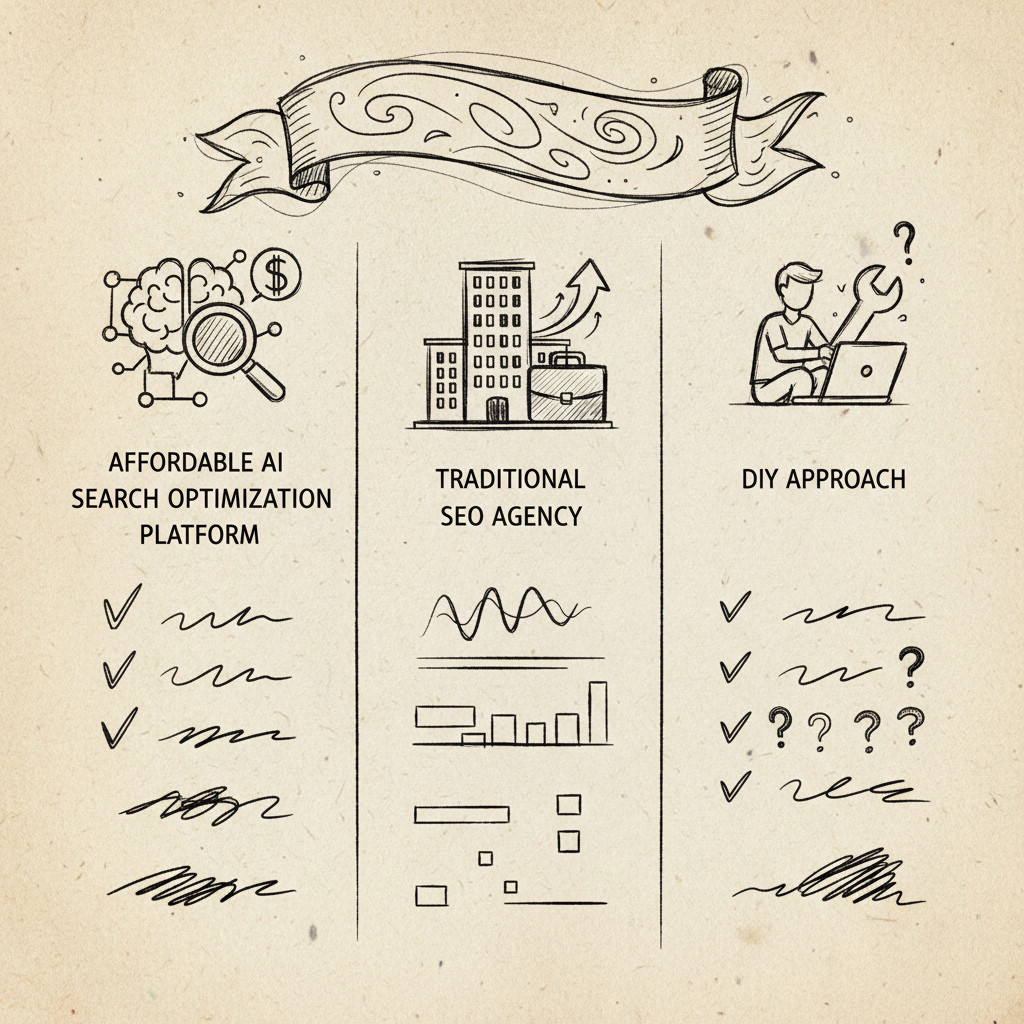
| Approach | Pros | Cons |
|---|---|---|
| Affordable AI Search Platform | Low cost, full automation, purpose-built for GEO, multi-engine tracking, no technical skills needed | Less customization than a dedicated agency; results vary by niche |
| Traditional SEO Agency | High customization, experienced team, broad service scope | $3,000–$10,000+/month, rarely focused on AI search signals, slow to adapt |
| DIY with Free Tools | Zero cost, full control | Requires significant time and technical knowledge; inconsistent results; no AI-specific optimization |
| Enterprise GEO Platforms | Deep analytics, enterprise-grade tracking | $199–$500+/month; designed for marketing teams, not SMB owners; steep learning curve |
Research from AIclicks.io's 2026 roundup of AI search visibility optimization tools confirms that the SMB market is increasingly well-served by purpose-built platforms that bundle tracking, content, and technical optimization at accessible price points [8]. For broader context on how AI tools are transforming marketing functions, Northwestern University's Medill IMC program analysis of AI marketing tools provides a useful academic perspective on adoption patterns and ROI [9].
Sources & References
- NoGood, "9 Best AI Search Visibility Optimization Tools in 2026," 2026
- Sight AI, "9 Best Affordable SEO Content Tools to Boost Rankings," 2026
- FeedTheBot, "We Tested 8 Best AI SEO Content Optimization Tools," 2025
- Zapier, "The 8 Best AI Visibility Tools in 2026," 2026
- Riff Analytics, "Top 12 AI Search Optimization Tools for Marketers in 2026," 2026
- Drupal 4U, "Best Tools For Monitoring GEO Performance & AI Visibility," 2026
- Nick Lafferty, "9 AI Visibility Optimization Platforms Ranked by AEO Score," 2026
- AIclicks.io, "14 Best AI Search Visibility Optimization Tools in 2026," 2026
- Northwestern University Medill IMC, "10 Best AI Tools for Marketing Success," 2026
Frequently Asked Questions
1. What exactly does an affordable AI search optimization platform do?
An this strategy automates the technical and content work required to appear in AI engine recommendations — specifically in ChatGPT, Gemini, Claude, and Perplexity. This includes implementing schema markup (structured data that identifies what your business does), configuring llms.txt files for LLM crawlers, publishing daily SEO content, building citations, and tracking your brand's visibility across AI engines. The goal is to get your business recommended when potential customers ask AI engines for suggestions in your category.
2. How is AI search optimization different from traditional SEO?
Traditional SEO optimizes for Google's PageRank algorithm, which uses backlinks, keyword density, and page authority as primary signals. AI search optimization targets the retrieval logic inside large language models, which prioritizes structured data, entity clarity, citation patterns, and content that directly answers natural-language questions. A business can rank well on Google and still be invisible to ChatGPT or Perplexity — the two systems use fundamentally different criteria. An this approach addresses the signals that matter to AI engines specifically.
3. How much should I expect to pay for AI search optimization?
Pricing varies significantly by platform type. Traditional SEO agencies typically charge $3,000 to $10,000 per month. Enterprise GEO platforms range from $199 to $500+ per month and are designed for marketing teams. Purpose-built thiss like Moonrank start at $99/month and include full automation — content generation, technical optimization, and multi-engine visibility tracking. Free tools exist but require significant manual effort and rarely cover the technical GEO signals that AI engines rely on.
4. How long does it take to see results from AI search optimization?
Results depend on your niche competitiveness, existing domain authority, and the consistency of your optimization efforts. In practice, businesses that implement technical GEO signals (schema markup, llms.txt, structured data) and maintain daily content publishing typically see measurable improvements in AI recommendation frequency within 30 to 60 days. Highly competitive categories may take longer. Results may vary, and no platform can guarantee specific placement in AI-generated responses — but consistent optimization compounds over time.
5. Do I need technical skills to use an AI search optimization platform?
Not if you choose the right platform. The best its handle all technical implementation automatically — including schema markup, llms.txt configuration, and structured data — without requiring you to touch any code. After an initial onboarding process where you provide your business details, keywords, and niche context, the platform runs on autopilot. This is a key differentiator from DIY approaches or traditional SEO tools that require ongoing manual technical work.
6. Which AI engines should my optimization platform cover?
As of 2026, the four AI engines with the largest user bases for recommendation queries are ChatGPT, Gemini, Claude, and Perplexity. Your platform should track and optimize for all four — not just one or two. Each engine uses slightly different retrieval logic, so visibility on one doesn't guarantee visibility on others. Platforms that monitor all four simultaneously give you a complete picture of your AI search presence and surface optimization opportunities specific to each engine.
7. Is an affordable AI search optimization platform suitable for e-commerce businesses?
Yes. E-commerce businesses — particularly Shopify store owners — are among the primary beneficiaries of AI search optimization. When a customer asks ChatGPT "best [product type] online store" or asks Perplexity for a product recommendation, the stores with proper AI optimization signals appear in those responses. An this method that includes product schema markup, niche-specific keyword targeting, and daily content publishing is well-suited to e-commerce contexts.
8. Can a free tool replace a paid affordable AI search optimization platform?
Free tools can support individual tasks — basic keyword research, content drafting, or schema generators — but they don't replace a comprehensive platform. The core value of an this strategy is integration: technical optimization, daily content publishing, multi-engine tracking, and competitive analysis all working together automatically. Assembling these capabilities from separate free tools requires significant time, technical knowledge, and ongoing manual effort — which defeats the purpose for time-poor SMB owners.
Conclusion
AI search engines aren't the future of customer discovery — they're the present. ChatGPT, Gemini, Claude, and Perplexity are already the first stop for millions of consumers making purchasing decisions, and businesses that don't appear in those recommendations are quietly losing customers they'll never know about.
The good news is that getting recommended by AI engines doesn't require a $3,000/month agency or a dedicated technical team. An this approach handles the full stack — schema markup, llms.txt, daily content, citation building, and multi-engine visibility tracking — automatically, for a fraction of what agencies charge.
Moonrank is built specifically for this moment. At $99/month with a 3-day free trial, it's the purpose-built AI search optimization platform for SMBs who want to show up when customers ask ChatGPT or Perplexity for a recommendation in their category. The platform runs on autopilot after onboarding — no writing, no technical work, no agency relationship required.
If your competitor is already showing up in AI search results and you're not, the gap is closing every day you wait. Start your free trial at www.moonrank.ai and see where your business stands across all four major AI engines today.
Recommended Articles
Explore more from our content library: