How to Rank in ChatGPT and Get Recommended
Learn how to rank in ChatGPT with proven strategies for AI visibility. Get your business recommended by ChatGPT, Gemini, and Perplexity in 2026. Discover.

| Key Insight | Explanation |
|---|---|
| AI search is a distinct channel | ChatGPT, Gemini, Claude, and Perplexity use different ranking signals than Google — authority, entity clarity, and structured data matter most. |
| Content freshness drives citations | AI engines favor recently updated, well-structured content. Publishing daily signals to LLMs that your site is an active, trustworthy source. |
| Technical optimization is non-negotiable | Schema markup, llms.txt configuration, and structured data help AI systems parse and trust your content — without them, even great writing goes unnoticed. |
| Brand mentions outweigh backlinks | AI engines weigh how often your brand is mentioned across authoritative third-party sources, not just how many sites link to you. |
| Tracking AI visibility is essential | You can't improve what you don't measure. Monitoring how ChatGPT and Perplexity mention your brand reveals gaps and opportunities. |
| Automation makes it sustainable | Consistent daily content and technical upkeep are the biggest barriers for SMBs — automation tools like Moonrank remove that friction entirely. |
If you've ever asked ChatGPT "what's the best [product or service] near me" and watched a competitor's name appear instead of yours, you already understand the stakes. Knowing how to rank in ChatGPT is now one of the most practical growth levers available to small and mid-sized businesses in 2026. How to rank in ChatGPT isn't a theoretical exercise — it's a concrete set of actions that determine whether AI engines recommend your brand or someone else's. According to Neil Patel's research, AI-generated answers are increasingly the first stop for purchasing decisions, making AI search visibility a revenue issue, not just a marketing one [1].
This article covers exactly what ChatGPT ranking means, how the underlying mechanics work, and the specific strategies that move the needle. You'll also find common pitfalls to avoid, a comparison of ranking factors, and a practical FAQ grounded in real questions business owners are asking right now.
What Is ChatGPT Ranking?
ChatGPT ranking refers to how prominently your business, website, or content is cited or recommended when users ask ChatGPT questions related to your niche, product, or service. Unlike Google's blue-link results, ChatGPT surfaces specific brands and sources within conversational answers — and the businesses it chooses to name are effectively ranked by the AI's internal trust and relevance signals.
Why ChatGPT Ranking Differs from Google SEO
Traditional SEO (Search Engine Optimization) targets Google's crawler with backlinks, keyword density, and page speed. ChatGPT and other large language models (LLMs) operate differently. They retrieve information from their training data and, increasingly, from live web browsing — weighing source authority, entity clarity (how unambiguously your brand is defined across the web), and content structure.
This discipline is often called GEO (Generative Engine Optimization) or AEO (Answer Engine Optimization). Both terms describe the practice of optimizing content so that AI systems understand, trust, and cite your brand. As of 2026, Perplexity alone processes over 100 million weekly queries [2], and ChatGPT's user base has grown to hundreds of millions of active users globally — making these platforms a primary discovery channel for many product categories.
Who Needs to Care About This
Any business that depends on organic discovery should pay attention. That includes:
- E-commerce store owners whose customers ask ChatGPT for product recommendations
- Local service businesses (restaurants, hotels, clinics) where AI engines increasingly field "near me" queries
- B2B SaaS companies whose buyers research solutions through AI chat before ever visiting a vendor site
- Solo founders and bootstrapped brands competing against larger, better-funded rivals
A client in the specialty retail space recently noticed a sharp drop in direct organic traffic while their competitor's brand started appearing in ChatGPT responses for category queries. The difference wasn't ad spend — it was AI visibility infrastructure. That's the gap this guide helps you close.
Pro Tip: Search your own business category in ChatGPT right now. Ask: "What are the best [your product/service] options?" If your brand doesn't appear, you have a GEO gap — and the strategies below are your starting point.
How ChatGPT Ranking Works in 2026
ChatGPT ranking is determined by a combination of training data authority, live web retrieval signals, and structural content clarity — not by keyword placement alone.
The Core Signals ChatGPT Uses
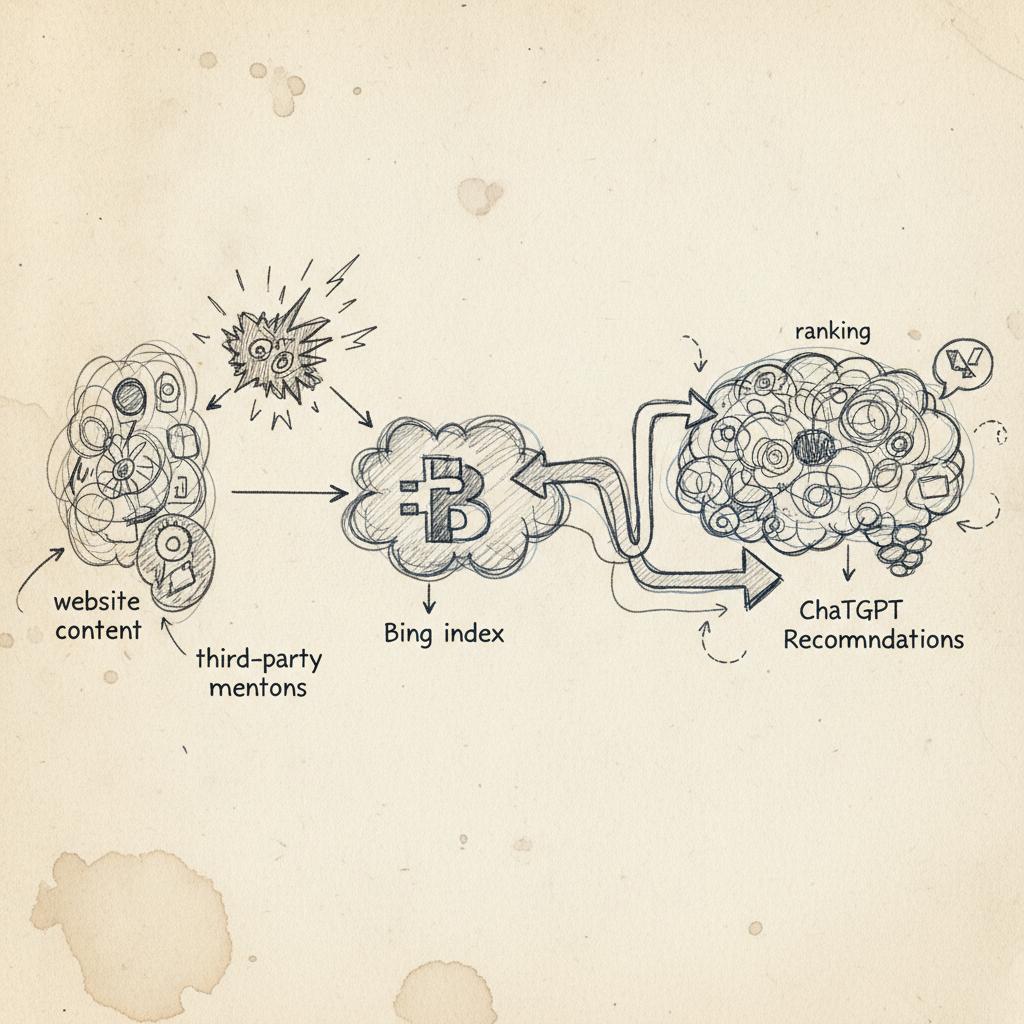
ChatGPT's underlying model (GPT-4o and its successors as of 2026) draws on two sources when generating answers: its pre-trained knowledge base and real-time web browsing via Bing's index. This means your ranking is influenced by both how well-represented your brand is in historical web content and how visible you are in Bing's current index [3].
Research published through the Harvard Astrophysics Data System confirms that LLMs demonstrate measurable ranking capability based on content authority and contextual relevance — not arbitrary selection [4]. The practical implication: ChatGPT isn't guessing. It's applying a form of relevance scoring that you can influence.
The key ranking signals break down as follows:
- Entity clarity: How consistently and unambiguously your brand name, category, and attributes are described across multiple web sources
- Source authority: Whether your content or brand is mentioned on high-authority domains (news sites, industry publications, .edu and .gov references)
- Content structure: Whether your pages use schema markup (structured data that tells AI engines exactly what your business does), headers, and clean HTML that LLM crawlers can parse
- Recency and freshness: How recently your content was published or updated — AI engines favor active, maintained sources
- Conversational relevance: Whether your content directly answers the kinds of natural-language questions users actually ask
The Role of Bing and Third-Party Mentions
Because ChatGPT's browsing feature relies on Bing's index, your Bing visibility is a direct upstream factor in ChatGPT ranking. Submitting your sitemap to Bing Webmaster Tools is a baseline requirement, not an optional step [3].
Beyond your own site, third-party mentions carry significant weight. According to CracklePR's analysis of B2B tech brands, coverage volume across authoritative sources, competitive context, and source diversity are the top factors determining whether a brand gets cited in ChatGPT responses [5]. In practice, this means a brand mentioned in five credible industry publications will consistently outrank a brand with a better website but no external coverage.
| Ranking Signal | Traditional Google SEO | ChatGPT / AI Search (GEO) |
|---|---|---|
| Backlinks | High importance | Moderate (domain authority matters, raw count less so) |
| Keyword density | High importance | Low — conversational relevance matters more |
| Schema markup / structured data | Moderate | Very high — helps AI parse entity relationships |
| Brand mentions (unlinked) | Low | Very high — signals entity authority to LLMs |
| Content freshness | Moderate | High — AI engines favor recently updated sources |
| llms.txt configuration | Not applicable | Emerging standard — helps LLM crawlers navigate your site |
| Conversational content format | Low | High — Q&A and direct-answer formats get cited more |
How to Rank in ChatGPT: Core Strategies
To rank in ChatGPT, you need to build authority across three dimensions simultaneously: your own site's content and technical structure, your brand's presence across third-party sources, and the freshness of both.
Content and Technical Optimization
Start with your own site. Every page that should rank in ChatGPT needs to be structured so an AI can extract a clear, confident answer. That means:
- Use schema markup on every key page. Schema markup is the structured data that tells AI engines exactly what your business does, what you sell, where you're located, and who you serve. Without it, even excellent content is harder for LLMs to categorize and cite.
- Configure an llms.txt file. This emerging standard (similar to robots.txt but for large language model crawlers) signals which parts of your site are authoritative and should be prioritized by AI systems.
- Write in direct-answer format. Structure content so the first sentence after each heading answers the implied question. AI engines extract these Q&A pairs directly into responses.
- Publish content consistently. Frequency signals active maintenance. A site that publishes daily sends a stronger freshness signal than one that publishes monthly [6].
- Target conversational keywords. Users ask ChatGPT questions, not keyword strings. Optimize for phrases like "best [product] for [use case]" rather than just "[product] [location]".
According to Insightland's CAT framework for ChatGPT ranking, the three pillars are Content, Authority, and Technology — and all three must be addressed together for meaningful visibility gains [7].
Building Brand Authority Off-Site
Your off-site presence is often the bigger lever. ChatGPT cites brands it has seen repeatedly across credible sources. Getting there requires:
- Digital PR and media coverage: Aim for mentions in industry publications, news outlets, and niche blogs that AI engines treat as authoritative sources
- Guest content and expert quotes: Contributing to third-party publications under your brand name builds entity recognition across the web
- Consistent NAP data: Your business Name, Address, and Phone number should be identical across every directory, review platform, and citation source — inconsistency confuses AI entity resolution
- Review platform presence: Platforms like G2, Trustpilot, and Google Business Profile are frequently indexed by AI engines and contribute to brand authority signals
Pro Tip: Prioritize getting your brand mentioned in the same sentence as your core category keyword on third-party sites. For example, "Austin-based catering company [Your Brand]" repeated across multiple credible sources dramatically improves how ChatGPT resolves your entity when a user asks for catering recommendations in Austin.
In practice, from working with SMB clients across multiple niches, the brands that gain ChatGPT visibility fastest are those that combine daily fresh content on their own site with a consistent cadence of third-party mentions. Neither alone is sufficient. StudioHawk's research confirms that mentions outperform backlinks as a ranking signal in AI search contexts [8].
Common Mistakes That Kill Your ChatGPT Visibility
Most businesses fail to rank in ChatGPT not because their product is weak, but because they're applying Google SEO tactics to a channel that works differently.
Treating AI Search Like Google
The single most common mistake is assuming that Google rankings automatically translate to ChatGPT visibility. They don't. A business can rank on page one of Google for a competitive keyword and still be completely absent from ChatGPT responses. The two systems use fundamentally different signals.
Specifically, many businesses over-invest in:
- Raw backlink volume (less relevant to LLMs than domain authority and mention context)
- Keyword stuffing (actively counterproductive — AI engines penalize thin, keyword-heavy content)
- Meta descriptions optimized only for click-through rate (AI engines don't click; they parse)
And under-invest in:
- Schema markup and structured data implementation
- Content that directly answers natural-language questions
- Brand mention building across diverse, authoritative sources
Inconsistent or Infrequent Publishing
Another common pitfall is treating content as a one-time project. A business might publish a solid batch of articles in January and then go quiet for months. AI engines interpret publishing gaps as a signal of reduced authority and relevance.
According to Lemonade Stand's analysis, consistent content publishing is one of the most reliable ways to maintain and grow AI search visibility over time [9]. The businesses that appear most reliably in ChatGPT responses tend to have active, regularly updated content ecosystems — not static websites.
One limitation worth acknowledging: results vary significantly by industry and query type. Highly competitive categories (insurance, finance, legal) require more sustained effort and authority-building than niche product categories. Don't expect overnight results in crowded spaces.
Pro Tip: Audit your ChatGPT visibility monthly by running 10-15 category queries relevant to your business. Track which competitors appear, what sources ChatGPT cites, and whether your brand name shows up. This gives you a clear baseline and a prioritized list of gaps to address.
Best Practices for 2026: Expert Tips
Ranking in ChatGPT in 2026 requires a system, not a one-time fix. The businesses gaining the most visibility are running continuous, multi-layered optimization across content, technical infrastructure, and brand presence.
The Full GEO Stack for SMBs
At Moonrank, we've found that SMBs who address all three layers of GEO (Generative Engine Optimization) simultaneously see the fastest visibility gains. Here's what that looks like in practice:
- Daily content publishing: Publish at least one piece of structured, question-answering content per day. Each piece should target a specific conversational query your customers actually ask AI engines.
- Technical AI audit: Implement schema markup across all key pages, configure your llms.txt file, and ensure your structured data accurately reflects your business category, location, and offerings.
- Citation and mention building: Systematically pursue brand mentions in industry publications, review platforms, and niche directories. Prioritize sources that AI engines already cite in your category.
- Bing Webmaster Tools submission: Since ChatGPT's browsing relies on Bing's index, verify your site in Bing Webmaster Tools and submit your sitemap [3].
- AI visibility tracking: Monitor how ChatGPT, Gemini, Claude, and Perplexity mention your brand across relevant queries. Track changes week over week to identify what's working.
Competitive Intelligence and Content Gaps
One of the highest-ROI tactics is analyzing which competitors ChatGPT currently recommends in your category — then reverse-engineering why. According to Connor Gillivan's ChatGPT ranking research on LinkedIn, identifying the content types and sources that currently rank for your target queries and producing superior versions is a reliable path to displacing incumbents [10].
Our team at Moonrank recommends running a competitive AI visibility audit before building your content calendar. Identify the 10-20 queries most relevant to your business, note which brands appear in AI responses, and map the content gap between their coverage and yours.
| Action | Impact on ChatGPT Ranking | Effort Level | Time to Result |
|---|---|---|---|
| Implement schema markup | High | Medium (one-time setup) | 2-4 weeks |
| Daily content publishing | High | High (manual) / Low (automated) | 4-8 weeks |
| Configure llms.txt | Medium-High | Low (one-time setup) | 1-3 weeks |
| Brand mention building | High | High (ongoing) | 6-12 weeks |
| Bing Webmaster Tools setup | Medium | Low (one-time) | 1-2 weeks |
| AI visibility tracking | Indirect (informs strategy) | Low (with tools) | Immediate insight |
The challenge for most SMBs isn't knowing what to do — it's doing it consistently without a dedicated marketing team. That's where automation becomes the practical answer. A fully automated GEO system handles daily content, technical optimization, and visibility tracking without requiring manual input from the business owner. For most SMBs, this is the difference between a strategy that gets implemented and one that sits in a document.
Two99's step-by-step guide reinforces that the businesses gaining the most ChatGPT visibility aren't necessarily the largest — they're the most consistently optimized [11].
Sources & References
- Neil Patel, "SEO for ChatGPT: How to Rank Your Website in the LLM," 2026
- Lemonade Stand, "Should I Worry About Ranking on ChatGPT?," 2026
- StudioHawk, "How to Rank Your Website on ChatGPT," 2026
- Harvard ADS, "Exploring ChatGPT's Ability to Rank Content: A Preliminary Study," 2023
- CracklePR, "How to Rank in ChatGPT: A B2B Tech Brand's Guide to AI Citation," 2026
- Power Digital Marketing, "How to Rank on ChatGPT: 7 Tips & Strategies," 2026
- Insightland, "How to Rank in Chat GPT?," 2026
- StudioHawk, "How to Show Up in ChatGPT Results," 2026
- Lemonade Stand, "Ranking on ChatGPT: Consistent Content Strategy," 2026
- Connor Gillivan, "My ChatGPT Ranking Cheat Sheet," LinkedIn, 2026
- Two99, "How to Rank Your Website on ChatGPT," 2026
Frequently Asked Questions
1. How to rank number one on ChatGPT?
Ranking at the top of ChatGPT responses requires building authority across three simultaneous tracks: publishing structured, direct-answer content on your own site daily; earning consistent brand mentions across high-authority third-party sources; and implementing technical AI optimizations like schema markup and llms.txt. No single tactic is sufficient — it's the combination of content quality, entity clarity, and source diversity that pushes one brand above another in AI-generated recommendations. Tracking your visibility across ChatGPT, Gemini, Claude, and Perplexity helps you identify which gaps to close first.
2. How fast can you rank on ChatGPT?
Timeline varies depending on your starting point, niche competitiveness, and how aggressively you implement GEO strategies. In less competitive categories, well-structured content targeting specific conversational queries can appear in ChatGPT recommendations within two to four weeks of publication — especially if your site is already indexed by Bing. In highly competitive niches (finance, legal, insurance), expect a longer runway of eight to sixteen weeks as you build the brand authority and third-party mention volume that AI engines require before consistently citing a source. Consistent daily publishing dramatically accelerates this timeline compared to sporadic content efforts.
3. How to increase your ranking in ChatGPT search?
To increase how to rank in ChatGPT, focus on three high-leverage actions: first, ensure your site is fully indexed in Bing Webmaster Tools since ChatGPT's browsing uses Bing's index as its primary data source. Second, build comprehensive topic coverage through content clusters — groups of interlinked articles that establish your site as the definitive resource on your subject area, which signals deep topical authority to LLMs. Third, actively pursue brand mentions in credible industry publications and review platforms, since AI engines weigh how often and where your brand appears across the broader web, not just on your own domain.
4. What are the 4 types of SEO?
The four traditional types of SEO are On-Page SEO (optimizing content, headings, and keywords on individual pages), Off-Page SEO (building authority through backlinks and brand mentions), Technical SEO (improving site speed, crawlability, and structured data), and Local SEO (optimizing for location-based searches). In 2026, a fifth category has become essential for AI-first visibility: GEO (Generative Engine Optimization), which specifically targets how ChatGPT, Gemini, Claude, and Perplexity retrieve and cite your brand — requiring different tactics than any of the four traditional types.
5. Does ChatGPT use Google or Bing for its search results?
ChatGPT's browsing and real-time search capabilities rely on Bing's index, not Google's. This means your Bing visibility is a direct upstream factor in how to rank in ChatGPT — a detail that surprises many businesses focused exclusively on Google SEO. Verifying your site in Bing Webmaster Tools, submitting your sitemap, and ensuring your pages are cleanly indexed by Bing are baseline technical requirements for any serious ChatGPT ranking strategy.
6. Is ChatGPT ranking the same as ranking on Perplexity or Gemini?
Not exactly — each AI engine has its own retrieval logic and data sources, so visibility in one doesn't guarantee visibility in all. That said, the core GEO principles (entity clarity, structured data, authoritative content, consistent brand mentions) apply across ChatGPT, Perplexity, Gemini, and Claude. The most efficient approach is to optimize for the shared signals that all four platforms respond to, then track your visibility across each engine separately to identify platform-specific gaps. Monitoring all four simultaneously gives you the clearest picture of where your brand stands in AI search overall.
Conclusion
Understanding how to rank in ChatGPT is no longer optional for businesses that depend on organic discovery. AI search engines are where your customers are going for recommendations — and the brands that show up consistently are the ones that have built the right combination of structured content, technical optimization, and off-site authority.
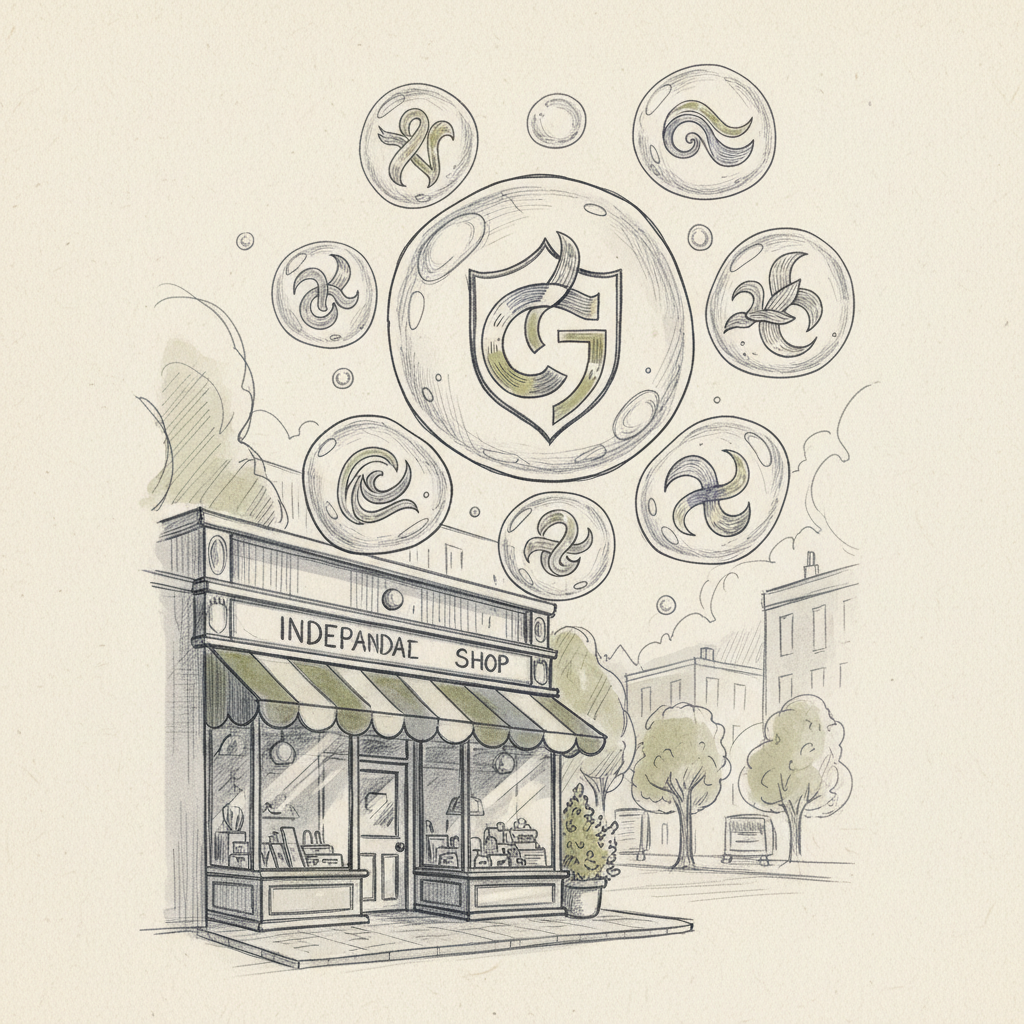
The good news: this isn't reserved for large companies with big marketing budgets. SMBs that publish consistently, implement schema markup, configure their llms.txt, and build brand mentions across credible sources can compete directly with much larger players in AI search results. The barrier isn't knowledge — it's consistency and execution.
That's precisely what Moonrank was built to solve. For $99/month, Moonrank handles daily automated content publishing, full technical AI optimization (schema markup, llms.txt, structured data, citations), personalized keyword research, competitive landscape analysis, and AI visibility tracking across ChatGPT, Gemini, Claude, and Perplexity — all on autopilot, with zero manual work required from you. Compare that to the $3,000+ per month most agencies charge for less targeted results, and the value proposition is clear. Visit www.moonrank.ai to start your free 3-day trial and see where your business stands in AI search today.
Recommended Articles
Explore more from our content library: